Andalusia can work in July or August, but the trip must be designed around heat rather than treated like a spring city break. Use Seville and Córdoba for short, pre-booked cultural blocks; give Granada a separate day; and keep a coast or rest day available when official warnings rise. Climate normals explain the baseline, while the AEMET forecast and warnings must control the plan for the actual date.
This guide does not promise that every healthy traveller can tolerate the same conditions. Age, pregnancy, medication, disability and existing health conditions can change heat risk. Travellers with a relevant medical concern should seek individual clinical advice before committing to a demanding itinerary.
The quick decision
| Situation | Best response | What not to assume |
|---|---|---|
| Fixed July or August dates | Build one major timed visit per half-day and protect a rest block | A normal-looking forecast means unlimited walking |
| Flexible route | Put the hottest inland city days around the lower-warning dates | Granada or the coast will always be cool |
| Heat-sensitive traveller | Prefer another season or a much lighter itinerary | Air conditioning removes all outdoor risk |
| AEMET warning for your zone | Follow the current warning and reduce, move or cancel exposed activity | A warning for Seville applies identically across Andalusia |
| Non-refundable attraction ticket | Protect health first and check the official change terms | A paid ticket makes an unsafe plan compulsory |
What the climate normals actually show
AEMET’s 1981–2010 station normals put the average daily maximum in July at 36.0°C for Seville Airport, 36.9°C for Córdoba Airport and 34.8°C for Granada Airport. These are monthly averages at particular stations, not a prediction or a safe-exposure threshold. Conditions in a paved plaza, shaded courtyard, hill, hotel room or coastal town can feel very different.
The same tables also undermine a common shortcut: Granada is not automatically a cool refuge. Its July average maximum is lower than the two inland lowland stations, but 34.8°C is still serious heat. Its average minimum is lower, which may improve early-morning and night conditions, yet an individual heat episode can depart sharply from the normal.
Never build the day from a climate average alone. Check the destination-level forecast and AEMET warning map, including the named warning zone and active hours, then check again on the morning of travel. AEMET weather warnings and the health-focused high-temperature system are related but not interchangeable; use both when available.
Choose the season honestly
If Seville, Córdoba and long outdoor walks are the heart of the trip, late spring or autumn is normally the more forgiving design. Summer becomes defensible when dates are fixed, the group accepts a slower rhythm, and accommodation and transport provide reliable cooling.
Do not select summer solely because you expect lower prices or empty attractions. Rates and demand move by date, event, property and refund conditions. Compare live EUR totals for the actual itinerary. A cheaper room with weak cooling, an exposed walk from the station or a rigid midday ticket can create a poor-value trip even when the headline rate is low.
Build a two-window day
The useful principle is simple: place necessary outdoor movement in the coolest workable windows and keep the hottest part of the day flexible. Exact clock times must come from the forecast, the attraction ticket and the traveller—not a universal “8–11” rule.
Morning window
Use the morning for the most exposed or physically demanding activity. That could be walking to an attraction, the gardens of the Real Alcázar, the Alhambra’s outdoor areas or the Giralda climb. A timed entrance limits flexibility, so include the route from the hotel, security queue and water stop in the exposure plan.
Protected middle of the day
Return to confirmed cooled accommodation, take a long indoor meal, or use an indoor attraction whose current visitor conditions suit the group. “Indoor” does not guarantee air conditioning, seating or immediate admission. Check the official site and ask the venue when that detail is important.
Evening window
Resume only after checking the current conditions. Sunset does not cause an immediate temperature reset, and heat can persist into the night. A short dinner walk or booked indoor performance can be sensible; a long sunset hike added because the morning felt easy may not be.
Seville: reduce crossings, not just attractions
In Seville, group the Cathedral and Real Alcázar area rather than repeatedly crossing the centre. The Real Alcázar publishes seasonal hours and sells official tickets online and at its ticket office; the summer schedule must be checked before purchase. The Cathedral publishes separate July and August arrangements and warns that worship or cultural needs can modify access. Use those live pages rather than copying a time into a permanent itinerary.
A practical summer day has one primary booking. If that is the Alcázar, arrive through a low-exposure route, visit the gardens according to conditions, and treat the Cathedral as optional unless the timing remains comfortable. If the Cathedral and Giralda are primary, remember that the tower component adds exertion; the interior visit and tower should not be treated as equal demands.
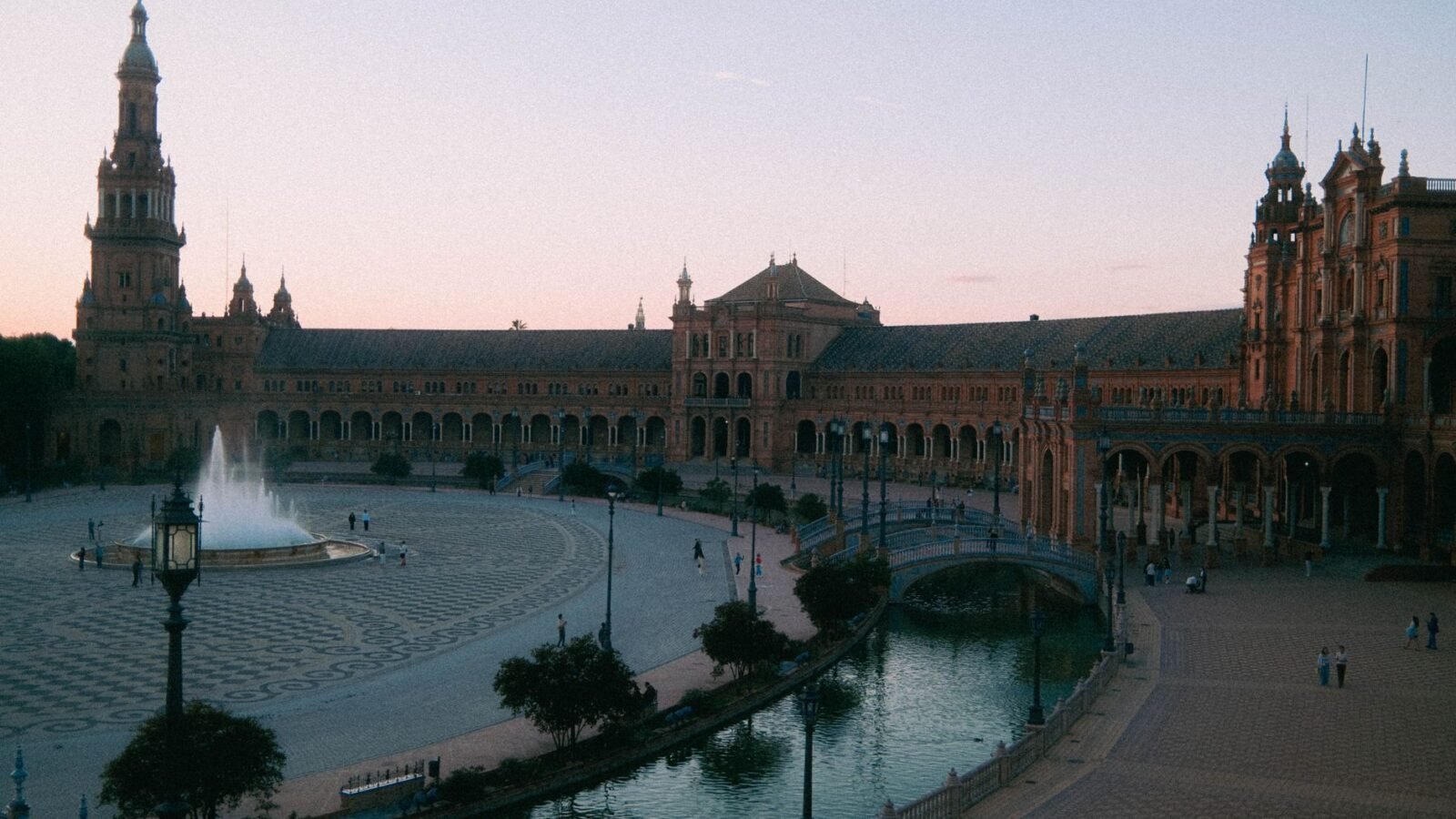
Plaza de España is highly exposed. It is not a sensible filler between two timed indoor visits in the hottest part of a warning day. Move it to a suitable morning or evening window, shorten the circuit, or omit it.
Córdoba: a compact centre can still be demanding
Córdoba Airport has the highest July average maximum of the three AEMET stations compared here. A rail day trip can look efficient, but station-to-monument movement, queues and the walk back all count as exposure.
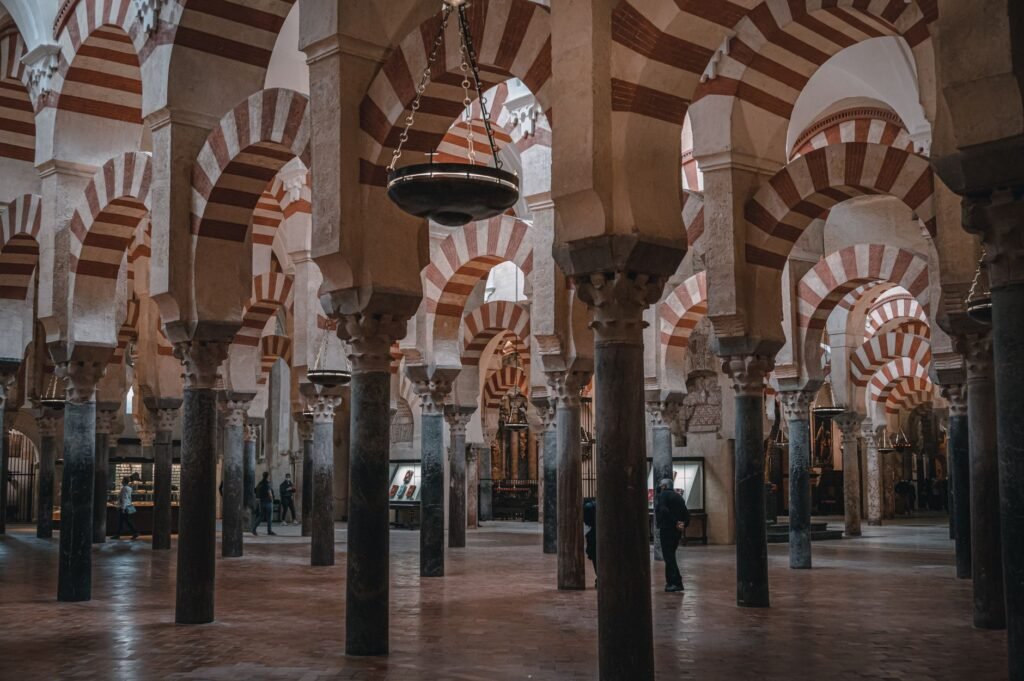
The Mosque–Cathedral publishes a date-specific official calendar, and schedules can differ for the monument, bell tower and night product. Choose the exact date on the official page. Do not describe the building as guaranteed air-conditioned or prescribe it as a medical cooling centre; its interior may provide shade and a different environment, but visitor comfort varies.
Limit the number of outdoor additions. The Roman Bridge, Jewish Quarter lanes, patios and riverfront are not interchangeable indoor stops. Choose one compact route with easy exits, then return to shade or cooling before fatigue controls the decision.
Granada: plan for distance and timed access
The Alhambra is a large complex, not a single indoor palace. Its official FAQ estimates roughly three hours for a general visit, and the route includes outdoor areas, uneven surfaces and distances between components. Tickets are personal, the Nasrid Palaces use a specified admission time, and same-day ticket-office availability is not guaranteed.
Select an official ticket that matches what you can realistically cover. Carry the required identification, respect the timed palace entry and check the permitted bag size. Arriving early does not help if the uphill approach has already exhausted the group; use the official access guidance to choose bus, taxi, private vehicle or walking according to current mobility and heat.
Granada’s lower average night temperature can make a split day easier, but it remains a hot summer city. Do not automatically add Albaicín climbs or a viewpoint sunset after a three-hour Alhambra visit.
Coast days are a buffer, not a guarantee
A coast day can reduce exposure to the most intense inland conditions, but “sea breeze” is not a safety plan. Coastal zones can have their own warnings, strong ultraviolet exposure and warm nights. Check the forecast for the exact town and beach, not Málaga as a proxy for the whole coast.
Choose a beach with current lifeguard information and services that match the group. Follow flags and local instructions, protect skin, avoid alcohol-led dehydration and do not enter the water as an improvised treatment for heat illness. Where available, official Andalusia tourism lists beaches with environmental certifications; certification does not replace live sea and weather safety information.
Accommodation is part of the safety system
“Air conditioning” in a listing can mean central cooling with restricted hours, a unit only in one room, an extra charge or a system that struggles during extreme heat. Before the free-cancellation deadline, ask:
- Is cooling available in the sleeping room and controlled by the guest?
- Are there operating-hour or temperature restrictions?
- Is there a lift, and are there steps between reception and the room?
- Can luggage be stored before check-in or after checkout in a cooled area?
- What happens if the cooling fails?
- Is potable water readily available, or where is the nearest refill point?
A pool is recreation, not proof of a cool room. Confirm its seasonal dates, access hours, shade and accessibility separately.
Transport without an exposed chain
Rail can remove the stress of driving and parking, but it does not remove first-mile and last-mile heat. Build the route door to door: accommodation to station, platform wait, arrival station to attraction and the return. Buy only through the operator or a channel whose change terms you understand, and recheck service information before departure.
If hiring a car, test the cooling before leaving the lot and learn the breakdown procedure. Never leave a child, dependent adult or animal in a parked vehicle, even for a short stop. Historic-centre access restrictions and parking walks can erase the apparent advantage of driving.
Taxis can reduce walking but may be scarce at peak demand. Save official or locally recommended booking options and a precise pickup point. Do not make one unavailable ride the only route back to safety.
Heat-health actions and warning signs
The Andalusian health guidance recommends frequent fluids, light meals, light clothing, shade, sunscreen and avoiding physical effort in the hottest hours. It also identifies older adults, young children and people with chronic illnesses among groups needing particular attention. Follow the current official guidance and any personalised medical instructions.
Move to a cooler place and seek help when someone becomes unwell. Confusion, loss of consciousness, seizures or severe deterioration require urgent action; call 112, the European emergency number used in Andalusia. Do not rely on an article to diagnose heat exhaustion or heatstroke, and do not delay emergency help while trying to finish a sightseeing plan.
Medication can affect heat tolerance or hydration, but travellers should not stop or alter prescribed medicine based on generic travel advice. Ask a qualified clinician or pharmacist about the specific medicine and trip.
Pack for the route, not social media
Carry water in a quantity appropriate to the next refill opportunity, but do not prescribe a universal litre target. Needs vary, and some medical conditions require fluid guidance. Add a brimmed hat, sunglasses, broad-spectrum sunscreen, breathable clothing, comfortable footwear and any medically required supplies.
A small umbrella or fan can improve comfort but cannot make a warning-level exposed walk safe. Keep tickets, hotel details, insurance contacts and offline maps on the phone, and carry a power bank. A light layer may help in strongly cooled interiors.
Build a live EUR budget
Avoid per-day tiers that combine unrelated assumptions. Price the exact trip in EUR, date by date:
| Budget line | Use a live input | Heat-related question |
|---|---|---|
| Accommodation | Refundable rate including taxes and cooling details | Can you return during the day? |
| Intercity transport | Official fare for the chosen service | Are changes allowed if warnings alter the route? |
| Local transport | Transit fare plus a taxi contingency | Can you avoid a long exposed transfer? |
| Attractions | Official ticket type for the exact date | Is the entry timed and partly outdoors? |
| Food and water | Your normal meal plan plus refill access | Does the plan require buying water in a captive venue? |
| Insurance | Policy wording, exclusions and excess | Does it cover heat-related treatment and disruption? |
| Flexibility reserve | An amount you can actually access | Can you add a taxi, rest night or route change? |
Use Travytour’s budget calculator for scenario totals and keep the currency in EUR unless you deliberately activate a current conversion. Attraction prices and hotel rates change; date every price you save and recheck before payment.
Accessibility and caring responsibilities
Heat planning and accessibility planning must be combined. Ask venues about the actual route, seating, lifts, accessible toilets, companion rules and the ability to leave and re-enter. Historic surfaces, slopes and security procedures can make a short map distance demanding.
For a child, older relative or traveller who needs assistance, identify who monitors symptoms and who can abandon the plan with them. Do not split essential medication or mobility equipment into luggage that may be inaccessible during the day.
A flexible five-night pattern
This is a decision framework, not a promise of safe conditions:
- Night 1–2, Seville: one primary timed attraction each day, with a protected rest block.
- Night 3, Córdoba or onward transit: make Córdoba a compact stop only if the forecast, luggage plan and return route work.
- Night 3–4, Granada: reserve the Alhambra through the official channel and keep the rest of that day light.
- Night 5, coast or flexible base: use this as a weather buffer, not a compulsory beach day.
If warnings intensify, remove Córdoba or an outdoor addition rather than compressing the same list into cooler hours. Fewer completed attractions can represent a better trip.
Common planning mistakes
- Treating the monthly average as the forecast.
- Checking a city forecast but ignoring the named AEMET warning zone.
- Assuming every museum, church or historic palace is fully cooled.
- Booking two major timed visits with an exposed transfer between them.
- Choosing a room by price without confirming sleeping-room cooling.
- Calling Granada or the coast “safe” without checking the actual day.
- Changing medication or forcing fluid intake without individual medical advice.
- Letting a non-refundable ticket overrule symptoms or official warnings.
Frequently asked questions
Is Andalusia safe to visit in July or August?
There is no universal yes or no. Many trips proceed, but heat risk varies by date, warning zone and traveller. Build flexibility, follow official warnings and health guidance, and choose another season when individual risk or itinerary rigidity makes adaptation unrealistic.
Is Córdoba hotter than Seville?
In the cited AEMET 1981–2010 airport-station normals, Córdoba’s July average daily maximum is 36.9°C and Seville’s is 36.0°C. That small difference does not predict which city will be hotter on your date; use the live forecast.
Is Granada cool in summer?
No. Its cited July airport-station average maximum is 34.8°C. Cooler average nights and elevation can help itinerary design, but Granada can still experience severe heat.
Should I book the Alhambra in advance?
Yes. Use the official channel because tickets are personal, the Nasrid Palaces have a specified entry time and same-day availability is conditional. Carry the required identification.
Can I use indoor attractions at midday?
Sometimes, but confirm the specific venue’s hours, ticket conditions, seating and cooling. Indoor historic buildings are not automatically cooling centres.
How much water should I carry?
Carry enough for the route to the next reliable refill and drink according to current health guidance and personal medical advice. A universal quantity is inappropriate for every body and condition.
Final recommendation
Book summer Andalusia only after creating a version of the trip that still works when one outdoor block is cancelled. Confirm cooled accommodation, price the route in live EUR, reserve only the essential timed attractions, and check AEMET plus Andalusian health guidance throughout the trip. The best summer itinerary is not the one that defeats the heat; it is the one that can change before the heat defeats the traveller.
For destination context, continue to Spain travel guides and review Travytour’s editorial policy for how changing operational and safety claims are handled.