Provence does not have one guaranteed “lavender week.” Flowering moves across the region with altitude, latitude, variety and weather, while harvest belongs to each farmer. Plan around a flexible area and check the current bloom with its tourist office shortly before travel. A historical calendar can narrow the search; it cannot promise that a particular field will still be purple.
The official Routes de la Lavande guidance gives the useful broad pattern: flowering begins around mid-June in lower areas such as the Luberon and Valensole, then continues toward the end of July in higher areas such as the Plateau de Sault. It also says weather can advance or delay harvest. Those are planning ranges, not appointments with a crop.
| Travel period | First area to investigate | Necessary check |
|---|---|---|
| Earlier in the broad season | Valensole or lower Luberon | Current bloom and harvest reports |
| Middle of the broad season | Compare Valensole, Luberon and Sault | Same-week local advice |
| Later in the broad season | Higher Sault/Albion areas | Whether fields remain unharvested |
| Outside flowering | Farms, distilleries, museums and villages | Live opening and reservation rules |
Use the France destination guides for a wider itinerary. This guide follows Travytour’s editorial policy: bloom, access, weather, transport and prices must be checked at decision time.
The rule that prevents most disappointment
Choose dates, then choose the area from current conditions—not the other way around. A photograph, blog post or festival date from a previous year does not prove what a working field will look like this year.
About one to two weeks before arrival, ask the relevant official tourist office:
- where flowering is currently strongest;
- which fields or farms explicitly welcome visitors;
- whether harvesting has begun;
- where legal visitor parking exists;
- whether a signed walking or cycling route is open;
- whether heat, storms or fire restrictions affect the day;
- whether an attraction requires a timed reservation.
Repeat the check shortly before leaving the accommodation. A useful itinerary can switch between Valensole, the Luberon, Sault and a non-field activity without treating the change as failure.
Lavender, lavandin and why fields differ
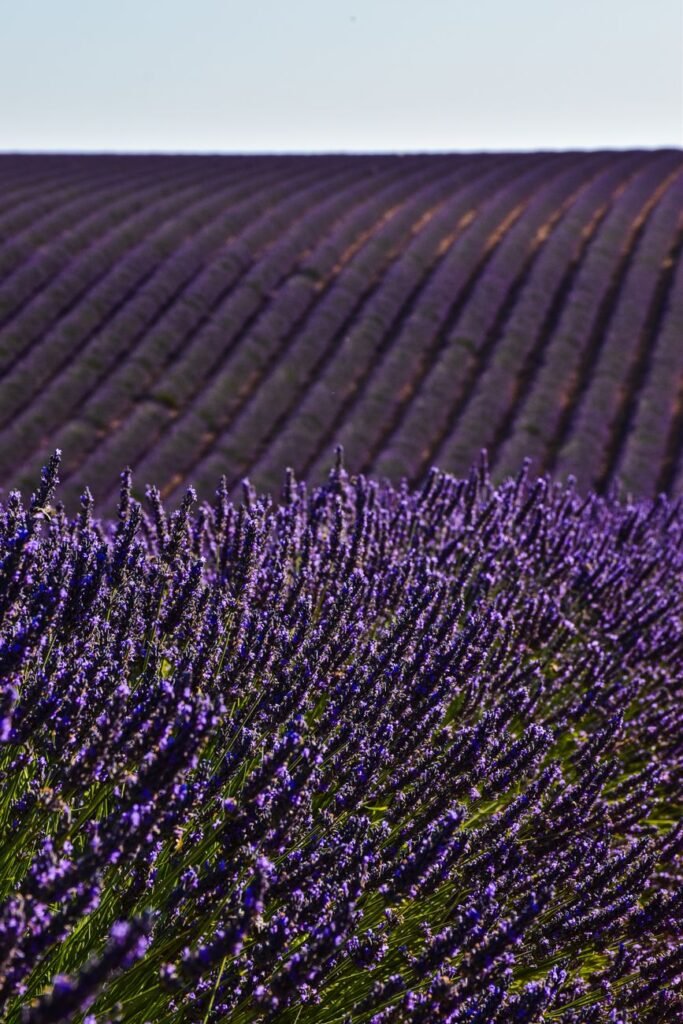
Not every purple field contains the same plant. Provence grows both lavender and lavandin, a hybrid widely cultivated for its yield. Variety is one reason neighbouring fields can look different or be harvested on different days.
Altitude, exposure, rain, heat and farming decisions add more variation. The official flowering guide says a dry period can advance harvest while a storm can delay it. That makes exact evergreen “peak” dates misleading.
Do not judge a farmer’s crop by the colour expected from an edited photograph. Pale, deep or partly cut rows can all reflect a real agricultural season.
Valensole: broad landscapes, heavy visitor pressure
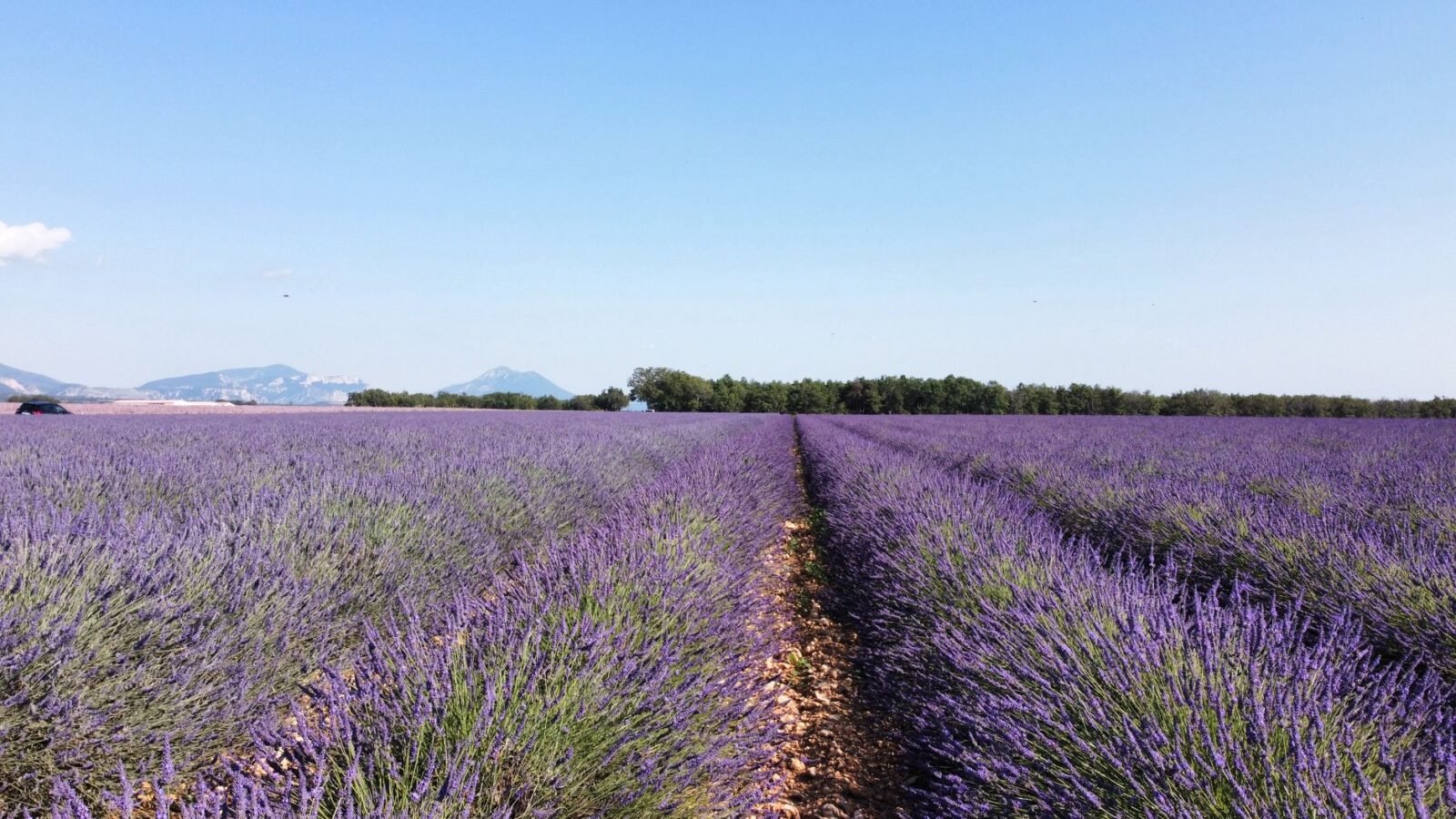
The Plateau de Valensole is the classic large-scale landscape. Regional tourism guidance places its usual flowering broadly from mid-June to mid-July, but the current year still controls. It also explicitly tells photographers not to enter fields or damage plants.
Use Valensole when the local office confirms suitable bloom and access. Do not build a “loop” from unverified social-media pins. Many lanes serve homes and farms, and a visually open verge is not automatically a parking place.
A responsible Valensole day has two or three authorised stops, a producer or village visit and a fallback. If the safe parking area is full, continue. Never block a gate, field entrance, passing space or emergency access.
Luberon: villages and producers, not only one photograph
The Luberon works best as a broader cultural base. Apt and surrounding villages can support markets, producers, walks and indoor visits even when a photographed field is past bloom.
Avoid promising that Gordes, Roussillon and every lavender site fit into one timed day. Summer traffic, parking controls and heat can reshape the route. Pick one principal village and one confirmed lavender experience.
The lower Luberon generally enters the broad flowering progression earlier than higher Sault areas, but individual farms decide harvest. Ask locally rather than driving between old coordinates looking for an unchanged view.
Sénanque Abbey: a monastery, not a public photo field
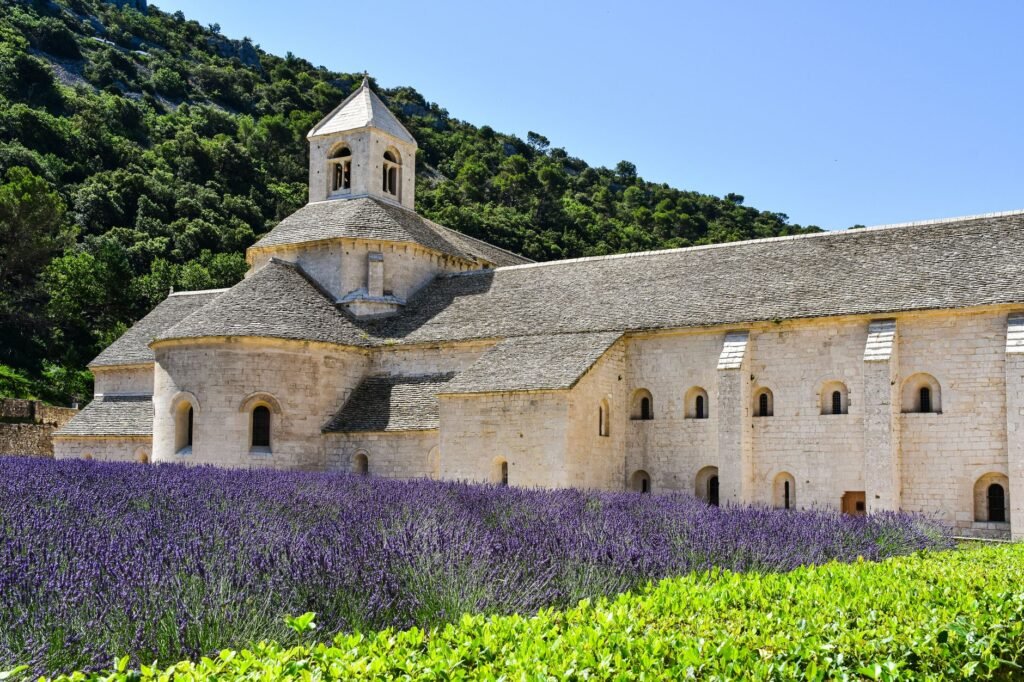
Notre-Dame de Sénanque is an active monastic community. Its official visitor page asks guests to respect silence and prayer, and states that access to the lavender fields is forbidden to protect the harvest. It also prohibits drone overflights in the valley.
View the abbey only from authorised areas. Do not step between rows, stage a commercial shoot, fly a drone or treat a barrier as a suggestion. A photograph showing someone inside a crop is not permission.
Check the abbey’s live visit schedule and reservation system. Historic buildings include many stairs, and the abbey says wheelchair access is not possible under the current arrangement. Travellers needing step-free access should confirm the latest provision directly before booking.
Sault: the higher-altitude option
The Pays de Sault generally flowers later in the regional progression. Provence Guide says flowering there begins from early July and documents two lavender-road circuits beginning at the Sault tourist office. It also asks visitors not to pick or uproot plants and to park without obstructing traffic.
Use the tourist office as the decision point rather than assuming every road on a map is a visitor route. Choose either the shorter or longer official circuit only after checking current conditions, vehicle suitability and stops.
Sault is not a guaranteed August rescue. The wider official calendar normally runs toward the end of July in higher areas, with some sectors varying. If lavender is the trip’s central purpose, do not book late dates on the assumption that altitude guarantees colour.
A realistic three-night plan
Three nights allow two field days and one flexible day. Choose one base rather than changing hotels to chase uncertain colour.
Arrival day: establish the live plan
Settle in Apt, the Luberon, Valensole/Manosque or Sault according to current reports. Contact the tourist office, review official weather and fire information, and identify legal parking. Do not schedule a remote field after a late arrival.
Full day 1: the best current lower or mid-altitude area
Choose Valensole or the Luberon—not both by default. Visit authorised viewpoints or a farm that welcomes guests, then add one village, museum or distillery. Respect the operator’s live hours and booking rules.
Full day 2: contrast or fallback
If bloom and conditions support it, visit the other lower area or move to Sault. If not, use an abbey visit, producer experience, market or village day. A flexible non-field day protects the trip from harvest and severe weather.
Departure day: no last-chance trespass
Use a confirmed stop near the onward route. Do not enter private land because the earlier days were cloudy or harvested. The crop is not a ticketed attraction owed to the visitor.
Getting there without false time promises
Avignon, Aix-en-Provence and Marseille can be practical gateways depending on the selected base. Paris–Avignon rail services and regional connections vary by date, engineering work and booking. Check the official rail and regional journey planners rather than preserving a fixed duration.
Self-driving offers flexibility across dispersed rural sites, but it is not mandatory. Official and private guided excursions can connect a city base with a producer and authorised viewpoints. This can reduce parking pressure and suits travellers uncomfortable with narrow rural roads.
For a rental car, compare the total live contract: insurance, deposit, fuel policy, mileage, additional driver, cancellation and exact return location. Choose a smaller vehicle that safely fits passengers and luggage.
Driving and parking etiquette
Lavender lanes remain working roads. Tractors, residents, cyclists, walkers and emergency vehicles need space.
- Park only where parking is lawful and the vehicle is fully clear.
- Never stop in a live lane for a photograph.
- Do not use farm entrances or private driveways to turn around.
- Follow temporary one-way systems, barriers and staff directions.
- Set navigation before moving.
- Keep speed appropriate for sightlines and road width.
- If the intended stop is crowded, use the planned alternative.
Do not advertise an exact “secret field” coordinate. Conditions, ownership and access can change, and concentrating visitors on one farm creates avoidable damage.
Heat, storms and fire restrictions
Check Météo-France vigilance information for the departments in the route. Heat, thunderstorms, wind and heavy rain can affect open fields and rural roads differently.
Alpes-de-Haute-Provence publishes daily fire-risk access information during regulated periods. Restrictions can govern entry, circulation and parking on roads serving forest areas. The current prefectural notice overrides an itinerary, even when the field itself appears accessible.
Carry water, sun protection and suitable footwear, but equipment does not make a restricted or dangerous visit acceptable. Avoid smoking and any flame near dry vegetation. Follow evacuation and closure instructions immediately.
Bees, allergies and field safety
Flowering crops attract pollinators. Observe from authorised paths, wear closed footwear and avoid disturbing insects. Anyone with a serious allergy should carry their prescribed medication and follow their clinician’s plan.
Rows can hide irrigation, uneven ground and farm equipment. Children require close supervision. Do not allow pets into a crop; follow each site’s leash and admission rules.
Essential oils are concentrated products, not interchangeable with viewing a plant. Do not offer medical claims or apply an unfamiliar product to skin without appropriate product instructions and individual advice.
Photography without damaging the crop
Soft morning or evening light may be attractive, but access and safety come first. Never assume sunrise grants entry before a farm opens.
Use a public viewpoint or an authorised farm experience. Keep feet on the permitted surface, avoid moving signs or props and do not cut flowers. Portrait sessions, tripods, drones and commercial work may require explicit permission even where casual photographs are allowed.
At Sénanque, personal photography rules and field prohibitions are specific. Check them directly. Elsewhere, ask the landholder rather than copying another visitor.
Accessibility
Accessibility must be checked site by site. Rural verges and farm tracks can be uneven; some viewpoints have no formal path, toilet or seating.
Ask about:
- step-free parking-to-view route;
- path width, gradient and surface;
- accessible toilet and shaded seating;
- distance from drop-off;
- assistance-dog policy;
- sensory conditions around bees, fragrance and crowds;
- accessible vehicle or guided-tour arrangements.
Do not describe a view as accessible merely because it is visible from a road. Stopping a vehicle must still be legal and safe.
Budget in EUR using current quotes
France uses the euro. Replace generic USD daily tiers with exact dated totals.
| Budget line | Record from live source | Flexibility cost to include |
|---|---|---|
| Transport to Provence | bags, seats, rail restrictions | changeable arrival |
| Local transport | rental total, fuel, parking or tour | cancellation terms |
| Accommodation | nightly total, tax, parking | refundable rate |
| Visits | reservation and included access | weather/harvest fallback |
| Food | breakfast and rural opening | late-arrival option |
| Insurance | covered events and excess | disruption protection |
Enter the totals in the Travytour Budget Calculator. A cheaper remote room can cost more after daily driving and parking; compare the whole plan.
Where to stay
Choose the base from the confirmed area and the rest of the Provence trip.
- Valensole or Manosque: useful when the plateau is the verified priority.
- Apt or another Luberon base: useful for villages, producers and flexible non-field days.
- Sault: useful for the higher-altitude area after local bloom confirmation.
- Aix-en-Provence or Avignon: useful for a city stay paired with a booked guided excursion.
Before booking, confirm parking, air cooling, step-free access, cancellation, check-in time and the route after dark. Do not claim a property is convenient based only on straight-line distance.
If the fields have already been harvested
Keep the trip. Visit a producer or distillery that confirms it is open, learn the difference between lavender and lavandin, explore one village or market, or use a museum. The Routes de la Lavande organisation explicitly notes that producers and other lavender specialists may still welcome visitors outside flowering.
Do not search private tracks for an uncut field. A land-based cultural day is a better result than trespass or unsafe roadside stopping.
Common planning mistakes
- Treating a historical bloom chart as a guarantee.
- Booking one famous field as the sole purpose of the trip.
- Assuming Sault will remain purple into August.
- Entering cultivated rows for portraits.
- Parking on a narrow shoulder or farm access.
- Using a festival date as proof that nearby fields are unharvested.
- Freezing old rail, driving or opening times.
- Ignoring daily weather and fire-access restrictions.
- Flying a drone without checking land, airspace and site rules.
- Converting unverified accommodation patterns into static USD budgets.
FAQ
What is the best week for Provence lavender?
There is no guaranteed week. The broad official progression begins around mid-June in lower areas and continues toward the end of July at higher altitude. Confirm the current year and chosen sector locally.
Is Valensole better than Sault?
They serve different dates and landscapes. Valensole is a lower, expansive plateau; Sault is higher and generally later. Current bloom, access and the rest of the itinerary decide.
Can I enter a lavender field for photographs?
Only with explicit permission. Regional guidance tells visitors not to enter or damage fields, and Sénanque expressly prohibits access to its lavender crop.
Can I see lavender in August?
Do not rely on it. Some higher sectors may vary, but harvest and weather control. Ask the local office before building a lavender-dependent August trip.
Do I need a car?
No. A car offers rural flexibility, while a guided excursion from a city base can remove driving and parking pressure. Check the live itinerary for either option.
Is Sénanque accessible by wheelchair?
The abbey’s current visitor information says its many stairs make wheelchair access impossible. Confirm again before travel because facilities can change.
Final planning sequence
Start with travel dates, consult the official flowering progression, then ask the relevant tourist offices what is blooming and open. Select one base, two conditional field days and a non-field fallback. Use authorised access, protect working crops, obey weather and fire restrictions, and budget from live EUR quotes. The result is more resilient than chasing a promised peak that agriculture cannot guarantee.