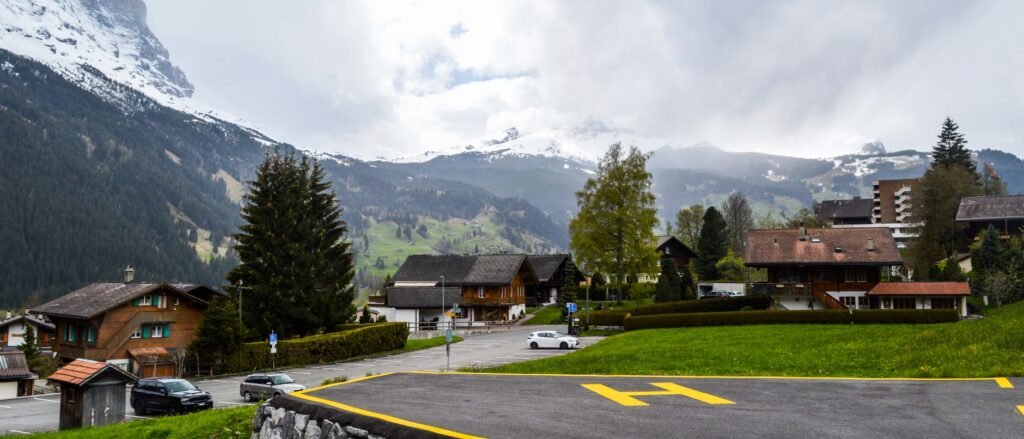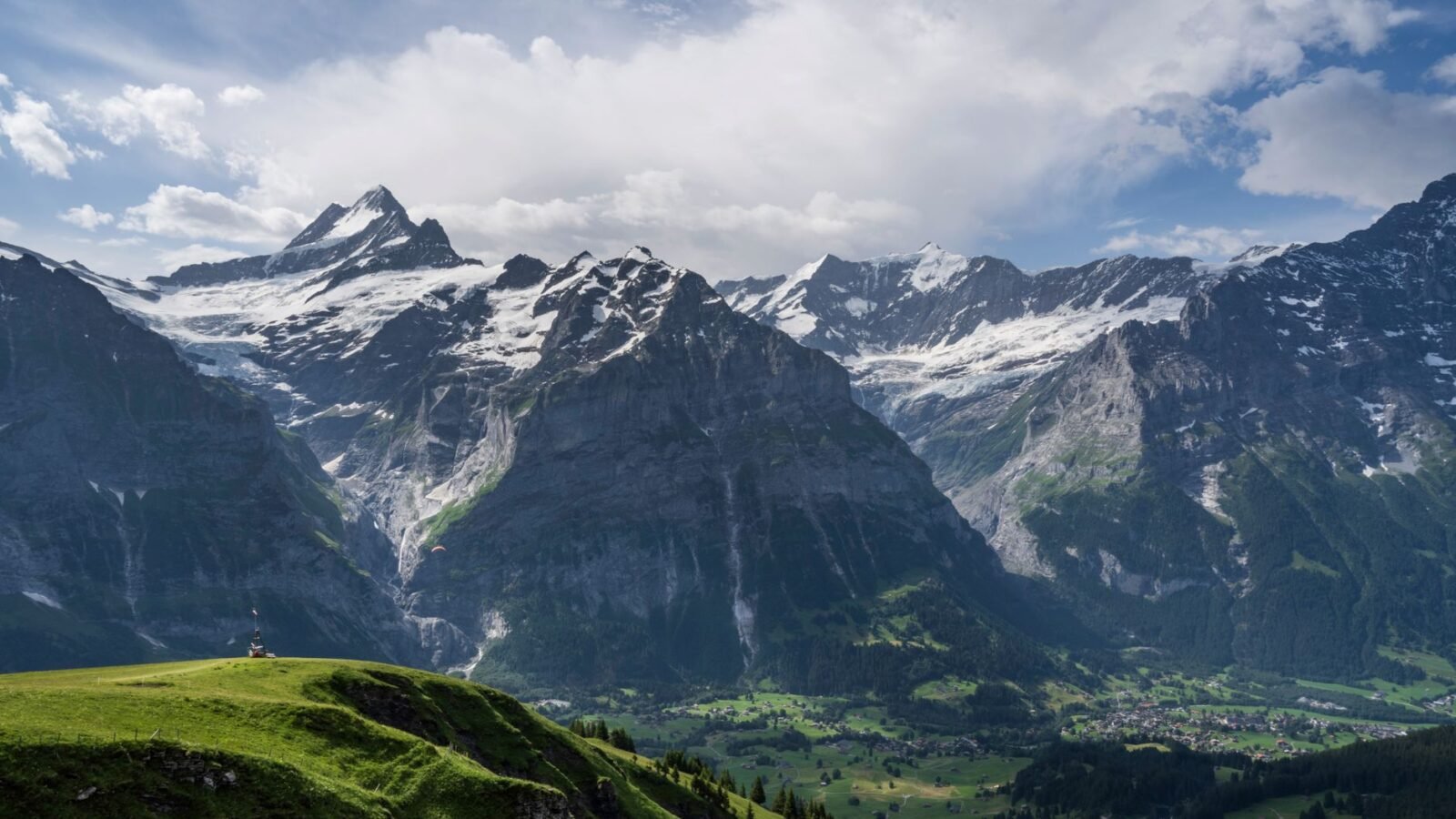
The Swiss Alps can be planned on a controlled budget, but the useful question is not “Which pass is cheapest?” It is which complete, dated combination costs least for the journeys you will actually take. For a first visit, spend five nights in one base in the Jungfrau region and buy no more than one major mountain excursion.
Choose Interlaken, Lauterbrunnen or Grindelwald only after comparing live accommodation and transport totals. This plan does not promise that one village is always cheaper. It reduces hotel changes, protects a clear-weather mountain day and prevents an expensive national pass from becoming the itinerary.
| Night | Base | Flexible plan |
|---|---|---|
| 1 | One Jungfrau-region base | Arrive, shop and verify operations |
| 2 | Same base | Valley or local low-cost day |
| 3 | Same base | Optional paid mountain day if conditions justify it |
| 4 | Same base | One named, officially open hike |
| 5 | Same base | Weather fallback and local day |
Use the Switzerland destination guides for a wider journey. This guide follows Travytour’s editorial policy: prices, coverage, weather, trail status and accessibility are checked for the exact date.
Start with one region, not a list of famous peaks
Jungfraujoch, Schilthorn, Pilatus and Zermatt are not interchangeable stops around one village. Pilatus belongs near Lucerne; Zermatt is a separate destination. Combining them in five nights adds relocation cost and removes the weather flexibility that mountain travel needs.
This itinerary stays between Interlaken and the Lauterbrunnen–Grindelwald valleys. Jungfraujoch can be the single optional paid summit day, but it is not compulsory. A clear valley day can be more rewarding than paying for cloud at altitude.
The savings come from scope: one accommodation base, groceries and simple meals, local walking when conditions permit, and only transport that earns its cost in the finished itinerary.
Choose the base from a complete live total
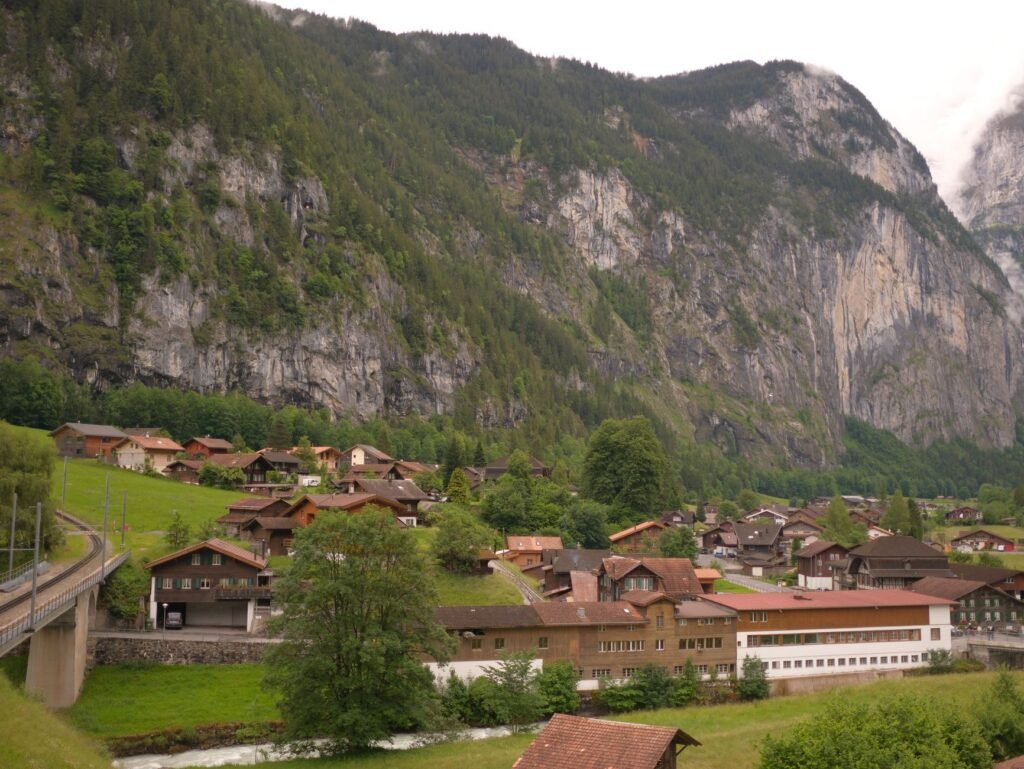
Search the same five nights in all three bases. Compare the final price after taxes, cleaning fees and required meal plans, then add the transport needed by your chosen days.
Interlaken
Interlaken is the broader transport hub and may offer more accommodation and food choices. It also means travelling into a valley on several days. Check the exact route from the room to Interlaken Ost, not merely the town name.
Lauterbrunnen
Lauterbrunnen can reduce travel for a valley-focused plan and connects toward Wengen and Mürren. Do not assume every hillside property is an easy walk from the station. Confirm gradient, steps, luggage route and the last useful connection.
Grindelwald
Grindelwald can be practical for routes on its side of the region, including connections toward Grindelwald Terminal. Properties are spread along slopes, so a lower room price can require repeated local transport.
Record for each candidate: refundable five-night total, breakfast or kitchen access, city or visitor tax, station distance, gradient, late check-in, luggage storage and confirmed guest-card benefits. Count a guest-card discount only when the accommodation or municipality states the exact benefit in writing for your dates.
Build four ticket totals before buying a pass
Open the official journey planner and mountain operator pages for the exact travel dates. Write every intended segment in CHF, including arrival to the base, local movements, the optional mountain day and departure. Then compare four complete baskets.
| Basket | Include in the live CHF total | Check carefully |
|---|---|---|
| Point-to-point | Every full-fare dated ticket | saver restrictions and missed connections |
| Swiss Half Fare Card | Card plus every reduced ticket | the exact reduction on each mountain leg |
| Swiss Travel Pass | Pass plus reservations and uncovered or reduced mountain legs | validity map, consecutive days and supplements |
| Regional product | Jungfrau-region pass plus inbound and outbound travel | operating season, exclusions and summit supplement |
The Swiss Travel Pass is a national visitor product; the Swiss Half Fare Card is a discount product; a Jungfrau Travel Pass is regional. None is automatically the cheapest for five nights. “Up to 50%” is not permission to divide every fare by two, and “included transport” does not prove that a particular summit, activity or reservation is free.
Keep screenshots or PDFs of the validity map and conditions that applied when purchasing. If the itinerary changes, recalculate instead of forcing extra journeys to justify a pass already bought.
Day 1: arrive and create the decision sheet
Treat arrival as transport and setup, not a summit day. Check in, locate groceries and confirm the nearest usable stop. Save the Jungfrau operating-information and timetable pages offline or as bookmarks.
Write two versions of the next four days:
- a clear-weather version with one paid mountain excursion;
- a cloud, rain or disrupted-operations version based near the valley or town.
Check cancellation and amendment deadlines before committing. A cheaper non-refundable ticket can be poor value when visibility is the main reason for travel.
If arriving after a flight or an international rail connection, leave enough margin between separately purchased tickets. A route shown in a planner is not necessarily one protected booking.
Day 2: a valley-first low-cost day
Use the first full day to understand the region without buying a premium summit. From Lauterbrunnen, choose a lawful valley walk or local village time based on the official route and current conditions. From Grindelwald, use a local route that starts from a stop included in the ticket calculation. From Interlaken, compare the return transport before leaving.
“Walking day” does not mean zero cost. Include the bus or train to the trailhead, any lift needed, food, equipment and the safe return. Never invent a shortcut across farmland or use a social-media track without current official status.
Keep the day moderate. Altitude, heat, rain and accumulated travel fatigue can change what is suitable even on a technically easy path.
Day 3: the optional paid mountain day
Choose the paid excursion only after checking the live timetable, operating status, visibility, wind and warnings. For Jungfraujoch, price the complete return from the actual base, not a headline “from” price. Check whether the selected pass requires a connecting ticket or reservation and whether the chosen route is operating.
Before paying, confirm:
- exact origin, route and return validity;
- included and excluded segments;
- reservation or supplement requirements;
- last comfortable return, not only the final service;
- refund or change rules during disruption;
- altitude, cold and health implications;
- wheelchair, stroller and assistance arrangements for every handoff.
High altitude can affect people regardless of fitness. Move slowly, stay hydrated and follow medical guidance relevant to your circumstances. If symptoms develop, alert staff and descend as directed. This article is not medical clearance.
If cloud hides the main landscape or an operator closes a segment, use the fallback day. The money saved is not a failed holiday; it is the purpose of a flexible budget plan.
Day 4: one named hike with live status
Select a specific route from SwitzerlandMobility or the operator’s current hiking information. Record its start, finish, distance, ascent, descent, surface, signed route category and last transport. Then compare those demands with every traveller’s experience and mobility.
Jungfrau Railways states that hiking routes depend on operating status and that walking is undertaken at the visitor’s own risk. A lift opening does not prove that the adjoining trail is open. Snow can remain when a valley feels like summer, and fresh snow can create avalanche danger outside winter.
On the morning of the walk:
- check the authoritative route status and closure notices;
- check MeteoSwiss warnings and local forecast;
- check SLF snow and avalanche information when relevant;
- carry suitable footwear, layers, water, food and navigation;
- set a turnaround time before the final transport;
- choose a non-hiking alternative if the evidence conflicts.
Do not call a route “family-friendly,” “easy” or “accessible” without verifying the exact surface and the needs of the group. Turn back when conditions, fatigue or route finding deteriorate.
Day 5: protect the weather fallback
Keep the last full day uncommitted until the trip is underway. It can absorb the optional mountain excursion if Day 3 was unsuitable, or become a local village, lake, museum, café and recovery day.
Do not use the buffer to add Zermatt or Lucerne at the last minute. Long excursions create new costs and put the departure at risk. If booking a lake boat or another attraction, verify its current timetable and whether the pass genuinely covers the selected service.
Reconfirm the next day’s departure, engineering work and the route from the accommodation with luggage.
Day 6: depart without a fragile final connection
Allow more time than the planner’s minimum change when an airport, international train or separate non-refundable booking follows. Confirm platforms and disruption notices on the day.
The cheapest departure is not the one that risks a replacement flight. Include a sensible connection margin in the budget decision from the beginning.
Budget in CHF, not a frozen USD tier
Switzerland prices transport in Swiss francs. Build the travel budget in CHF and convert only when you are ready to pay. Exchange rates, card fees and dynamic accommodation prices make a static “budget/mid-range/luxury” dollar box misleading.
| Budget line | Capture now | Contingency |
|---|---|---|
| Accommodation | five-night final total and taxes | refundable premium or late arrival |
| Inbound/outbound | exact dated fares | separate-ticket disruption |
| Local transport | every planned segment | additional bad-weather journey |
| Pass option | product plus all supplements | uncovered routes and reservations |
| Mountain day | complete return from the base | cancellation/change restrictions |
| Hiking | trailhead transport and equipment | safe alternative activity |
| Food | groceries and simple meals | limited mountain choices |
| Insurance | actual covered events | exclusions and excess |
Enter the four transport baskets and the rest of the dated CHF costs in the Travytour Budget Calculator. Compare like with like: the lowest advertised pass price is not the lowest complete trip.
Food savings that do not weaken the plan
Choose accommodation with breakfast or a usable kitchen only when the final total supports it. Shop after checking opening hours and carry food only where the operator and venue allow it.
Prepare a trail lunch, water and a small emergency snack. Do not rely on a mountain restaurant being open, affordable or reachable during disruption. Budget for at least one flexible meal after a long day rather than designing an itinerary that only works if every supermarket visit succeeds.
Accessibility is a chain, not one icon
A station or cable car marked accessible does not make the full journey step-free. Verify the actual train, platform, interchange, lift, path surface, toilet and accommodation entrance.
Ask operators about boarding assistance, advance-notice requirements, wheelchair dimensions, companion rules and alternatives during maintenance. Ask the property for photographs or measurements when steps, gradients or bathroom layout matter.
For the mountain day, verify altitude and evacuation constraints as well as physical access. Keep a local alternative that does not depend on the failed link in the chain.
Families and mixed-ability groups
Price each traveller correctly rather than applying an adult pass assumption to the group. Child products and family arrangements have eligibility and accompaniment rules that can change the total substantially.
Keep transfers few, protect toilet breaks and supervise children at platforms, cliffs, water and livestock areas. A signed mountain trail can still be unsuitable for a stroller or a young child. The slowest member determines the turnaround time.
Responsible Alpine travel
- Use scheduled public transport when it fits the journey.
- Stay on marked, open routes and respect closures.
- Do not cross fields, disturb livestock or block residents’ access.
- Carry rubbish back to an appropriate bin.
- Keep noise low in villages and shared accommodation.
- Check drone, protected-area and local photography rules.
- Refill water only where it is identified as potable.
- Spend with local food, accommodation and guides without treating villages as scenery sets.
Common budget mistakes
- Buying a national pass before listing the actual journeys.
- Assuming every mountain railway receives the same discount.
- Counting a guest card before the accommodation confirms its terms.
- Moving hotels to chase a small nightly saving.
- Paying for several summit excursions in a short trip.
- Treating hiking as free, always open or risk-free.
- Using a headline fare instead of the return total from the base.
- Freezing an exchange rate or old seasonal opening date.
- Ignoring reservation, cancellation and accessibility requirements.
- Using the final day for a distant, fragile excursion.
FAQ
Is the Swiss Travel Pass worth it for five nights?
Only a complete live comparison can answer. Add the pass and every uncovered mountain segment, then compare it with full-fare tickets, the Swiss Half Fare Card basket and a relevant regional product plus inbound and outbound travel.
Is Interlaken always the cheapest base?
No. It may have broader inventory, while Lauterbrunnen or Grindelwald may reduce daily transport. Compare the same dates, final accommodation total and itinerary-specific transport.
Should I book Jungfraujoch in advance?
Check the current operator rules, availability, reservation requirements and refund terms. Balance capacity risk against the possibility of poor visibility or changed operations; there is no universal booking date suitable for every season.
Can I hike for free?
Some open routes have no admission fee, but transport, lifts, equipment and a safe fallback still cost money. Use a named official route and verify status, weather, snow and warnings on the day.
When is the cheapest month?
There is no evergreen cheapest month. Accommodation demand, product seasons, lift maintenance, snow and daylight vary. Search exact dates and reject any saving that removes the experience or safe operating window you need.
Final decision rule
Book five nights in the base with the lowest suitable complete total. Buy the lowest complete transport basket only after mapping real journeys. Preserve two possible days for one paid mountain excursion, and let live visibility and operating status decide which day—if any—earns the cost.