Editorial deck: Two weather-led days on Skye, with one walking anchor each day, legal parking and enough flexibility to replace an exposed route without breaking the trip.
Two days on the Isle of Skye can produce a coherent visit, but not a guaranteed collection of the Old Man of Storr, Quiraing, Fairy Pools and Neist Point. Those places sit in different parts of the island, their paths ask different things of the walker, and cloud, wind, rain, road works or full parking can remove an option.
This plan solves that problem with choices rather than a rigid loop. Day 1 is Trotternish: select one principal walk, then add only low-commitment viewpoints that still fit. Day 2 is either the Fairy Pools/Cuillin side or the Neist Point/Dunvegan side. Do not combine both by default. Keep the same confirmed accommodation for two nights if its address works for both days.
Every morning, check the Met Office Northwest Highlands mountain forecast, the local forecast, Traffic Scotland, and any live site or parking notice. The forecast—not the photograph that sold you the trip—selects the day.
What this itinerary promises—and what it does not
It promises a decision structure: one fixed overnight base, one principal outdoor anchor per day, a lower-exposure fallback, and an explicit point at which you stop adding places. It does not promise clear views, a specific walking duration, easy parking or completion of every famous path.
Your base need not be Portree. Use its exact address, not the town name, when testing routes. Portree can work for Trotternish and either western option, but a stay elsewhere may be better if it matches your arrival and departure. Confirm check-in, evening food and fuel rather than assuming island-wide availability.
Two days also provide almost no spare weather day. If a particular mountain walk is the purpose of the trip, add another night. If the visit must remain two days, accept that replacing the walk is part of the plan rather than a failure.
Arrival: bridge or booked ferry product
The A87 reaches Skye across the Skye Bridge without a ferry booking. Treat it as a live road journey: check Traffic Scotland for incidents and works and your accommodation for the final local approach.
The Mallaig–Armadale ferry is a different product, not simply a scenic interchangeable entrance. Use CalMac’s route page for the exact travel date. Confirm that the sailing exists, book as instructed even for foot travel, meet the published check-in deadline, and recheck service status. Tidal amendments, maintenance and disruption can alter the plan. Build the first island activity only after the booked arrival, not against an old timetable.
If travelling without a car, start with the live public-transport planner and exact accommodation address, then buy a guided product or build a smaller walking plan that the available services actually support. This car-oriented itinerary should not be used to infer that Skye has no buses—or that a bus timetable will reproduce a flexible road loop.
The morning decision gate
Run this gate before leaving your accommodation:
- Read the Met Office mountain forecast for the Northwest Highlands, which includes the Cuillin, plus the local point forecast for your chosen area.
- Check Traffic Scotland and any Highland Council notice for the roads and car parks you will use.
- Match visibility, wind, precipitation and ground conditions to the selected walk and your group’s navigation, clothing and fitness.
- Confirm one legal parking location. A full car park does not create permission to block a verge, gateway or passing place.
- Set a turn-around decision and a latest departure for the confirmed accommodation or booked ferry.
Weather thinking continues during the walk. Mountaineering Scotland specifically advises anticipating change rather than treating the pre-trip forecast as the final answer. If cloud lowers, wind strengthens, water rises or the party slows, shorten or replace the route.
Driving single-track roads responsibly
Many local Skye roads are single track. Drive on the left, reduce speed for sight lines and be ready to stop within the visible road. Use passing places to allow vehicles to pass; never park in them. Do not cross into a passing place on the right as if changing sides of the road. When traffic builds behind, use a suitable left-side place to let it pass safely.
The Highway Code says narrow-road drivers should slow and be prepared to stop, give way when possible, and reverse to a passing place when necessary. It does not confer priority on whoever arrives fastest. Allow more margin for buses, agricultural vehicles, cyclists, walkers and animals.
Park only in a marked bay or a clearly legal location. The Highland Council publishes current records for its Skye car parks, including the Storr and Quiraing. Check the current charge and maximum stay rather than copying a price into the itinerary. If the intended car park is unavailable, use the fallback plan; do not turn the road edge into overflow parking.
Day 1: choose one Trotternish product
Both versions below use the same principle: the primary route consumes the day’s walking and weather budget. Other stops are optional and must not compromise the return.
Product A: Old Man of Storr walk, then a short north-coast drive
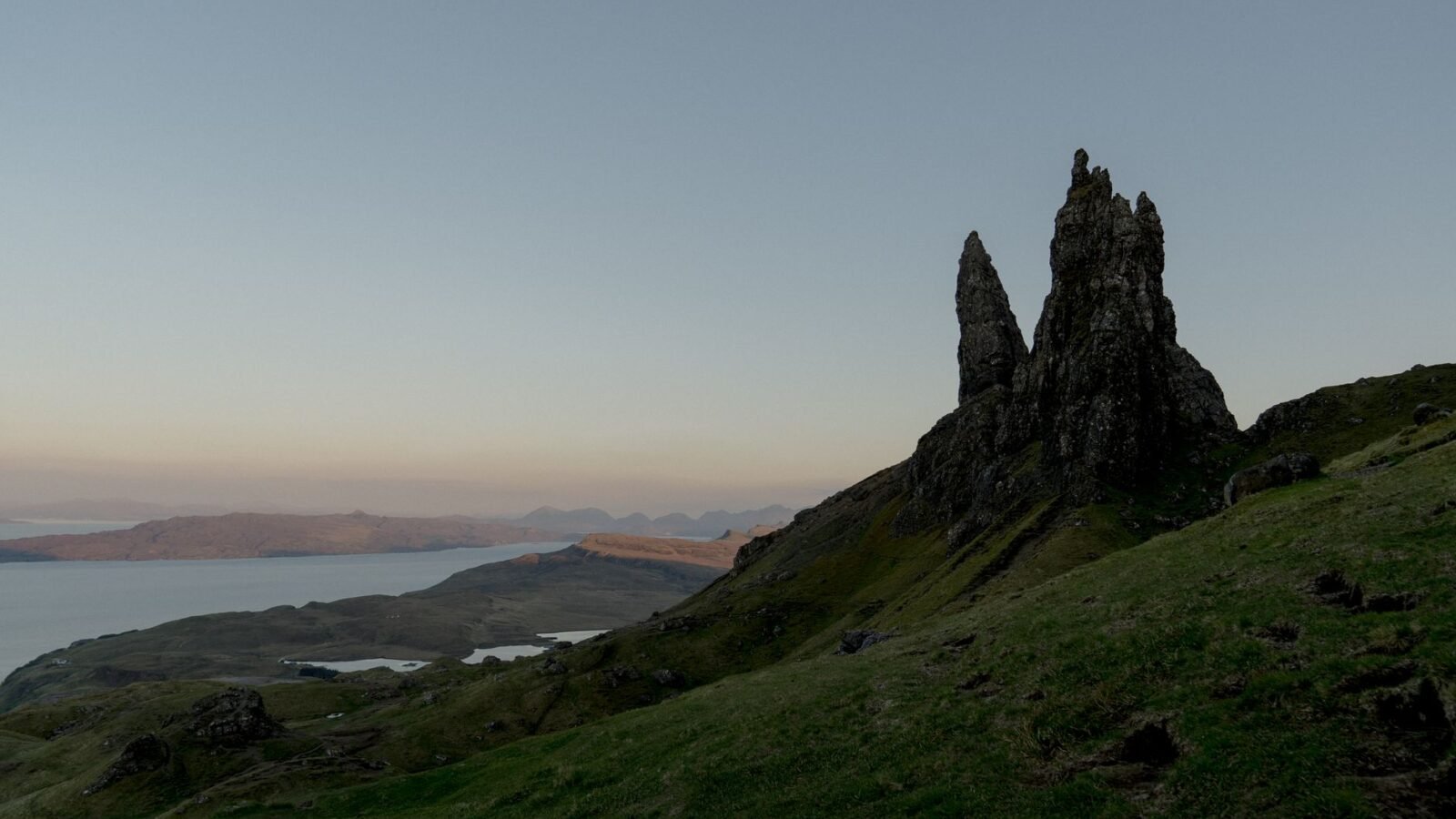
Choose this version only if the mountain and local forecasts fit an uphill, exposed walk and your group is equipped for wet, uneven ground. Use the Highland Council Storr record to identify the managed parking, then read every on-site path notice.
The destination is not one universal viewpoint. Decide in advance whether you are taking the maintained visitor route to a chosen point or attempting a longer hill objective. Turn around when the agreed time, visibility, footing or least-comfortable walker says so. A cleared lower path does not prove that higher ground is suitable.
After returning to the car and changing out of wet layers, reassess. If time and attention remain, select one signed coastal viewpoint such as Kilt Rock. Then return toward the booked base. Do not automatically add the Quiraing full walk, Fairy Glen and northern ruins.
Product B: lower-commitment Trotternish viewpoints
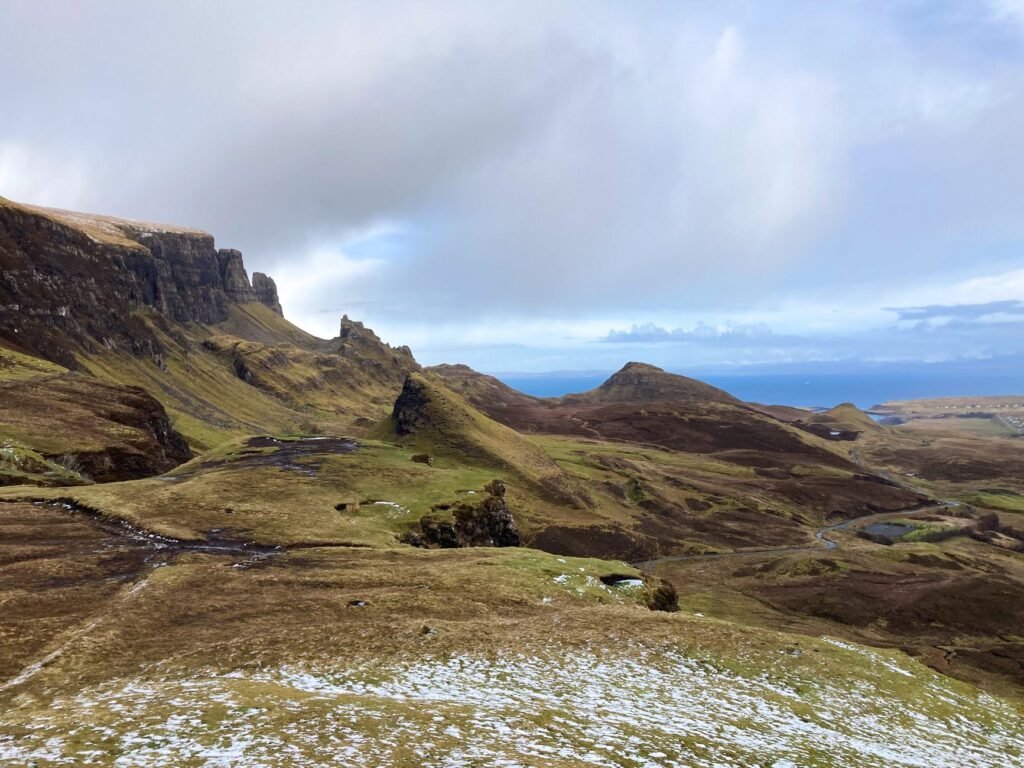
Use this version when the ridge walk does not fit but road travel remains appropriate. Select two or three legal, managed stops rather than completing every pin on the peninsula. A possible structure is a Storr lower viewpoint, Kilt Rock and the Quiraing car-park viewpoint, subject to visibility and parking.
The Highland Council Quiraing record identifies the managed facility and its restrictions. Reaching that car park is not approval for the full Quiraing circuit. Treat the view and the hill route as separate products. If cloud, wind, saturated ground or group capability do not fit the walk, remain at the permitted viewpoint or leave.
Fairy Glen is not a required finale. Add it only if the legal parking, remaining daylight and return route are confirmed. Follow the Scottish Outdoor Access Code: use established paths where appropriate, protect vulnerable ground, avoid moving stones and take litter away.
Day 2: Fairy Pools/Cuillin or Neist Point/Dunvegan
Choose between the two geographic products after the morning gate. Do not drive to one, discover it does not fit, and then race across the island to complete the other.
Product A: Fairy Pools and a Cuillin-view day
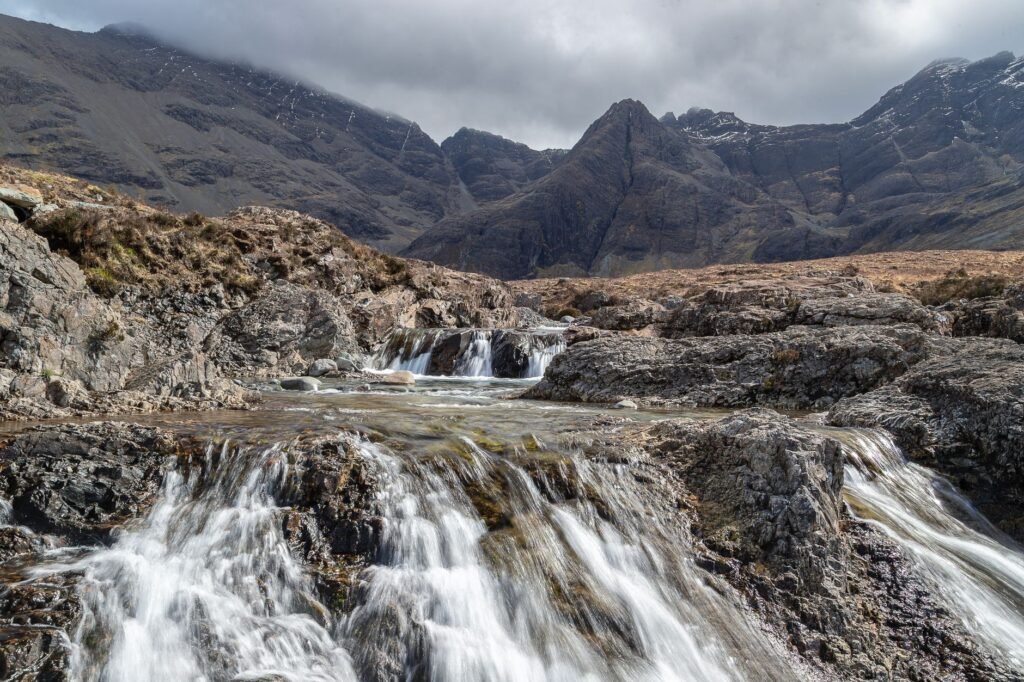
Choose the Fairy Pools only when the approach road, parking, stream conditions and weather fit. The pools are an outdoor walking destination, not a guaranteed swimming product. Stay on the established route, follow local advice, and do not enter water because a marketing image describes it as clear or turquoise.
The surrounding Cuillin changes the consequences of poor weather. The Met Office mountain forecast includes this area, but a general forecast cannot select a route for your ability. This itinerary does not extend into the Cuillin hills. If you want a mountain objective, plan it separately with an appropriate route source, navigation and—where needed—a qualified guide.
After the walk, use Sligachan or another legal low-level viewpoint only if it lies naturally on the verified route. A distillery visit is not a spontaneous extra for the driver. It requires a dated booking with the exact operator, its age and accessibility rules, and a plan in which every driver consumes no alcohol.
Product B: Neist Point side with one booked anchor
Choose the west-side day when its local forecast is better and the longer single-track approach suits the driver. Neist Point is exposed coastal terrain. Check signs and conditions, keep away from cliff edges, and select a viewpoint or walk that fits the party. Sunset is not promised; visibility and the safe return take priority.
Pair this area with at most one confirmed anchor, such as a dated Dunvegan Castle ticket when the venue is operating. Verify opening, last admission, parking and access directly before building the route. If you do not have a booking, a shorter coastal day and early return is a complete product.
Do not add Fairy Pools after this plan. The cross-island transfer consumes the margin intended for single-track driving, weather and the final return.
Walking and access rules
Scotland’s access rights depend on responsible behaviour. The Scottish Outdoor Access Code asks visitors to respect other people, wildlife and land management, follow reasonable local advice, use paths where suitable and park without obstruction.
For every walk:
- Select a route, not merely a landmark name.
- Save the route and emergency information offline; mobile coverage is not a planning method.
- Carry waterproof and insulating layers, suitable footwear, food, water and a charged phone.
- Keep the group together and turn around for the least-capable member.
- Follow temporary signs or diversions and avoid widening muddy paths.
- Keep dogs under effective control, especially around livestock and wildlife.
For an emergency, call 999 or 112 and ask for Police, then Mountain Rescue when appropriate. A phone signal and rescue response are never guaranteed, so prevention and margin remain the main controls.
Budget in GBP: compare complete two-day baskets
Replace generic USD-per-day tiers with live pounds sterling (GBP) totals for the exact dates. Two travellers sharing a room and car have a different per-person cost from a solo traveller, and a ferry arrival differs from the bridge route.
Create these dated baskets:
- Arrival and departure: fuel, rental terms, parking, or the exact CalMac passenger-and-vehicle product.
- Accommodation: the same two-night stay where possible, including taxes, breakfast, cancellation and late check-in.
- Food: confirmed breakfast/evening options plus packed-lunch supplies.
- Anchors: only exact tickets or guided products selected for the two days.
- Contingency: a realistic allowance for weather-led changes, without ignoring cancellation rules.
Compare refundable totals and inclusions, then record the result in the Travytour budget calculator. Do not describe landscapes as universally free: managed parking, transport and booked access can still cost money.
Booking order
- Confirm how you enter and leave Skye; book the exact ferry if using one.
- Choose a two-night base from its address and cancellation terms.
- Build Day 1 and Day 2 as mutually exclusive products with lower-exposure fallbacks.
- Add no more than one timed attraction or guided product per day.
- Test every route against live roads, parking and the required final return.
- Recheck the forecast, service status and venue information shortly before travel and each morning.
The Travytour Scotland hub provides wider destination context, and our editorial policy explains how changing travel information is sourced and reviewed.
Common mistakes to avoid
- Treating the complete Trotternish loop as a relaxed half-day.
- Attempting both the Storr and full Quiraing walks as automatic Day 1 items.
- Crossing the island between Fairy Pools and Neist Point to save a disappointing day.
- Parking in a passing place, gateway or damaged verge when a facility is full.
- Using yesterday’s forecast or a generic island weather icon for exposed terrain.
- Assuming a CalMac timetable guarantees operation without a booking and status check.
- Adding a whisky tasting when someone still needs to drive.
- Using a landmark name as if it defined route, difficulty and turn-around time.
The two-day decision rule
Day 1 belongs to one Trotternish walking anchor or a lower-commitment sightseeing plan. Day 2 belongs to the Fairy Pools/Cuillin side or the Neist Point/Dunvegan side. The weather chooses between versions; the booked base and departure protect the finish.
If you complete fewer stops but park legally, avoid rushed single-track driving and turn around before conditions deteriorate, the itinerary worked exactly as designed.