Best Time to See the Great Migration in Kenya

Ask ten safari guides when the Great Migration happens and you’ll get ten slightly different answers — because it isn’t a single event with a start and end date. It’s a year-round, roughly circular movement of over a million wildebeest and hundreds of thousands of zebra and gazelle across the Serengeti-Mara ecosystem, driven by rainfall and grass growth rather than a schedule. What most travelers mean by “the migration,” though, is one dramatic chapter of that journey: the river crossings, when the herds funnel through the Masai Mara in Kenya and cross the crocodile-filled Mara River. Timing a trip around that chapter takes some understanding of how the herds actually move, what changes month to month, and how much rainfall patterns can shift the calendar in any given year. Here’s a grounded, honestly-caveated breakdown to help you plan.
Why the Timing Question Matters More Than Usual
Most wildlife-watching destinations reward patience — spend enough days in the bush and you’ll see what you came for. The Great Migration is different because it’s genuinely seasonal and genuinely mobile. Arrive in the Masai Mara in March, and you’ll have excellent general game viewing but no wildebeest herds at all — they’re in the southern Serengeti in Tanzania, calving on the short-grass plains. Arrive in late August, and you could witness a chaotic, thundering river crossing. The difference between those two trips is enormous, so getting the timing right matters far more here than for a general Kenya safari.
The honest trade-off: the best crossing months are also the busiest and priciest months in the Mara. Camps fill up, permit and park fees are at peak-season rates, and you’ll be sharing riverbank vantage points with other vehicles. Travelers who prioritize solitude over crossing drama sometimes deliberately choose the shoulder months instead — a trade worth thinking through before you book.
Month-by-Month: Where the Herds Are
**January–March:** The herds are in Tanzania’s southern Serengeti and Ndutu area, not Kenya, for calving season. This is a poor window for a Kenya-focused migration trip, though it’s a strong period for general Masai Mara game viewing and predator sightings, since resident lion and cheetah populations are still active with fewer migratory herds to chase.
**April–May:** Long rains across East Africa. The Serengeti-Mara ecosystem is lush but many camps in the Mara reduce rates or close briefly, and roads can be difficult. The herds are typically still in Tanzania, moving north through the central and western Serengeti.
**June–early July:** The herds begin pushing north from Tanzania toward the Kenyan border, often crossing the Grumeti River in Tanzania first. This is a genuine build-up period — not yet the Mara, but excellent value for travelers who want fewer crowds and are willing to base in the northern Serengeti instead.
**Mid-to-late July:** The vanguard of the migration typically starts arriving in the Masai Mara. Based on current expert forecasts, the “mega-herds” are expected to be established in the Mara by around the third week of July, though this varies year to year with rainfall.
**August–September:** This is the headline window. August is consistently the most reliable month for Mara River crossings, with early September offering a strong secondary window that often has comparatively fewer vehicles at the riverbanks. for the current season specifically, current expert forecasting points to a peak crossing window of roughly August 12 through September 25, with the highest-probability stretch falling between about August 22 and September 7.
**October–early November:** The herds begin their return journey south. Crossings can still happen during this period, and in years with delayed rainfall, early October can be an excellent extension of the season with noticeably lighter crowds than peak August. By mid-to-late November, most of the migration has moved back into Tanzania.
**December:** The herds are generally back in Tanzania’s Serengeti, heading toward the southern plains again as the cycle restarts.
The Honest Caveat: Nature Doesn’t Read Forecasts
Every migration timing guide, including this one, is describing tendencies built from historical patterns — not guarantees. Rainfall timing shifts the herds’ movements from year to year, sometimes significantly. A river crossing witnessed on a specific date one year might happen two weeks earlier or later the next. Specialist migration operators and camps that track the herds daily are your best real-time source once you’re within a few months of travel, and it’s worth asking any operator you’re considering how they track herd movement and adjust itineraries if the timing shifts.
How to Get There
Most Kenya migration trips begin in Nairobi, which is well connected by direct flights from major hubs in Europe and North America, and has strong regional connections from other East African gateways. From Nairobi, travelers typically reach the Masai Mara one of two ways: a scheduled small-aircraft flight (roughly 45 minutes to an hour, landing at one of several airstrips near the reserve and conservancies), or an overland drive of around five to six hours, most of which is on paved road with the final stretch on graded dirt. Flying is the more common choice for travelers with limited time, since it preserves an extra day or two in the Mara itself; driving is more affordable and lets you stop at the Great Rift Valley viewpoints en route, but it eats into your safari days.
Within the Mara, you’ll typically base at a camp or lodge either inside the national reserve or in one of the surrounding private conservancies (such as Mara North, Naboisho, or Olare Motorogi). Conservancies generally offer a quieter, less-crowded experience with additional activities like night drives and walking safaris, which aren’t permitted inside the reserve itself — a meaningful trade-off worth weighing against the reserve’s slightly lower nightly rates.
Realistic Budget Estimate (planning estimates)
Safari pricing in Kenya varies enormously by season, camp style, and whether you’re staying in the reserve or a private conservancy. As a general, dated guide:
- **Budget tier:** Roughly $250–$450 per person, per night, for a shared or smaller tented camp during peak season, often including meals and some game drives. Outside peak months, comparable camps can run noticeably lower.
- **Mid-range tier:** Roughly $450–$800 per person, per night, for a well-appointed tented camp or lodge with private guiding and full board during the July–October window.
- **Upscale tier:** $800–$1,500+ per person, per night, for premium conservancy camps with exclusive-use vehicles, top guiding, and elevated service, especially during the August–September peak.
These figures are general market estimates for planning purposes only, not quotes, and should be confirmed with a current operator closer to your travel dates. On top of accommodation, budget separately for Kenya park and conservancy fees (which vary by reserve and are typically charged per person, per day), domestic flights if you fly rather than drive, and international airfare into Nairobi.
Top Experiences and Practical Tips
**Positioning for a crossing.** River crossings aren’t scheduled — herds can gather at the riverbank for hours before committing, or turn back entirely. Good guides read herd behavior (agitation, repeated approaches to the water) to anticipate a crossing, but patience is part of the experience. Build in at least three to four full days in the Mara if a crossing is a priority, not just one or two.
**Balloon safaris.** A dawn hot-air balloon flight over the plains, often followed by a champagne breakfast, is a popular add-on during migration season and offers a genuinely different perspective on the herds’ scale. Book this in advance during peak months, as availability is limited.
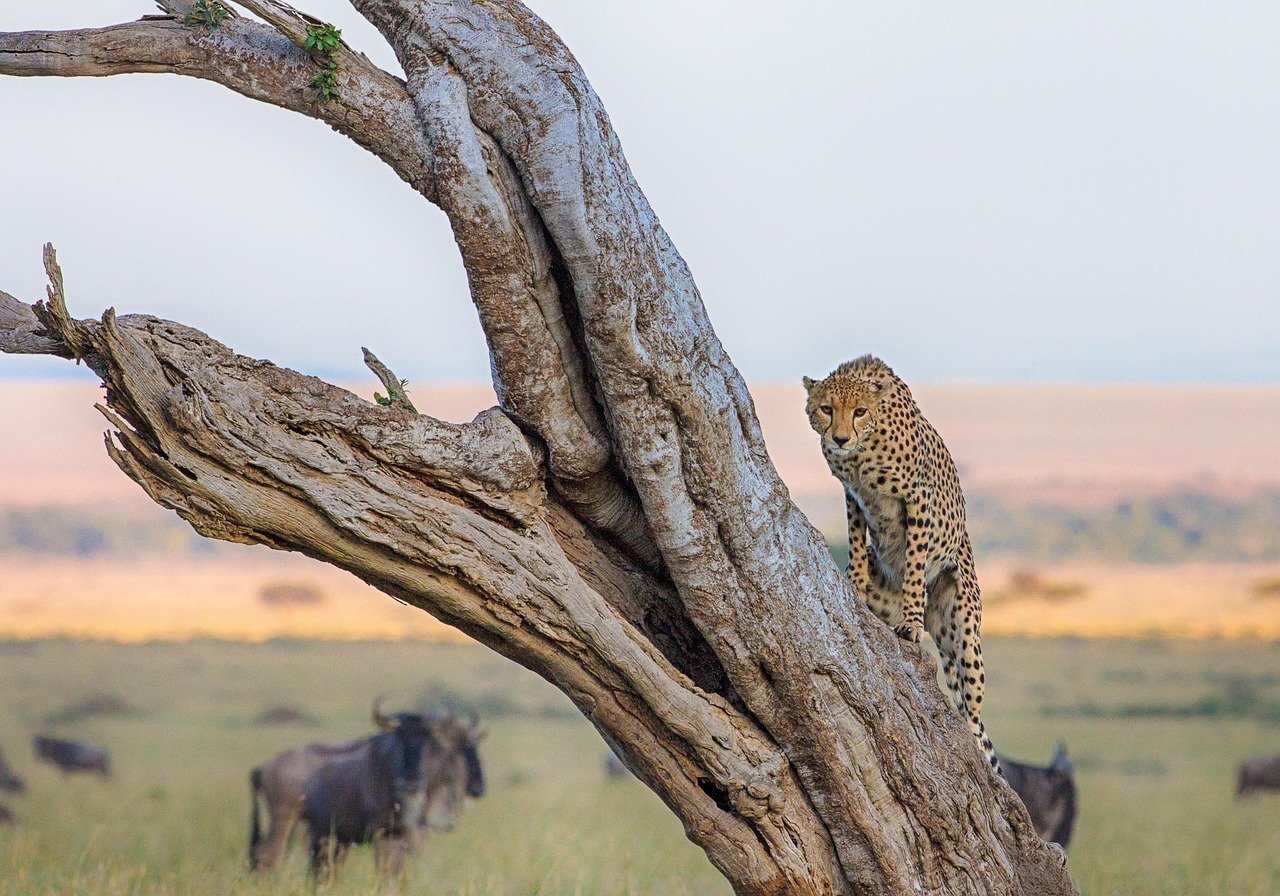
**Beyond the crossings.** Even outside crossing moments, the sheer density of wildebeest and zebra across the plains during migration season creates excellent predator activity, since lion, cheetah, and hyena follow the herds closely. Don’t treat the crossing as the only worthwhile sighting — some of the best game drives happen well away from the riverbank.
**Conservancy vs. reserve during peak season.** If crowding at crossing points is a concern, ask your operator directly how many vehicles typically gather at popular crossing sites during your travel window, and whether a conservancy base with reserve access might offer a better balance.
Where to Stay
For travelers prioritizing crossing access, camps along or near the Mara River within the reserve, or in conservancies bordering it, offer the shortest transit time to crossing points. For travelers who want a quieter overall experience with added activities, the private conservancies to the north and east of the reserve are worth the trade-off, even with a slightly longer drive to the river on crossing days. Families and first-time safari travelers often do well in mid-range tented camps with strong guiding reputations, since the quality of your guide affects your sightings as much as your camp’s location.
Common Mistakes to Avoid
Booking only two or three nights during peak season and expecting to see a crossing on demand is the most common miscalculation — crossings are unpredictable, and a short stay increases the odds of missing one entirely. Another frequent mistake is booking migration-season travel without confirming cancellation and rebooking flexibility, given how much timing can shift. Finally, some travelers underestimate how cold early-morning game drives can be even in a warm-climate country — pack layers.
FAQ
**Is the Great Migration only in Kenya?** No. The migration circulates through both the Serengeti in Tanzania and the Masai Mara in Kenya. Kenya offers the dramatic river crossings for part of the year; Tanzania offers calving season and other phases of the cycle.
**What’s the single best month to see a river crossing in Kenya?** August is generally the most consistent month, with early September as a strong secondary option, though exact timing shifts yearly with rainfall.
**Do I need to stay a full week to see a crossing?** Not necessarily, but three to four nights significantly improves your odds over one or two, since crossings can’t be scheduled.
**Is the Masai Mara crowded during peak migration season?** Yes, particularly at well-known crossing points during August. Private conservancies offer a less crowded alternative with a small trade-off in river access time.
**Can I combine Kenya and Tanzania to follow the migration more fully?** Yes, some itineraries combine both countries, though this adds cost, flights, and logistical complexity. It’s worth discussing with a specialist if you want to see multiple phases of the migration cycle.
**Is the migration worth seeing outside peak crossing months?** Yes — the Masai Mara has strong resident wildlife and excellent game viewing year-round, even when the migratory herds are elsewhere.
Next Step
If you’re weighing dates, the most useful thing you can do next isn’t to lock in a booking — it’s to talk to a Kenya specialist about how the current season’s rainfall is tracking, since that single factor shapes everything else about your trip’s timing.
Related Travytour guides
- [Fes or Marrakech: Which Should You Visit First in Morocco?](/fes-or-marrakech-first-visit/)
- [Is It Safe to Travel to Egypt? An Honest Safety Guide](/is-egypt-safe-to-visit/)
- [Is Cape Town Safe for Tourists? An Honest Safety Guide](/is-cape-town-safe-for-tourists/)