
Namibia might be the most approachable self-drive safari destination in Africa for first-timers, and that’s a genuine compliment: low population density, good roads by regional standards, dramatic landscapes that change every few hours of driving, and a well-established tourism infrastructure that doesn’t require fluency in a foreign language to navigate. It’s also a country where distances are deceptively large and a rushed itinerary undercuts the whole point of the trip. This guide lays out a realistic 12-day first-timer route, with honest notes on where people commonly overreach.
Why Self-Drive Namibia Specifically
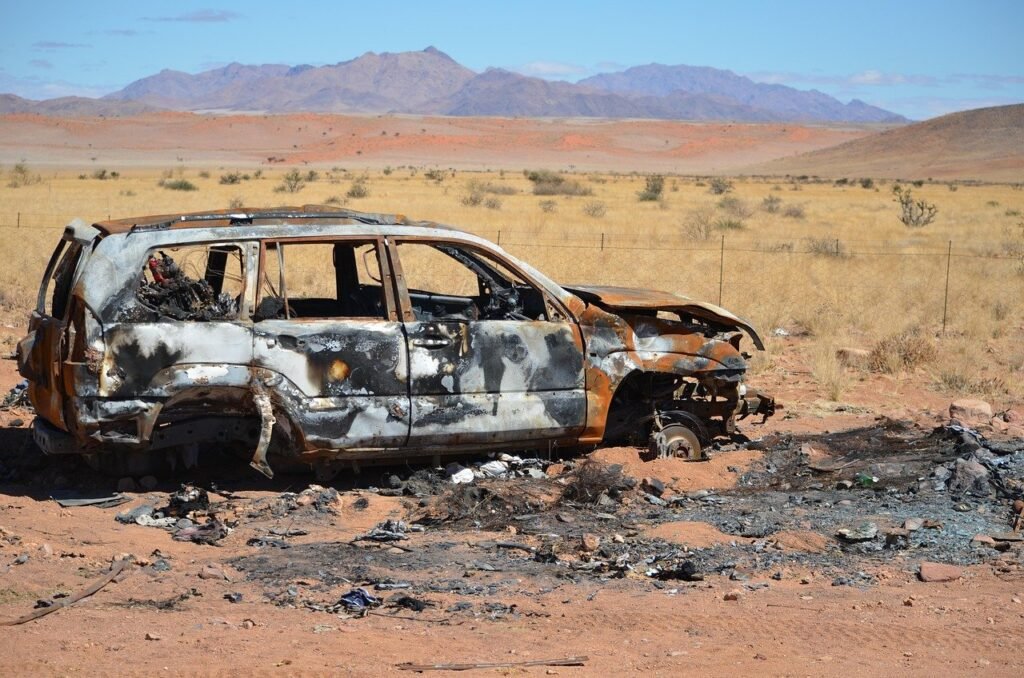
Unlike many African safari countries, where self-driving is complicated by park regulations, road quality, or safety concerns, Namibia is set up for it. Roads connecting the major sights are generally well maintained, signage is reasonable, English is widely spoken, and the country’s low crime rate relative to much of the region makes independent travel genuinely comfortable rather than something you have to white-knuckle through. The trade-off is that Namibia is enormous and sparsely populated — you’ll spend real hours behind the wheel most days, often on gravel roads, and fuel and rest-stop planning matters more here than in a country with denser infrastructure. This isn’t a trip for travelers who want to minimize driving; it’s a trip that rewards travelers who enjoy the drive itself as part of the experience.
Best Time to Go

Namibia’s dry season, roughly April/May through October, is the most popular and generally most reliable window for self-driving and wildlife viewing, since wildlife concentrates around waterholes as vegetation thins. July and August are peak season with the most comfortable daytime temperatures but also the coldest nights, particularly in the desert, so pack layers. The shoulder months of April–May and September–October offer a good balance of manageable heat and strong wildlife visibility. The wet season (roughly November through March) brings green landscapes and dramatic skies but also the risk of flooding on some routes and reduced wildlife visibility as animals disperse with more water available; some remote roads can become impassable during heavy rain periods. During peak dry-season months, especially July and August, book vehicles and campsites well in advance, as availability tightens considerably.
Vehicle, License, and Road Basics
Most travelers staying under 90 days can drive in Namibia using their home country’s driver’s license, provided it’s in English — rental companies generally accept this without requiring an International Driving Permit. If your home license isn’t in English, arrange an International Driving Permit before you travel. Rental drivers typically need to be at least 23, with at least one year of driving experience; some companies set the minimum age at 25 or add a young-driver surcharge for those between 21 and 25.
Namibia drives on the left. Main highways are generally in good condition, but a significant portion of the country’s road network, including some routes to major attractions, is unpaved gravel. Most rental companies recommend not exceeding roughly 80 km/h (50 mph) on gravel, since loose surfaces significantly increase stopping distances and rollover risk at higher speeds. Punctures and chipped windscreens from gravel are common enough that most self-drive itineraries budget in at least one flat tire; make sure your rental includes a full-size spare (ideally two) and confirm you know how to use it before you leave the rental depot. Driving with headlights on during the day is a widely recommended practice, since dust can reduce visibility. Avoid driving after dark outside of towns — wildlife on rural roads, including kudu, warthogs, and occasionally larger animals, is a genuine hazard at night.
The Route: A Realistic 12-Day First-Timer Loop
This route follows the classic first-timer loop: Windhoek to Sossusvlei, on to the coast at Swakopmund, north through Damaraland toward Etosha, and back to Windhoek. Total driving distance runs roughly 2,500–3,000 km depending on detours, so pace matters more than mileage-per-day ambition.
**Days 1–2: Windhoek and travel to the Namib Desert (Sossusvlei area).** Pick up your rental in Windhoek, spend a relaxed first day acclimatizing (and recovering from a long-haul flight), then drive south toward the Sossusvlei area — roughly a 4–5 hour drive, much of it on gravel in the final stretch. Base near the Sesriem gate for easy early access to the dunes.
**Day 3: Sossusvlei and Deadvlei.** An early start is essential here — arrive at the dunes at or before sunrise, both for the light and to beat the heat, since temperatures climb fast once the sun is up. Climbing Big Daddy or Dune 45 and walking out to Deadvlei’s white clay pan and ancient dead trees is the highlight of this stretch of the trip.
**Day 4: Travel to Swakopmund.** A drive of roughly 4–5 hours brings you to the Atlantic coast, and the temperature and landscape shift dramatically — desert to cool, foggy coastline in a single day.
**Days 5–6: Swakopmund and the coast.** Use this stretch as a deliberate pace-break from desert driving. Swakopmund itself is a walkable, low-key coastal town with good food and a distinctly different colonial-era architectural character than the rest of the country. A day trip to Walvis Bay for the lagoon and its flamingo population, or a scenic dune/skeleton coast excursion, is a worthwhile add-on.
**Day 7: Travel through Damaraland.** Roughly a 4–5 hour drive north into Damaraland, a starkly beautiful, sparsely populated region known for desert-adapted elephant populations and ancient rock engravings at sites like Twyfelfontein.
**Day 8: Damaraland exploration.** A full day here for a guided visit to Twyfelfontein’s rock art, and, depending on your route and timing, a chance at spotting desert-adapted elephants, which are genuinely rare and a highlight for travelers who see them.
**Day 9: Travel to Etosha National Park.** Roughly a 3–4 hour drive brings you to one of Etosha’s southern or western gates, depending on where you’re staying.
**Days 10–11: Etosha game drives.** Etosha’s waterhole-centered ecosystem makes for excellent self-drive game viewing — you can park at a waterhole and simply wait, which suits a self-drive pace far better than most parks. Early morning and late afternoon are the most productive windows; midday heat pushes animals toward waterholes too, so it’s rarely a dead period, but the light and comfort are better at the margins of the day.
**Day 12: Return to Windhoek.** A drive of roughly 4–5 hours back to Windhoek to return your rental and catch a flight home, or add extra nights if your schedule allows.
This pacing keeps most single-day drives under five hours and builds in rest days at both Swakopmund and Etosha — the two points in the trip where first-timers most commonly regret over-scheduling.
Realistic Budget Estimate (planning estimates)
Namibia self-drive costs break into three main categories: vehicle rental, accommodation, and park/activity fees. As general, dated planning estimates:
- **Budget tier:** Roughly $180–$280 per day covering a standard 2WD or basic 4WD rental, budget guesthouses or campsites, and simple meals — workable for travelers comfortable with campsite-style accommodation.
- **Mid-range tier:** Roughly $300–$550 per day for a proper 4WD rental, comfortable mid-range lodges with dinner included, and standard park fees — the most common tier for first-time self-drive travelers.
- **Upscale tier:** $600–$1,000+ per day for a premium 4WD, higher-end lodges (some with excellent private waterhole viewing at Etosha-adjacent properties), and additional guided activities layered onto the self-drive base. Fuel is a real line item given the distances involved — budget generously and fill up whenever you pass a station in more remote stretches, since gaps between fuel stops can be long.
Common Mistakes to Avoid
The single most common first-timer mistake is underestimating driving time and cramming too many stops into too few days — Namibia’s distances look manageable on a map but take longer than expected on gravel. A second common mistake is skipping travel insurance that covers vehicle excess/rental damage, given how routine minor gravel-related damage (windscreen chips, tire punctures) actually is. Driving at dusk or after dark outside towns, when wildlife-vehicle collisions are most likely, is another avoidable risk. Finally, some travelers don’t carry enough water and basic supplies for the distances between towns — carrying extra water in the vehicle is standard practice, not overcaution.
Where to Stay by Traveler Type
**Independent, budget-conscious travelers** often mix campsites with the occasional lodge splurge, particularly near Sossusvlei and Etosha where private waterhole views can be worth the extra cost for at least one or two nights.
**First-time comfort-seekers** tend to do well with mid-range lodges throughout, particularly ones offering guided sundowner drives or activities that supplement self-driving with expert local knowledge.
**Couples or travelers wanting a slower pace** might consider trimming the route to focus on two or three regions in more depth (say, Sossusvlei and Etosha only) rather than the full loop, especially on a first trip of ten days or less.
Packing and Practical Notes
Layers are essential year-round — desert temperature swings between day and night are significant even outside winter. A basic first-aid kit, extra water, and a paper map or offline GPS as backup (cell signal is unreliable in remote stretches) are all worth carrying. Dust gets everywhere; a duffel bag packs better than a hard suitcase for this kind of trip.
FAQ
**Is Namibia self-drive safe for first-timers?** Generally yes — Namibia is one of the more approachable self-drive destinations in Africa, with good infrastructure and low crime relative to the region, though driving distances and gravel roads require realistic pacing.
**Do I need a 4WD vehicle?** For the classic Sossusvlei–Swakopmund–Etosha loop, a well-equipped 4WD is strongly recommended, particularly for reaching Sossusvlei’s Deadvlei parking area (2WD often can’t complete the final stretch) and for comfort on extended gravel driving.
**How many days do I need for a first Namibia self-drive trip?** Ten to fourteen days is a realistic minimum for the classic loop without rushing; shorter trips should trim regions rather than compress driving days.
**Do I need an International Driving Permit?** Not if your home license is in English and you’re staying under 90 days — most rental companies accept a standard English-language license.
**Is it safe to drive at night in Namibia?** It’s strongly discouraged outside towns due to wildlife on the roads and poor visibility on unlit rural routes.
**Can I do this trip without camping?** Yes — the itinerary above works entirely with lodge and guesthouse accommodation if camping isn’t your preference; camping is an option, not a requirement.
Next Step
Before booking, sketch your own version of this route on a map with realistic driving-time buffers, and if the total feels tight, cut a region rather than cutting rest days — Namibia rewards travelers who give the drive itself room to breathe.
Related Travytour guides
- [Cape Town to Garden Route Road Trip Itinerary: A Complete 7-Day Guide](/garden-route-road-trip-itinerary/)
- [Gorilla Trekking in Rwanda: Realistic Cost and What to Expect](/gorilla-trekking-rwanda-cost/)
- [Tanzania Safari Cost: A Realistic Budget Breakdown](/tanzania-safari-cost-realistic-budget/)