The North Coast 500 is a signed scenic concept, not a road that must be completed at a fixed speed. Use seven nights, reserve the west-coast days for the slowest roads, and treat Bealach na Bà as optional. Large vehicles, caravans, towing vehicles and uncomfortable drivers should use the official alternative.
The recognised route starts and finishes around Inverness and covers just over 500 miles, but that headline distance excludes detours, stops and reversals on single-track roads. This itinerary avoids fixed drive-time promises and gives each night a role.
| Night | Base area | Main purpose |
|---|---|---|
| 1 | Inverness | Arrival, vehicle and supply check |
| 2 | Applecross or Shieldaig | Optional Bealach decision; no pressure to cross |
| 3 | Torridon or Gairloch | Short landscape and reserve day |
| 4 | Ullapool or Lochinver | Services and Assynt transition |
| 5 | Durness or northwest Sutherland | Remote north-west with booked bed |
| 6 | Thurso or north Caithness | North-coast transfer without forcing east coast |
| 7 | Dornoch or east coast | Protected final leg before Inverness |
Travellers planning a wider trip can use the Scotland destination guides. The route is reviewed under Travytour’s editorial policy: closures, fuel, accommodation, attractions and weather remain live checks.
Is seven nights enough?
Seven nights is a workable minimum for a first complete loop when the group is happy with selected short walks and one or two priorities per day. It is not enough for multiple long mountain days, island ferries, distillery tours, castles and every beach.
VisitScotland advises allowing five to seven days or more. For this guide, “seven days” means seven nights plus the arrival and departure margin. If only six nights are available, shorten the geography rather than accelerating the west coast. An Inverness–Ullapool–Assynt out-and-back or an east-and-north circuit can be a better holiday.
Nine or ten nights is the stronger choice for hikers, photographers, families, motorhomes or anyone who wants two weather buffers.
Clockwise or anticlockwise?
This plan runs clockwise, reaching the west first. The advantage is protecting slow landscape days before fatigue builds and ending on roads with more services. The cost is facing the Bealach decision early.
Anticlockwise is equally valid. Choose according to available accommodation and forecast rather than internet consensus. Do not book a direction that cannot change when a closure or severe warning appears.
The Bealach na Bà decision
The official NC500 FAQ says the Bealach na Bà stretch is unsuitable for large motorhomes, caravans and inexperienced drivers because of sharp bends and steep gradients, and advises an alternative via the A896. It also cautions large vehicles about the B869 between Lochinver and Kylesku.
Treat that as a vehicle-and-driver filter, not a challenge. Skip the pass when:
- the vehicle is large, towing or outside the rental company’s permission;
- the driver dislikes steep single-track roads or reversing;
- visibility, ice, snow, wind or surface condition is poor;
- darkness or fatigue would affect the crossing;
- the road is closed or local advice says not to proceed.
Use the alternative without framing it as a lesser trip. Applecross and Shieldaig can be arranged through different approaches, and the route remains scenic without the pass. Confirm the live road status and do not trust an old seasonal claim.
Single-track road etiquette
Passing places keep traffic moving; they are not parking bays or photo stops. When meeting traffic, use a passing place on your left or wait opposite one on your right. Be ready to reverse to the nearest suitable place when necessary.
Check mirrors frequently. Let faster traffic pass, and give working and emergency vehicles room. Cyclists, walkers, livestock and wildlife may appear around bends. Never pressure another driver to move faster than conditions allow.
Park only where the whole vehicle is off the carriageway and permitted. A spectacular view does not justify blocking a gate, passing place, residence or emergency access.
Before leaving Inverness
Complete the vehicle, route and supply checks before the first narrow-road day:
- confirm permitted roads and damage exclusions;
- photograph the vehicle and wheels;
- test lights, washers, demisting and spare or repair kit;
- download offline maps without treating them as closure data;
- save Traffic Scotland, Met Office and local-road contacts;
- record fuel or charging options along the booked route;
- confirm late arrival and evening food at each accommodation;
- carry water and food without stripping small communities’ limited stock.
A standard car may be suitable for the signed route in good conditions, but the rental contract, current road and driver comfort remain controlling. Four-wheel drive is not a substitute for judgement.
Night 1: Inverness arrival and readiness
Do not turn a late flight or train into the first route stage. Stay in Inverness, collect supplies and rest. If renting locally, use daylight for inspection and a short familiarisation drive.
Check the whole weather pattern, but make only the next day’s decision. Highland forecasts can change, and local roads may not appear on a trunk-road feed.
Day 2: Inverness to Applecross or Shieldaig
Leave with a confirmed bed and dinner plan. At the route decision, choose Bealach na Bà only if vehicle, driver, weather and daylight all pass. Otherwise follow the safer alternative identified by the official FAQ.
Do not attach a fixed duration to this day. Passing traffic, stops and road conditions shape it. If progress is slow, remove an attraction rather than arriving tired.
Applecross is a small community, not a theme-park finish line. Park lawfully, keep noise low and honour reservations. Shieldaig can be the better base when accommodation or the alternative route fits.
Day 3: Applecross or Shieldaig to Torridon or Gairloch
This should be a short geography day. Choose one landscape walk or viewpoint and leave recovery time after the first single-track section.
Beinn Eighe and Loch Maree Islands National Nature Reserve provides a useful, authoritative range of options. NatureScot distinguishes easier visitor-centre routes from a more difficult mountain trail with narrow paths and steps. Select from the current reserve information; do not call every trail an easy NC500 stop.
The reserve page also provides specific accessible facilities and parking information. Confirm seasonal visitor-centre and toilet operation before relying on them.
Day 4: Torridon or Gairloch to Ullapool or Lochinver
Use Ullapool as a services reset where helpful: fuel, food, charging and a proper rest. Continue toward Assynt only when the booked accommodation and remaining daylight support it.
Avoid creating a long list of beaches and viewpoints. Choose one meaningful stop and one fallback. Where paths cross fragile ground, remain on the established route and keep dogs under the control required by signs and livestock.
Large vehicles should review the official NC500 warning about the B869 and choose the suitable road. A navigation app’s shortest line is not vehicle guidance.
Day 5: Assynt to Durness or northwest Sutherland
This is one of the least suitable days for fixed timings. Remote scenery, single-track progress and limited services make a reserved base essential.
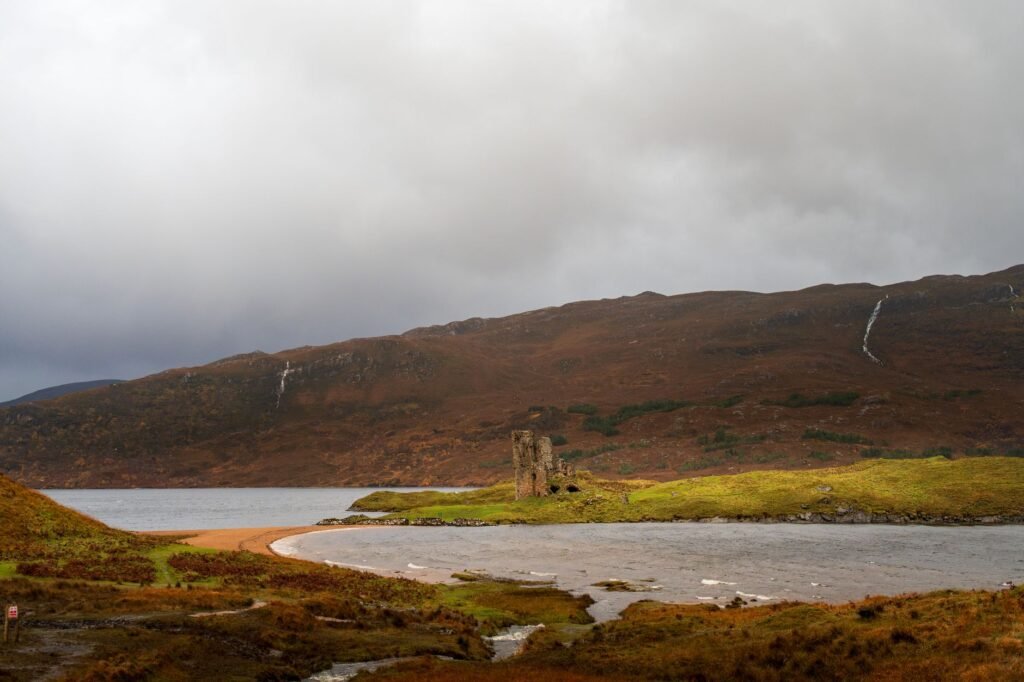
Ardvreck Castle can be viewed as a landscape stop only when parking and ground conditions permit; ruins and loch edges can be uneven. Do not climb unstable masonry or create roadside parking.
At Durness, verify the current status of any cave, beach or boat experience. Coastal conditions, rockfall, water and seasonal staffing can affect access. A viewpoint from safe ground is a complete visit.
Day 6: Durness to Thurso or north Caithness
Move from the north-west to a north-coast base without treating every headland as mandatory. This is a transfer day with one primary stop.
Dunnet Head and John o’ Groats serve different interests; neither needs to become a race for a geographic label. Check the relevant land manager and local weather before cliff walks. Remain behind barriers and keep well back in wind.
Book food and arrival in advance. Remote businesses may close on different days or seasons, and an old directory listing is not proof of service.
Day 7: Thurso or Caithness to Dornoch or the east coast
Do not force the entire return to Inverness plus a flight on this day. Use an east-coast night to protect the schedule.
Choose either a heritage visit or a coastal walk, not a chain of timed stops. If visiting a castle, distillery or wildlife activity, confirm the current session and accessibility through the operator. Never combine a whisky tasting with later driving; designate a driver or arrange transport.
Departure day: east coast to Inverness
Keep the last leg simple. Check Traffic Scotland for live trunk-road information, allow rental return margin and avoid a prepaid morning attraction when a missed train or flight would be costly.
If travelling onward to Edinburgh or Glasgow, treat that journey as an additional stage rather than part of the NC500’s seventh day.
Live road and weather checks
Traffic Scotland publishes live trunk-road information and camera feeds, including Highland routes such as the A9 and A835. Local Highland roads require additional local checks. The absence of a trunk-road alert is not evidence that Bealach na Bà or another local single-track section is clear.
Use this sequence each morning:
- read Met Office warnings and local forecast;
- inspect Traffic Scotland for relevant trunk roads;
- check local authority, operator or accommodation advice for local roads;
- ask whether the day’s accommodation can be reached without pressure;
- remove stops or stay put when the answer is uncertain.
Never drive through floodwater, around a closure or beyond the driver’s visibility.
Accommodation strategy
Rooms are limited in small communities. Book early, but favour changeable terms where weather could break the sequence.
For each night, record:
- check-in deadline and after-hours contact;
- evening food and breakfast availability;
- parking dimensions and charging if needed;
- step-free route, stairs and bathroom details;
- cancellation deadline;
- closest safe alternative if the route changes.
Two-night bases can improve the trip. With nine nights, add one around Torridon/Gairloch and one around Assynt or Durness rather than adding more geography.
Budget in pounds, built from live quotes
The old USD daily tiers and a single fuel price are not durable. Use GBP quotes for the exact dates and vehicle.
| Budget line | Capture | Contingency |
|---|---|---|
| Rental | rate, mileage, permitted roads, insurance and deposit | extra day or alternative vehicle |
| Accommodation | nightly total, meals and change deadline | one weather night |
| Fuel/charging | vehicle consumption and live station plan | remote-route reserve |
| Food | confirmed opening and packed lunch | closed-service fallback |
| Activities | exact slot and cancellation | weather cancellation |
| Parking/camping | official site and fee | no assumption of free overnight parking |
Enter the dated GBP amounts into the Travytour Budget Calculator. Keep an emergency accommodation and onward-transport reserve separate.
Motorhomes, campervans and caravans
The Scottish right of responsible access is non-motorised; it does not create a right to park or sleep in a vehicle anywhere. The official NC500 FAQ similarly states that wild camping does not apply to motorhomes or campervans.
Use designated campsites or authorised overnight schemes, obey signs and book a pitch suitable for the vehicle. Dispose of black and grey water only at proper facilities. Never empty waste into drains, water or ground.
Large vehicles should avoid Bealach na Bà and review the B869 warning. Passing-place congestion affects residents and emergency services, so do not enter a road merely because the vehicle physically fits.
Tent camping and the Outdoor Access Code
Scottish access rights can include responsible lightweight tent camping in small numbers, but the Outdoor Access Code’s responsibilities still apply. It is distinct from sleeping in a motor vehicle.
Use established campsites where pressure is high. When lawful informal tent camping is appropriate, stay away from buildings, roads, crops and livestock, keep the group small, leave no trace and move on. Follow local restrictions and fire guidance.
Do not publish or follow an exact “secret camp” pin that concentrates damage.
Fuel, charging, food and toilets
Never state one current fuel price for the entire Highlands. Record the vehicle’s range, then identify live stations before the remote day. Refill earlier than in an urban trip.
EV drivers should verify charger type, operator, payment method and live status, and keep an alternative. A map icon may represent one unavailable unit.
Toilets and cafes can be seasonal. Use facilities as a paying customer where appropriate, carry waste responsibly and never use roadside land as a toilet near homes, water or paths.
Midges and seasonal conditions
Midge activity varies with location, weather and time, so avoid fixed promises that a month will be clear. Carry repellent, consider a head net for still evenings and keep accommodation screens closed where provided.
Weather, daylight and business operation also change outside summer. Bealach na Bà can become unsuitable without following a neat winter calendar. Build the trip from the current forecast and available services, not a “May to September” guarantee.
Walking without turning the drive into a hiking expedition
Select routes through land-manager sources. At Beinn Eighe, NatureScot gives different trail characters and facilities; use that distinction. A mountain route needs weather, footwear, navigation and ability beyond a roadside stop.
Avoid combining a strenuous walk with a long single-track transfer. Tell someone the plan, carry appropriate equipment and turn around before the schedule or weather makes the decision.
Accessibility
The NC500 is not uniformly accessible or inaccessible. Verify the chain:
- parking surface and bay dimensions;
- gradients, gates and path width;
- toilets and seasonal opening;
- step-free bedroom and bathroom;
- emergency access and phone coverage;
- whether a viewpoint can be enjoyed without leaving the vehicle.
NatureScot publishes specific visitor-centre and trail information for Beinn Eighe. Use similar first-party detail for each chosen stop. Do not infer access from a photograph.
Responsible travel in small communities
- Use designated parking and never a passing place.
- Buy from local businesses without expecting public toilets or bins everywhere.
- Keep gates, homes, driveways and livestock access clear.
- Take litter and pet waste away.
- Use campsites and authorised motorhome facilities.
- Avoid drones near homes, wildlife and restricted sites.
- Do not enter crofts, fields or ruins outside responsible access.
- Let residents and working vehicles pass.
- Stay longer and make fewer stops rather than treating villages as photo props.
Common mistakes
- Calling seven calendar days a relaxed seven-night itinerary.
- Treating Bealach na Bà as mandatory.
- Sending a large vehicle onto the B869 or pass because a map selected it.
- Parking in passing places.
- Using trunk-road status as proof every local road is open.
- Booking every night non-refundable with no route alternative.
- Confusing tent access rights with motorhome overnight permission.
- Adding a long hike to a long driving day.
- Freezing fuel prices, business hours or seasonal opening.
- Returning to Inverness on the same morning as an inflexible departure.
FAQ
Do I need a 4×4?
Not as a blanket rule for the recognised route in suitable conditions. Confirm the actual vehicle and roads with the rental provider. Driver skill, vehicle size, weather and closures matter more than a label.
Is Bealach na Bà compulsory?
No. The official route guidance advises an alternative for large vehicles, caravans and inexperienced drivers. Use it whenever conditions or comfort require.
Can I complete the NC500 in five days?
VisitScotland lists five to seven days or more, but a five-day version requires far fewer stops. This guide recommends seven nights; shorten the route if less time is available.
Which direction is best?
Neither is universally best. Choose based on forecast, accommodation and driver confidence. This framework runs clockwise but works in reverse after redistributing nights.
Can a motorhome wild camp anywhere?
No. Access rights do not grant unrestricted motor-vehicle parking or overnight use. Use designated or explicitly authorised places and follow vehicle-specific rules.
When should I book?
Book limited accommodation and timed activities early for the exact travel dates, then prefer terms that permit safe changes. Confirm each service again shortly before arrival.
Final plan
Give the NC500 seven nights, not seven rushed driving days. Make Bealach na Bà optional, keep the first four stages short, sleep on the east coast before returning to Inverness and use current weather, road and local advice every morning. Respect passing places, vehicle restrictions, campsites and small communities. The route succeeds when the landscape and residents are treated as the destination—not when every pin is collected.