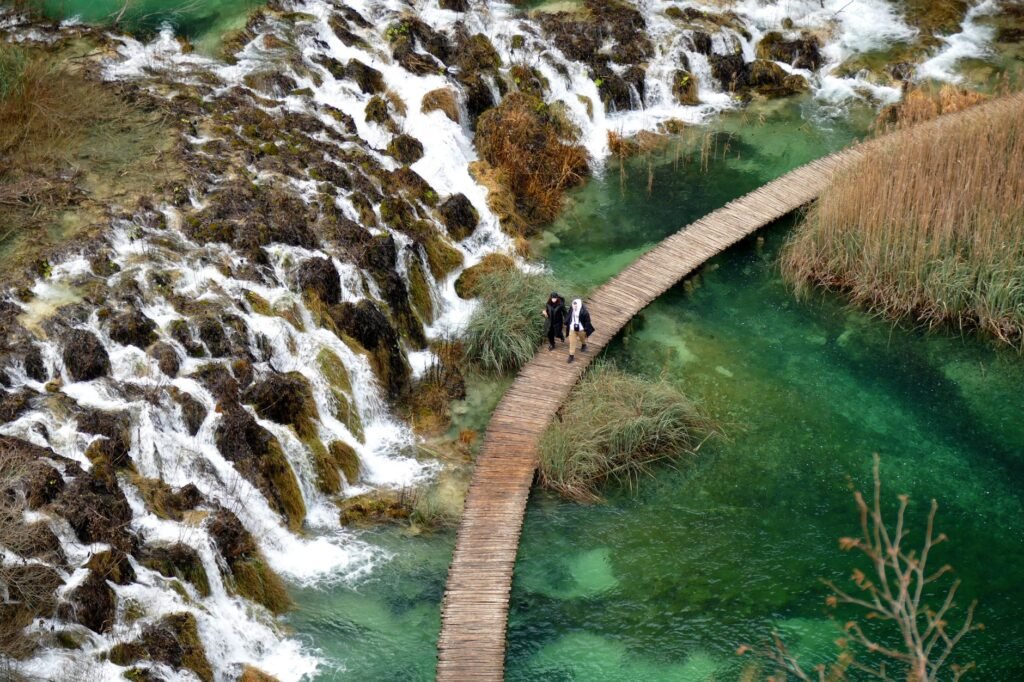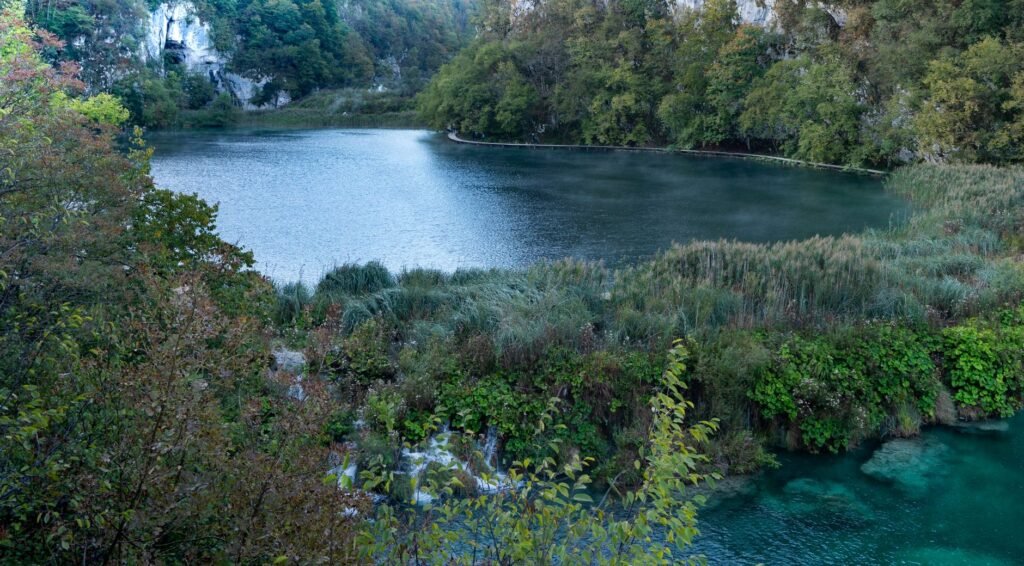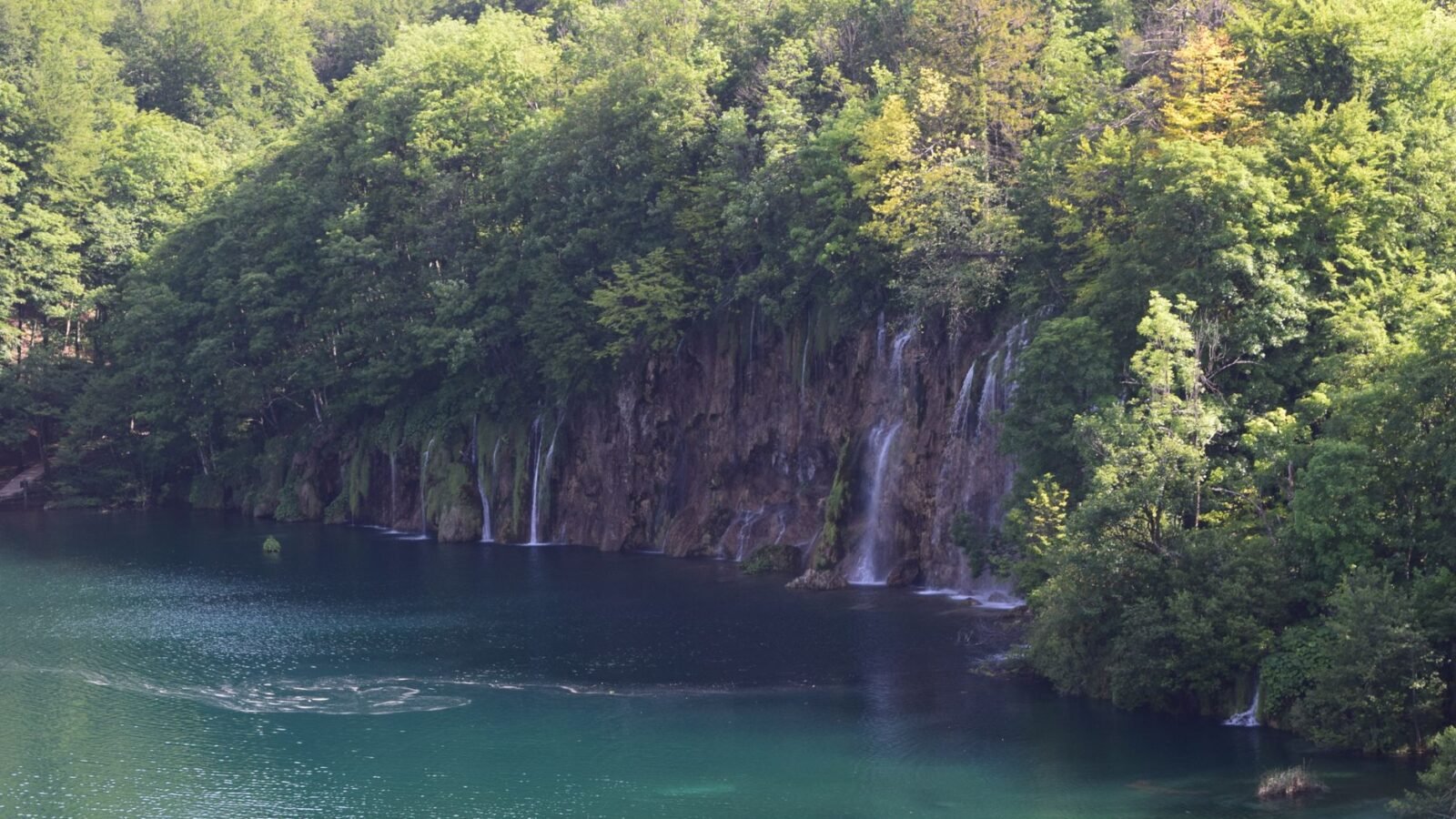
Editorial deck: No entrance, weekday or hour guarantees an uncrowded Plitvice visit; the reliable strategy is to choose an official programme first, buy its matching entrance and time slot, and carry a reduced-route fallback.
The title answers a popular search, but the honest answer is immediate: you cannot guarantee Plitvice Lakes without crowds. Visitor numbers change with ticket inventory, groups, weather, transport and which official programmes are operating. A first slot or a particular entrance may still be busy.
What you can control is whether your plan remains coherent. Pick one official lake-tour programme that matches the group’s walking capacity. Buy the ticket for that programme’s correct entrance and a usable time. Recheck park hours, route status, electric boats, panoramic vehicles, weather and road access. Keep a shorter programme as the fallback.
That process is more reliable than choosing a “quiet month,” arriving at an arbitrary hour or assuming Entrance 2 receives fewer visitors.
Why programme choice comes before ticket choice
Plitvice is not one boardwalk. The park publishes circular programmes with different starts, walking demands and transport segments. Programmes A, B and C begin at Entrance 1; programmes E, H and K2 begin at Entrance 2, while K1 begins at Entrance 1. Programme status can change—the official page may mark a route temporarily closed.
The entrance is therefore a route requirement, not a crowd hack. If you buy Entrance 2 but select an Entrance 1 programme, you have created an avoidable transfer problem before the walk begins.
Use the official programme descriptions to compare:
- start and finish entrance;
- published distance and planning duration;
- Lower Lakes, Upper Lakes or both;
- electric-boat and panoramic-vehicle segments;
- steep or demanding sections identified by the park;
- whether the full route still fits the group when services are delayed or unavailable.
Published duration is a planning reference, not a completion promise. Stops, queues, group pace, wet surfaces and operational changes can extend the day.
Select the programme by capability
Lower Lakes focus
If the priority is the Lower Lakes and Great Waterfall area, select an open Entrance 1 programme that fits the group. Programme A is the shorter official walking product and does not depend on a long boat crossing. Programme B adds specified transport segments. Confirm the current descriptions rather than copying an old route diagram.
This is the strongest fallback when a complete Upper-and-Lower-Lakes day becomes too long. It is not described as uncrowded.
Upper Lakes focus
If the Upper Lakes are the priority, use an open Entrance 2 programme such as E when the park lists it. Check the required boat and panoramic-vehicle operation before purchase and again on arrival. Do not assume that Upper Lakes always receive fewer visitors.
Both lake systems
Programmes C and H are official full-area structures from different entrances, while K programmes carry much greater walking demand. Choose one only when every participant can manage the published route with extra time and when the required transport segments operate.
Do not build an independent “Lower Lakes first, boat, Upper Lakes, shuttle home” sequence from several blogs. The selected programme already defines the logical order and return.
Buy the exact official ticket
The park’s price list and ticket guidance publish live euro prices, date categories, one- and two-day products and what transport is included within a selected sightseeing programme. Prices can change, so calculate from the booking date rather than preserving a table in your itinerary.
An online ticket must be validated at the official entrance chosen during purchase and within its stated time period. The park’s FAQ explains that visitors cannot enter before the selected time and sets the current tolerance for late arrival. Read that rule during checkout; do not rely on this article if the park changes it.
Use this purchase sequence:
- Choose an open official programme.
- Confirm its starting entrance.
- Check live inventory for the exact date and usable arrival window.
- Price the correct visitor category and ticket duration.
- Read cancellation, validation and identification terms.
- Save the ticket offline or print it as the park instructs.
Gate sales may be available when inventory remains, but that is not a ticket strategy. Buying ahead secures the selected product; it does not secure solitude.
One day or a genuine two-day ticket
Use a one-day ticket for one complete official programme. If mobility, photography or a slower pace requires two visits, buy a two-day ticket whose current terms cover consecutive days. Do not assume one daily ticket permits a split afternoon-and-morning visit or unlimited re-entry.
An overnight stay can reduce arrival uncertainty only when the accommodation address, transfer, breakfast and ticket terms work together. It does not guarantee a quieter park. Compare the full cost with a city-base day product before booking.
Some park-operated accommodation may advertise ticket extensions under specific terms. Verify eligibility directly with that property; do not transfer the benefit to an unrelated guesthouse.
Recheck operations on the visit date
The park is open through the year, but public hours and individual services vary. Its hours-of-operation page publishes current entrance, ticket-sales, parking, electric-boat and panoramic-vehicle schedules.
Check it shortly before travel and again that morning. A valid ticket does not guarantee every trail or transport segment. Weather, maintenance, water, ice or another operational reason can change the day.
Create two route cards:
- Plan A: the purchased programme with every required segment operating.
- Plan B: a shorter open programme from the same entrance, confirmed with park staff.
Do not improvise across barriers or closed paths to preserve Plan A. Ask at the information office when the official website and conditions leave uncertainty.
Weather and surface gate
Use Croatia’s official DHMZ warning page and the current local forecast. Rain, wind, heat, snow or ice can affect walking comfort, surfaces and which programme suits the group. A seasonal label such as “spring waterfalls” or “winter solitude” cannot replace the exact forecast and park status.
Pack for the chosen programme and conditions: footwear with suitable fit and grip, a weather layer, water, food permitted by park rules and any essential medication. Boardwalks and trails are not a controlled indoor surface. Slow down, keep to the marked path and avoid stopping where doing so blocks a narrow section.
If the weather exceeds the group’s capability, select the reduced programme or move the visit under the ticket’s actual terms. A dramatic water-flow forecast is not a reason to ignore warnings.
Arriving by car
The park provides paid visitor parking at both main entrances. Match navigation to the entrance printed on the ticket. Do not park on the DC1 state road or improvise on verges.
Before departure, check the Croatian Automobile Club traffic report for current road conditions, incidents and works along the exact route. Recalculate from the real origin and date; fixed Zagreb, Zadar or Split drive times do not survive traffic and road changes.
Protect a margin for parking and walking to validation, but do not arrive before the ticket simply to create a queue. If road disruption makes the purchased slot unrealistic, contact the park or follow the ticket terms rather than speeding.
Arriving by public transport or tour
The park’s how-to-get-here page identifies bus stops near the entrances and directs visitors to current schedules. Search the exact city, date, direction and stop with the actual operator. The return must work after the selected programme, including walking from the finish.
For an organised day tour, confirm the ticket entrance, park programme, guided versus independent time, pickup, return, physical requirements and cancellation. Do not assume all tours arrive at midday or use one entrance. A tour product may be convenient, but its schedule—not a generic crowd strategy—controls the visit.
If the last bus or tour departure leaves no delay margin, choose a shorter programme.
Park rules protect the living system
Plitvice’s lakes and waterfalls depend on a continuing tufa—or travertine—formation process. The park’s natural-heritage explanation describes the growing barriers that shape the connected lake system. This is why the marked route and protection rules are part of the visit, not inconvenience around a photograph.
The official rules of conduct prohibit leaving marked paths, swimming, fishing, cycling, camping, fire, plant or rock damage, wildlife disturbance and drone use. Dogs must remain leashed. Review the current full list before arrival.
Never step off a boardwalk to pass a group or stage a photograph. Wait for a safe space. Do not feed wildlife, touch tufa barriers or fly a drone because other visitors appear to do so.
Mobility and access planning
Do not interpret a map’s short distance or “Lower Lakes” label as wheelchair or limited-mobility suitability. Programmes can include gradients, steps, uneven paths, narrow boardwalks, transfers and boarding constraints. The park’s general web accessibility statement is not a physical-access guide.
Contact the park’s information office with the exact date, mobility aid, transfer needs and desired sights. Ask which open programme and transport segments are feasible, whether assistance is needed and what happens if a service changes.
Visitors using discounted or free categories should verify documentation and collection instructions on the current price list or FAQ. Never promise access from a ticket category alone.
A practical one-day structure
Before purchase
Choose A/B/E for a shorter focused product or C/H only when a broader day fits. Treat K as a high-walking-demand programme, not a shortcut to “everything.” Confirm entrance and services.
The day before
Check ticket, programme status, operating hours, DHMZ warnings, local forecast and HAK route. Save the ticket and park contacts offline. Pack without depending on food outlets.
On arrival
Use the printed entrance and ticket window. Read current boards and ask staff whether Plan A is operating as published. If not, move to the confirmed same-entrance fallback.
During the visit
Follow programme markers and keep the ticket. Allow faster visitors to pass only at a suitable wide place. Reassess group fatigue before every optional or transport-dependent continuation. Respect closure signs.
Before the return
Protect the car-park closing time, bus departure or tour meeting point. Finishing a shorter complete programme is better than leaving the route to chase a transfer.
Budget in EUR
Build the budget from exact euro products:
- official one- or two-day ticket for the visitor category;
- parking or exact bus/tour fare;
- accommodation only if its address and ticket terms support the plan;
- food and water;
- optional authorised guide;
- refundable-change contingency.
The ticket includes electric-boat and panoramic-vehicle transport within the selected programme and current operation; it is not a general free-shuttle pass. Check the live price list for inclusions.
Compare a self-drive, public-transport and organised-tour basket with the Travytour budget calculator. Use the Travytour Croatia hub for wider routing and our editorial policy for sourcing standards.
Common mistakes
- Expecting the first slot or a weekday to be empty.
- Choosing Entrance 2 because a blog calls it quieter.
- Buying before selecting the programme and start entrance.
- Treating boat and panoramic-vehicle schedules as guaranteed.
- Rebuilding a custom route from several official programmes.
- Using one-day admission as an assumed two-session ticket.
- Copying frozen prices, hours or city drive times.
- Depending on a long route with a tight bus return.
- Assuming a shorter programme is physically accessible.
- Leaving marked paths to pass, photograph or reach water.
The accurate meaning of “without the crowds”
It cannot mean an empty Plitvice. It means you arrive with the correct ticket, follow one coherent official programme, avoid self-created transfers and carry a reduced-route fallback when operations or the group change.
Choose the programme first. Let it choose the entrance. Let live inventory choose the time. Let current operations and weather choose how much of the programme remains sensible. That is the controllable path to a calmer visit—even when other visitors are present.