
Bangkok sprawls across roughly 600 square miles, and traffic on the ground can turn a short-looking distance into a 45-minute crawl. The single most useful piece of advice for a first visit isn’t which neighborhood has the best hotels — it’s understanding that where you sleep determines how much of your trip you spend in a taxi. This guide breaks down the city’s main visitor-friendly areas, what each one actually offers, and how to match a neighborhood to your travel style rather than just picking whichever hotel photo looks best.
Why the Neighborhood Choice Matters More in Bangkok Than Most Cities
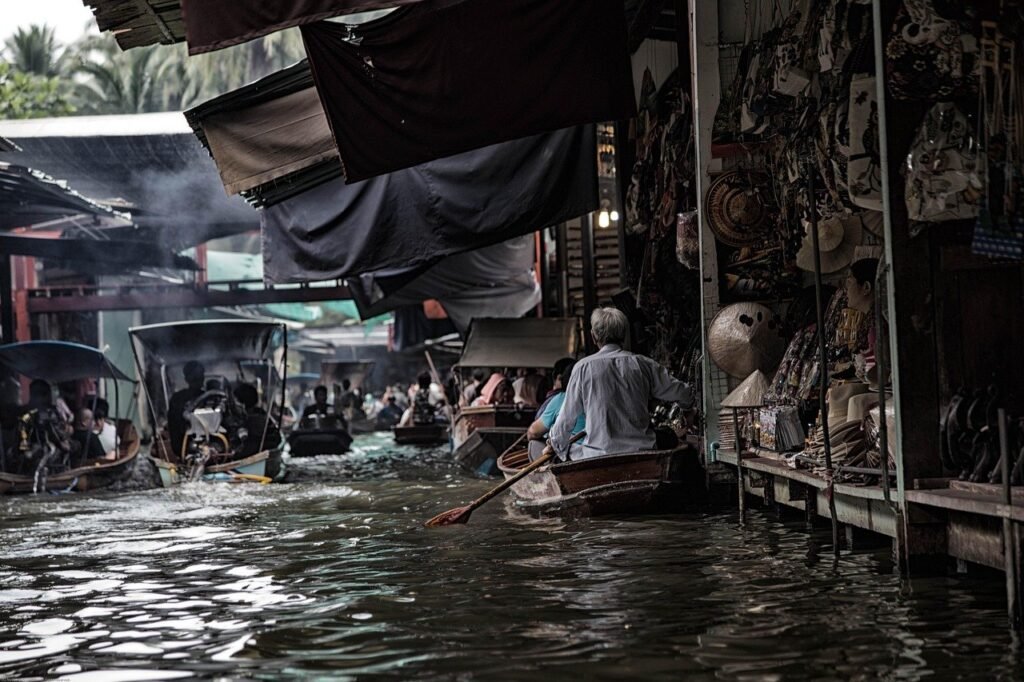
Bangkok’s public transit — the BTS Skytrain and MRT subway — covers a meaningful chunk of the city, but not all of it, and the areas it doesn’t reach well require taxis, ride-hailing apps, or the Chao Phraya river boats to access comfortably. A hotel that’s inexpensive but 15 minutes from the nearest train station can end up costing more time and money in transport than a pricier hotel directly above one.
The practical rule that comes up repeatedly among experienced Bangkok travelers: staying within a short walk of a BTS or MRT station matters more than almost any other factor in choosing where to stay, because it insulates you from Bangkok’s notoriously heavy traffic. Almost every neighborhood worth considering as a first-time visitor sits on or near one of these lines, so this isn’t a hard trade-off to make — it’s more a matter of picking the right station.
Best Time to Go
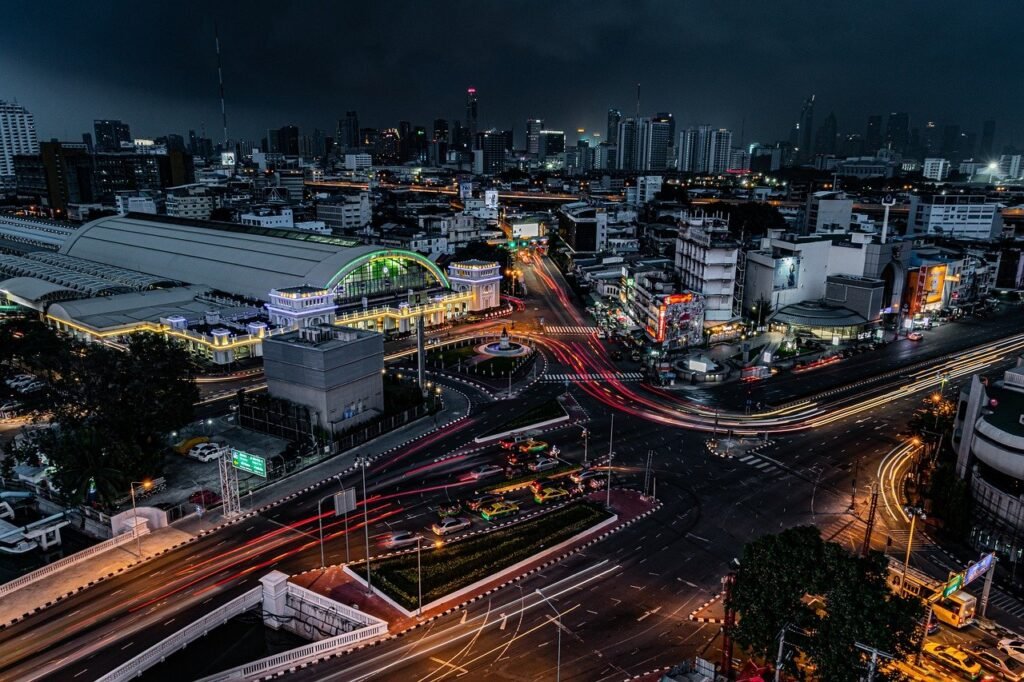
Bangkok is a year-round destination, but conditions vary meaningfully by season. The cool season, roughly November through February, brings the most comfortable temperatures and lower humidity, and is generally considered the best time to visit for first-timers doing a lot of walking and outdoor sightseeing. March through May is hot season, with temperatures regularly climbing into the mid-90s°F (mid-30s°C) and high humidity. The rainy season runs roughly June through October, bringing frequent but often short, intense afternoon downpours rather than all-day rain — manageable with some flexibility, and it comes with the benefit of thinner crowds and lower hotel rates.
How to Get There and Around
Most international visitors arrive at Suvarnabhumi Airport (BKK), with a smaller number using Don Mueang Airport (DMK), used mainly by budget and regional carriers. From Suvarnabhumi, the Airport Rail Link connects to Phaya Thai Station, where it links into the BTS Skytrain network — a fast and affordable way into the city that beats a taxi during peak traffic hours. Metered taxis, and ride-hailing apps such as Grab, are widely used and reasonably priced alternatives, particularly for late-night arrivals after train service ends (last trains run at approximately midnight).
Within the city, the BTS Skytrain and MRT subway form the backbone of getting around efficiently — clean, air-conditioned, with English signage, and largely immune to surface traffic. The Chao Phraya Express boat service is a scenic and practical option for reaching riverside areas like the Old City and Chinatown. Tuk-tuks are more a tourist novelty and short-hop option than a genuinely efficient way to get around at length.
Regarding entry requirements: rules depend on passport and can change. Confirm the permitted stay, any visa/eVisa requirement, and the current Thailand Digital Arrival Card process through official Thai immigration channels shortly before departure; do not rely on a fixed stay length in an evergreen neighborhood guide.
Realistic USD Budget Estimate
Figures below reflect Bangkok accommodation and daily cost patterns as research recorded in the July 2026 planning notes, presented as general planning ranges rather than fixed prices for any specific property.
**Budget tier (approx. $40–70/day total):** Guesthouse or 2-star hotel a short walk from a BTS/MRT station, mostly street food and casual local restaurants, public transit for getting around.
**Mid-range tier (approx. $90–180/day total):** 3- to 4-star hotel directly on or very near a train line, a mix of street food and sit-down restaurants, occasional taxi or Grab rides alongside public transit.
**Upscale tier (approx. $220–400+/day total):** 4- to 5-star hotel, often with river views or rooftop amenities, a mix of fine dining and casual meals, private transfers and taxis used more freely.
Bangkok’s Neighborhoods, Explained
**Sukhumvit.** For most first-time visitors, Sukhumvit — particularly the stretch between BTS Nana and BTS Ekkamai — is the easiest and most practical base. It’s central, has hotels across every price range, and sits directly on the BTS line with easy access to malls, restaurants, nightlife, and Suvarnabhumi Airport via the Airport Rail Link connection. The trade-off: parts of Sukhumvit, especially around Nana and Asoke, have a pronounced nightlife and red-light district presence that some travelers, particularly families, prefer to avoid or at least be aware of before booking.
**Silom / Sathon.** A centrally located business and residential district south of Sukhumvit, well connected by both BTS and MRT, putting it within reasonable reach of the Old City’s temples, Sukhumvit’s shopping and dining, and the green space of Lumphini Park. Silom has its own nightlife strip (Patpong) but is generally considered a calmer, more grown-up base than central Sukhumvit, appealing to travelers who want central connectivity without being in the middle of the busiest nightlife zone.
**Old City (Rattanakosin / Phra Nakhon).** Home to the Grand Palace, Wat Pho, and Wat Arun, this is Bangkok’s historic and cultural core, set along the Chao Phraya River. Staying here suits travelers prioritizing temple-hopping and river views over nightlife or shopping, and it has real charm and a slower pace than the newer commercial districts. The trade-off: this area has limited BTS/MRT coverage, so getting to Sukhumvit or the newer parts of the city typically means a river boat, taxi, or a longer walk, and the neighborhood itself quiets down earlier in the evening.
**Chinatown (Yaowarat).** Known for its dense street food scene, gold shops, and after-dark energy, Chinatown makes an interesting, atmospheric base for travelers prioritizing food and a more local, less polished feel. It connects to the MRT (Wat Mangkon station) but has less BTS access than Sukhumvit or Silom, and hotel options, while growing, are fewer than in the bigger commercial districts.
**Riverside (near Charoen Krung).** Home to several of Bangkok’s well-known luxury riverside hotels, this area along the Chao Phraya offers river views and a certain grandeur, but limited walkability to BTS/MRT stations, so most getting-around here relies on hotel shuttle boats, taxis, or the public river boat service. It suits travelers prioritizing a resort-style stay with river views over ease of independent exploring.
**Siam.** The city’s central shopping hub, anchored by major malls and sitting at the intersection of the BTS Silom and Sukhumvit lines, making it extremely well connected. It’s less residential and characterful than Sukhumvit or Silom, and skews toward shopping-focused travelers rather than those looking for neighborhood atmosphere.
Matching a Neighborhood to Your Trip
**First-time visitor wanting one easy, central base:** Sukhumvit (Asoke to Ekkamai stretch) or Silom, both well connected by train and close to a wide range of restaurants and attractions.
**Culture- and temple-focused itinerary:** Old City, accepting some trade-off in transit convenience for direct proximity to the Grand Palace, Wat Pho, and Wat Arun.
**Food-focused trip:** Chinatown for street food immersion, or Sukhumvit/Silom for a wider range of both street food and sit-down dining with easier transit.
**Families:** Silom/Sathon or the Sukhumvit stretch east of Asoke (around Thong Lo/Ekkamai), both generally quieter and further from the most concentrated nightlife.
**Shopping-focused trip:** Siam or Sukhumvit, both close to Bangkok’s major malls.
**Multi-stop itinerary combining Bangkok with other parts of Thailand:** Sukhumvit near the Airport Rail Link connection at Phaya Thai simplifies arrival and departure logistics.
Common Mistakes First-Time Visitors Make
Booking a hotel based on price or photos alone, without checking walking distance to a BTS/MRT station, is the single most common regret among first-time Bangkok visitors — a 20% cheaper hotel that adds 30 minutes of traffic to every outing isn’t actually a good deal. Underestimating Bangkok’s size and trying to base in one area while planning to see attractions across the whole city on foot is another common miscalculation; the city rewards using its transit system rather than fighting the distances on foot or by taxi during rush hour. Finally, some visitors avoid the Old City entirely because of its more limited transit access, missing out on genuinely essential sights — a half-day or full-day dedicated visit, rather than trying to base there for transit convenience, often solves this well.
Safety and Practical Notes
Bangkok is generally a safe city for tourists, with standard city precautions — watching belongings in crowded markets, using licensed metered taxis or ride-hailing apps rather than unmetered street taxis, and confirming fares before tuk-tuk rides. Tap water isn’t recommended for drinking; bottled or filtered water is the norm and widely available. Modest dress (shoulders and knees covered) is required for temple visits, including the Grand Palace and Wat Pho.
FAQ
**What’s the single best area for a first-time visitor with no strong preference?** Sukhumvit, roughly between BTS Nana and Ekkamai, or Silom, both offer strong transit connectivity and a wide range of hotels, restaurants, and things to do within easy reach.
**Is the Old City too inconvenient to stay in?** Not inconvenient, but less connected by train than other areas. It suits travelers prioritizing temples and river views who don’t mind relying more on taxis, tuk-tuks, or the river boat to reach other parts of the city.
**How many nights should a first-time visitor spend in Bangkok?** Three to four nights allows a reasonably paced visit to the major sights, a food-focused day, and some flexibility, though the city rewards longer stays for travelers with the time.
**Is Bangkok walkable?** Within a neighborhood, yes; between neighborhoods, generally no, given the distances and heat. Most experienced visitors combine some walking with the BTS/MRT and occasional taxis.
**Do I need to book accommodations near the Grand Palace to visit it?** No — the Grand Palace and nearby Old City temples are an easy half-day or full-day trip from Sukhumvit or Silom via taxi or river boat, without needing to stay in the Old City itself.
**Is nightlife unavoidable if I stay in Sukhumvit?** No. The most concentrated adult-entertainment nightlife is centered around specific sois (side streets) near Nana and Asoke; staying further east toward Thong Lo or Ekkamai, still on the same BTS line, offers a noticeably different, quieter atmosphere.
Next Step
Before booking, it’s worth pulling up a BTS/MRT map alongside a shortlist of hotels to confirm actual walking distance to the nearest station, since map distance and real walking time (especially in Bangkok’s heat) don’t always match. Matching the neighborhood to what the trip is actually built around — temples, food, shopping, or a calm base — tends to matter more than any single “best” area.
—
Related Travytour guides
- [Chiang Mai or Chiang Rai: Which Fits a Slow Trip Through Northern Thailand](/chiang-mai-or-chiang-rai-slow-trip/)
- [Best Thailand Islands for Diving vs. Beach Relaxation: A Traveler’s Guide](/best-thailand-islands-diving-vs-beach/)
- [Penang Food Guide: What to Eat for First-Time Visitors](/penang-food-guide-first-time-visitors/)