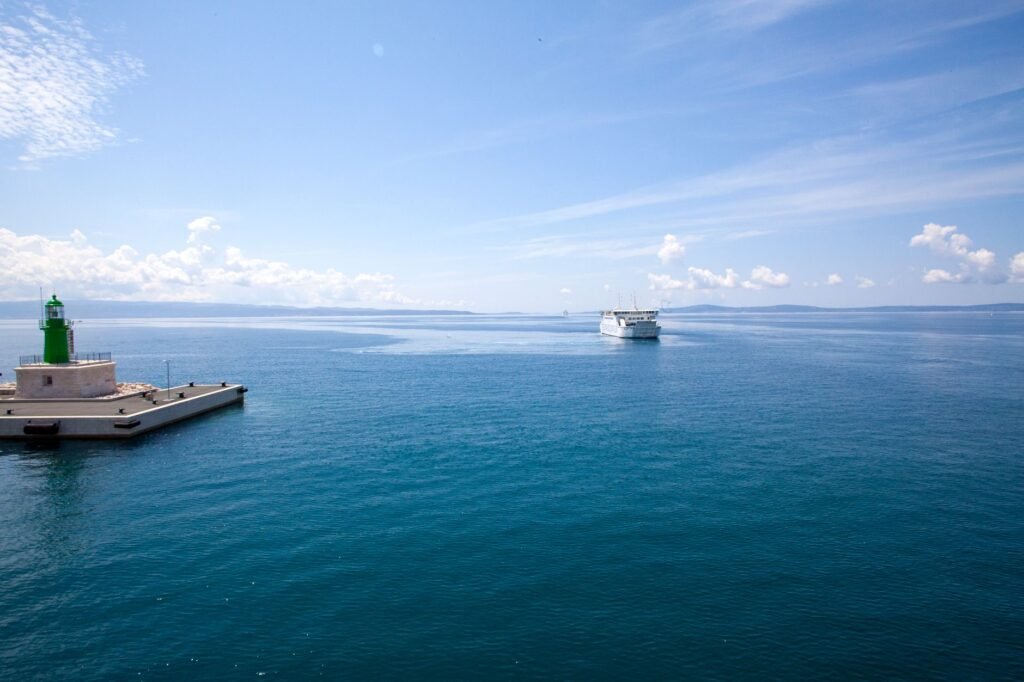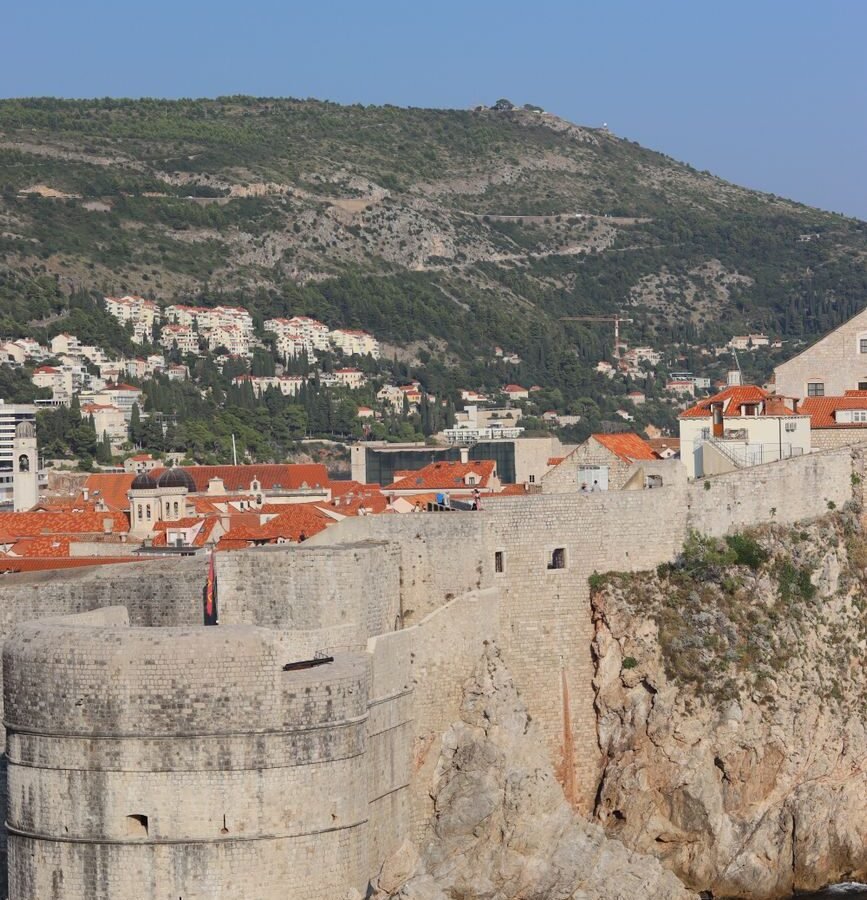
Editorial deck: Choose Dubrovnik or Split from the dated products you must protect, then compare complete euro booking baskets. If both cities hold a non-negotiable anchor, use two stays instead of forcing day trips.
Dubrovnik and Split are not interchangeable bases, but neither is universally cheaper, easier or better. The useful question is: which confirmed products does this trip need? Dubrovnik becomes the logical base when the City Walls and another Dubrovnik-area booking are fixed priorities. Split becomes the logical base when Diocletian’s Palace and a dated island or Split-region product drive the trip.
If each city contains something you would regret missing, book separate stays and one protected one-way transfer. Do not choose a base from atmosphere labels, an old ferry timetable or a room headline that excludes luggage and transfers.
The decision in one minute
| Your confirmed trip | Stronger structure | What must be checked before booking |
|---|---|---|
| City Walls plus another Dubrovnik-area product | Dubrovnik base | official ticket terms, exact address, stairs/luggage and airport transfer |
| Diocletian’s Palace plus a dated island sailing | Split base | exact departure port, reserved sailing, protected return and room-to-port transfer |
| One non-negotiable product in each city | Separate stays | one-way transfer, luggage plan, check-out and check-in buffers |
| No fixed product in either city | Compare complete baskets | room total, cancellation, transfers and the activities actually available on your dates |
This is a planning rule, not a verdict on either city. A low room rate can lose once taxis, luggage storage or repeated transfers are added. A more expensive room can win if its address removes a difficult connection.
Build the anchor list before comparing hotels
Write every desired experience in one of three columns:
- Non-negotiable: the trip would feel incomplete without it.
- Flexible: valuable, but the date or supplier can change.
- Optional: book only if the live conditions and budget work.
Every non-negotiable item needs an official product page, exact date, meeting or entry point, cancellation rule and workable transport. “Visit Hvar” is not yet a product. “Jadrolinija’s selected Split–Hvar passenger sailing on this date, with a protected return” is one. “Walk Dubrovnik” is not a product. An official City Walls ticket with usable entry terms is one.
Limit a short stay to one demanding anchor per day. Multiple timed products can fit on paper while failing when baggage, heat, queues or a transport disruption enters the day.
When Dubrovnik is the stronger base
Choose Dubrovnik when the official City Walls ticket is a fixed anchor and at least one additional verified Dubrovnik-area product justifies sleeping locally. That second anchor might be a specific guided visit, boat ticket or other dated activity, but it must have a real supplier and terms.
The walls are not simply a view added between transfers. The official webshop controls the current product and its terms. Read the selected ticket’s validity, visitor category and delivery or use instructions at checkout. Do not copy a price or access rule from an old article.
Before paying, test the day in this order:
- Select the official walls product and date.
- Read the current webshop terms.
- Check the route’s physical demands against every traveller.
- Confirm how the exact accommodation address connects to the entry area.
- Add a weather and operations fallback that does not require the same exposed walk.
Dubrovnik’s historic fabric can introduce steps, slopes and vehicle-access limits. A property marketed as “Old Town” does not prove step-free luggage access. Ask the property for the exact arrival point, walking surface, number of steps and help available with bags. Treat a map pin and written answer as booking evidence.
Use the Dubrovnik Tourist Board’s travel-information hub to reach current transport operators, then confirm the exact service with the operator. For local buses, consult Libertas Dubrovnik rather than preserving a route number or frequency in the itinerary.
When Split is the stronger base
Choose Split when the core itinerary is Diocletian’s Palace plus a dated island or regional transport product. The Split Tourist Board’s Palace overview provides the official destination context, but individual paid sites inside or around the palace may have their own operator, ticket and hours. Verify each one you intend to enter.
Split becomes operationally persuasive only after the island day is real. Search the operator for the exact date, origin, destination port and traveller type. Jadrolinija’s search and ticket channel distinguishes places such as Hvar town and Stari Grad; they are not the same arrival point.
For a day return, record:
- operator and line;
- exact Split departure point;
- exact island arrival port;
- outbound and return departure dates and times;
- whether the ticket reserves the chosen sailing;
- passenger, vehicle and baggage conditions;
- change and cancellation terms;
- the island-side transfer, if the destination you want is elsewhere;
- a fallback if the return is disrupted.
Jadrolinija’s passenger FAQ explains that reservation treatment differs by service. Some tickets guarantee a specified departure; on services without reservations, boarding may follow arrival order. The current ticket and line conditions control. A timetable screenshot alone is insufficient.
Do not call Split a guaranteed “island-hopping base.” A particular sailing may be seasonal, changed or unavailable on the travel date. The base wins only when the exact outbound and protected return fit the itinerary.
If both cities are essential, split the stay
Using Dubrovnik as a base for a critical Split product—or Split for a critical Dubrovnik product—creates a long chain of dependencies. When both cities contain non-negotiable anchors, the robust answer is usually two stays:
- Finish the first city’s anchor before transfer day.
- Book one direct, dated transfer product where possible.
- Keep transfer day free of a non-refundable attraction.
- Confirm luggage allowance and the precise pickup and drop-off points.
- Leave a written contingency for delay or cancellation.
An older version of this comparison stated that the normal road journey had to cross Bosnia and Herzegovina. That is obsolete. The Croatian government describes the Pelješac Bridge project as the road connection linking southernmost Croatia with the rest of the country. Current navigation may therefore route entirely through Croatia. Border and route choices can still vary, so check the actual route and HAK live road conditions for the travel date.
Do not preserve a fixed driving, coach or ferry duration. Road works, incidents, stops and the exact product change the result. A live routing check is evidence; an inherited duration is not.
Compare two complete euro baskets
Price the same dates and traveller count in both cities. Keep every line in euros and save the timestamp or screenshot. The Travytour budget calculator can hold the comparison, but the live supplier total remains authoritative.
| Basket line | Dubrovnik | Split |
|---|---|---|
| Room total including mandatory charges | Live EUR quote | Live EUR quote |
| Cancellation and payment exposure | Exact terms | Exact terms |
| Airport or arrival transfer | Exact product | Exact product |
| Luggage, stairs or storage | Confirmed cost | Confirmed cost |
| Primary anchor tickets | Live cart total | Live cart total |
| Transfer to anchor start | Exact route/product | Exact route/product |
| Second verified anchor | Live cart total | Live cart total |
| Contingency allowance | Your chosen amount | Your chosen amount |
| Complete basket | Sum above | Sum above |
Do not mix refundable and non-refundable rooms and call the cheaper headline a fair comparison. Match room type, occupancy, baggage, meals and cancellation exposure. If one basket requires a ferry day, include the whole return chain, not only the outbound fare.
Use the same method for airport access. The Split Tourist Board provides official arrival-by-plane guidance, while Dubrovnik’s travel-information hub points travellers to current airport and transport channels. Flight availability, shuttle times and fares are date-specific; verify them before choosing the base.
Test the exact accommodation address
A neighbourhood name is too broad for an operational decision. Put the property’s precise address into the plan and request written answers where listings are unclear.
Check:
- walking route from the actual arrival stop or terminal;
- steps, gradients, cobbles and lift access;
- vehicle drop-off distance;
- staffed reception and late-arrival procedure;
- bag storage before check-in or after check-out;
- route to the fixed attraction or port;
- cancellation deadline in the property’s time zone;
- noise or access concerns relevant to the exact room, without assuming a district is universally quiet.
For accessibility needs, a booking-platform icon is not enough. Ask for measurements, step count, lift dimensions, bathroom layout and an accessible arrival route. Keep the reply with the reservation.
Protect ferry and transfer days
A successful island day is a return plan, not an outbound ticket. Put the latest acceptable return before the final advertised return and decide what happens if the preferred service does not operate. If missing the return threatens a flight or separate non-refundable booking, the itinerary is too tight.
On transfer day between Dubrovnik and Split, use gates:
- 72-hour gate: confirm product status, pickup, baggage and contact channel.
- Previous-evening gate: check operator notices, weather warnings and HAK conditions.
- Departure gate: verify the live platform, berth or pickup point and retain offline tickets.
Never schedule the City Walls, an island departure or a flight inside an optimistic arrival buffer. The transfer should deliver you to the next overnight base, not directly into a fragile timed chain.
Weather and safety are decision gates
Weather changes exposure, sea services and walking conditions. Check the Croatian Meteorological and Hydrological Service’s official warnings, the local forecast and operator notices shortly before each anchor.
Use a simple response rule:
- Proceed: product operates and conditions fit the group.
- Reduce: retain the base but use a shorter or less exposed confirmed activity.
- Replace: activate a cancellable indoor or local alternative.
- Stop: follow authority or operator instructions when conditions make the plan unsafe.
Do not assume one city always has better swimming, calmer water, lighter crowds or more reliable weather. Those are date-, location- and condition-dependent claims.
A booking sequence that prevents expensive mistakes
- Fix travel dates and traveller requirements.
- Label non-negotiable, flexible and optional experiences.
- Verify the official products behind each non-negotiable item.
- Decide Dubrovnik, Split or separate stays from those anchors.
- Build two complete euro baskets before selecting accommodation.
- Test exact addresses for luggage, mobility and transfers.
- Book the hardest cancellable or capacity-limited anchor first.
- Book accommodation whose terms protect that anchor.
- Add arrival and intercity transport with realistic buffers.
- Recheck operator notices, weather and roads before travel.
For wider planning, use the Croatia destination hub and apply the evidence standards in the Travytour editorial policy.
Final verdict
Choose Dubrovnik when the official City Walls product and another confirmed Dubrovnik-area anchor dominate the trip. Choose Split when Diocletian’s Palace and an exact dated island or regional product dominate it. Choose separate stays when each city holds a genuine non-negotiable.
If there is still a tie, select the basket with the lower total cancellation exposure and fewer unprotected connections—not the city with the stronger slogan. Reprice before payment and retain the evidence. That produces a base decision that can survive real tickets, real luggage and a change of conditions.