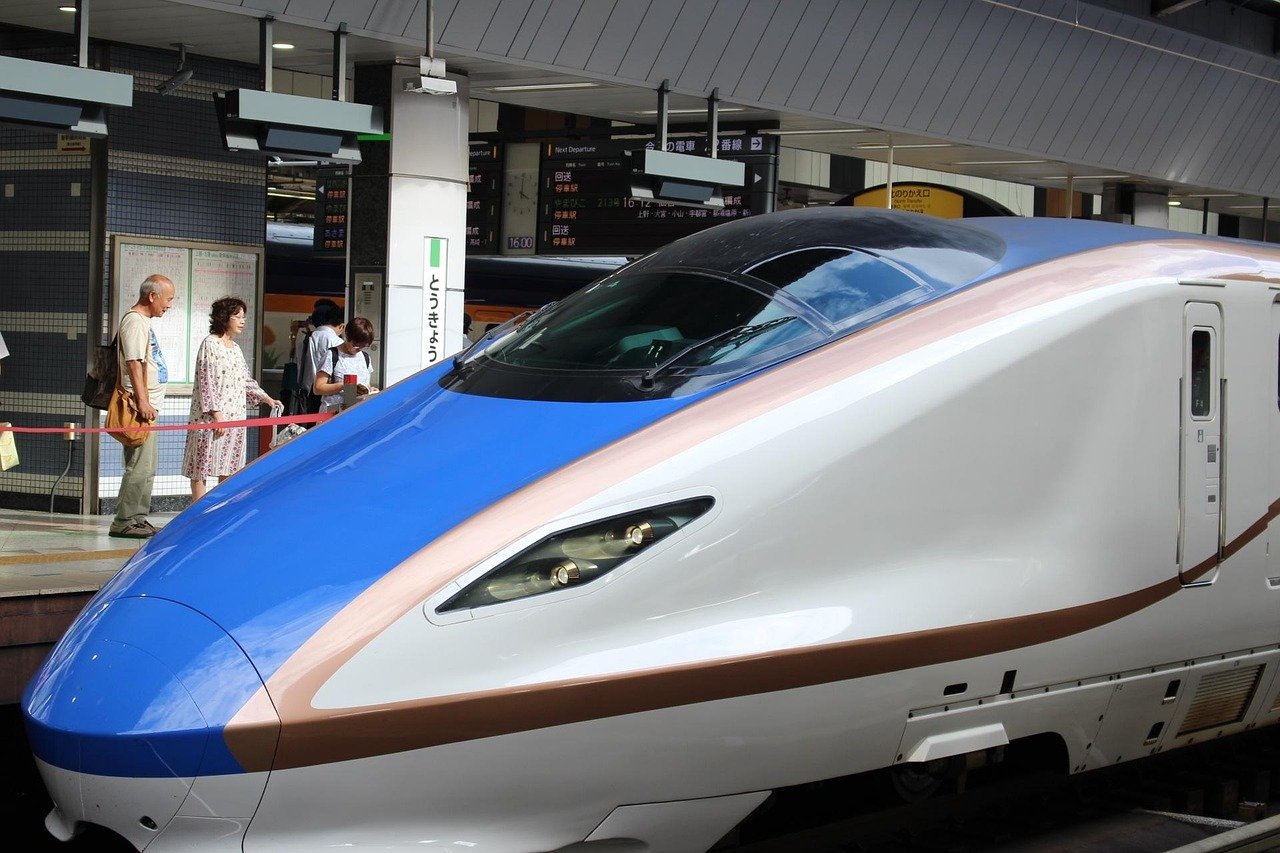
The nationwide Japan Rail Pass is no longer an automatic purchase for a first trip to Japan. After the 2023 price rise, the right question is not “Am I taking the Shinkansen?” but **“Do the JR fares I would otherwise pay exceed the pass price for the exact days I can use it?”** For many Tokyo–Kyoto trips the answer is no; for dense, long-distance itineraries it can still be yes.
This guide was rechecked on **September 2, 2026** against JR Group and JR Central material. Two details matter especially in 2026: the online and overseas-agency prices are about to diverge, and Nozomi/Mizuho trains are **not** simply included with the pass—you need a separate special ticket for those services.
Quick answer

Buy the nationwide pass only after pricing the long-distance JR legs in your itinerary. A Tokyo–Kyoto round trip by itself does not normally justify a 7-day nationwide pass. A rail-heavy loop with several expensive intercity legs may do so, but the calculation should use the trains and seat types you actually plan to ride.
Japan Rail Pass prices

JR’s published adult prices are:
| Pass | Ordinary | Green |
|---|---|---|
| 7 days | ¥50,000 | ¥70,000 |
| 14 days | ¥80,000 | ¥110,000 |
| 21 days | ¥100,000 | ¥140,000 |
Those are the current prices on the official online reservation service as checked on September 2, 2026. JR Group has announced that **overseas JR-designated sales offices and agencies** will charge higher prices for purchases from **October 1, 2026**: ¥53,000 / ¥84,000 / ¥105,000 for Ordinary and ¥74,000 / ¥116,000 / ¥147,000 for Green. JR said the official online service would temporarily retain the existing prices, with the end date to be announced later.
That distinction matters. Do not quote a single “new JR Pass price” without also checking the purchase channel.
The Nozomi and Mizuho rule people still get wrong
A standard valid Japan Rail Pass does **not** by itself let you board Nozomi or Mizuho services. JR’s current rules say you must buy the separate **[ONLY WITH JAPAN RAIL PASS] NOZOMI MIZUHO Ticket** before boarding and use it together with the pass for the covered section and facility.
If you do not want to pay that extra charge, use covered Shinkansen services such as Hikari, Sakura, Kodama or Tsubame where appropriate. This makes the pass more flexible than it was before 2023, but calling Nozomi/Mizuho “included” without qualification is misleading.
The break-even method that actually works
Use this four-step calculation:
- List every long-distance JR journey that falls inside the same 7-, 14- or 21-day pass window.
- Price those journeys as individual tickets using the train and seat type you would really choose.
- Add smaller JR journeys only if you would genuinely take them; do not inflate the calculation with unnecessary rides just to make the pass look better.
- Compare the total with the pass price **plus any Nozomi/Mizuho special tickets** you expect to buy.
The pass wins financially only when that comparison is favorable. Convenience can still have value, but convenience should not be disguised as fare savings.
A useful Tokyo–Kyoto benchmark
JR Central’s published fare table shows a regular-season Tokyo/Shinagawa–Kyoto Nozomi reserved-seat fare in the neighborhood of **¥14,000 one way**. Exact pricing varies by origin station, season, product and seat choice, so recheck your dates.
The planning implication is straightforward: a simple Tokyo–Kyoto round trip is well below a ¥50,000 7-day nationwide pass. Adding ordinary local travel in Tokyo or Kyoto usually does not close that gap because much city transport is run by non-JR operators anyway.
When the 7-day pass can still make sense
The 7-day pass becomes more plausible when you compress several expensive long-distance JR legs into one week—for example, moving through multiple regions rather than basing yourself in one or two cities. It can also be attractive if you value the ability to change covered reservations without rebuilding your entire ticket plan.
Good candidates tend to share three characteristics:
- several long intercity JR journeys inside seven consecutive days;
- little reliance on flights, highway buses or private railways during that window;
- enough fare value to beat the pass without counting trips you would not otherwise take.
If your itinerary is primarily Tokyo plus Kyoto/Osaka, a regional pass or point-to-point tickets often deserves the first comparison.
When the nationwide pass is usually poor value
A single-region itinerary
If your trip is concentrated in Kansai, Kyushu, Hokkaido or another region, compare the relevant regional JR pass before looking at the nationwide product. Regional products have different rules and coverage, but they can be much cheaper for geographically focused travel.
A short city trip
Tokyo subways, Osaka Metro and many other urban services are not covered simply because they are trains. A nationwide pass is an expensive way to solve a local-transit problem.
An itinerary built around cheap flights or buses
The pass only has value when you use eligible JR transport. If a domestic flight or highway bus is already the better fit for your route, do not count that leg toward a pass break-even calculation.
A trip with many private-railway segments
Japan has extensive private rail networks. A Japan Rail Pass is not a universal Japan transport pass, so routes to some airports, resorts and sightseeing areas still require separate payment.
Ordinary or Green Car?
Green Car passes cost substantially more. The upgrade makes the most sense when you have several long rail days and specifically value the seating environment. It is much harder to justify if the Ordinary pass itself is already marginal on cost.
Do not assume Green means every premium product is free. JR lists additional charges or restrictions for some facilities, and Nozomi/Mizuho still require the separate pass-holder ticket described above.
How to buy and activate it
JR’s current leaflet lists two purchase channels: the **official dedicated JAPAN RAIL PASS Reservation website** and **overseas JR-designated sales offices/agencies**. If you buy online, you pick up the pass at an eligible JR ticket office in Japan. If you buy through an overseas agency, you exchange the issued Exchange Order after arrival.
The ordinary tourist eligibility rule is also important: foreign visitors generally need **Temporary Visitor** status. JR specifically warns travelers to make sure the correct entry status is recorded because eligibility is checked when the pass is issued or exchanged.
Do not rely on old blog posts that say you can simply arrive and buy a nationwide pass over the counter under the former in-Japan sales scheme.
Reservations and airport trains
Covered reserved seats can be booked under the pass rules, but popular trains around New Year, Golden Week, Obon and other busy periods can fill. Reserve the trains that matter most to your itinerary rather than treating “unlimited” as “guaranteed seat on any departure.”
JR-operated airport services such as the Narita Express can fall within pass coverage, while non-JR airport operators do not. The same principle applies throughout the trip: identify the operator, not just the route name.
A better decision rule than “500 km”
Distance by itself is a poor shortcut. Two itineraries with the same number of kilometers can have different fares, different operators and different premium-train choices. Use **actual fare total versus actual pass cost** instead.
A practical spreadsheet can be as simple as:
| Date | Route | Operator/train | Individual fare | Covered by pass? | Extra pass-holder fee? |
|---|---|---|---|---|---|
| Day 1 | Example leg | JR | ¥— | Yes/No | ¥— |
| Day 3 | Example leg | JR/private | ¥— | Yes/No | ¥— |
| Day 6 | Example leg | JR | ¥— | Yes/No | ¥— |
Add the individual-fare column, then compare it with the relevant pass price and any required extras.
FAQ
Is the JR Pass still worth it after the price increase?
Sometimes. It is strongest for rail-heavy, multi-region itineraries and weakest for city-focused or simple Tokyo–Kyoto trips. Calculate your actual route before buying.
Does the JR Pass include Nozomi and Mizuho?
Not by itself. A valid pass holder must buy the separate **NOZOMI MIZUHO Ticket** before using those trains on an eligible section.
What will a 7-day pass cost after October 1, 2026?
JR has announced ¥53,000 for an adult Ordinary pass through overseas designated sales offices/agencies from that date. The official online reservation service is temporarily keeping the ¥50,000 price; JR says it will announce that online-price end date separately.
Can I buy the pass at a JR station after arriving?
Do not plan around the former walk-up sales arrangement. JR’s current material directs travelers to the official reservation website or an overseas designated agency, followed by pickup/exchange in Japan.
Do children pay less?
Yes. JR’s current table lists child prices at half the corresponding adult online price for eligible children; check the age definition and purchase-date rules in the official terms.
Related Travytour guides
- [Best Onsen Towns Near Tokyo for a Day Trip](/onsen-day-trip-from-tokyo/)
- [Where to Stay in Kyoto: 6 Neighborhoods That Skip the Crowds](/where-to-stay-kyoto-without-crowds/)
- [Best Cherry Blossom Spots in Japan Outside Tokyo and Kyoto](/cherry-blossom-spots-japan-outside-tokyo-kyoto/)
Conclusion
The Japan Rail Pass is now a **calculation, not a default**. Price the itinerary first, keep Nozomi/Mizuho supplements separate, and compare the nationwide pass with both point-to-point tickets and regional passes. If the numbers do not clearly work, individual tickets are not a planning failure—they are often the rational 2026 choice.