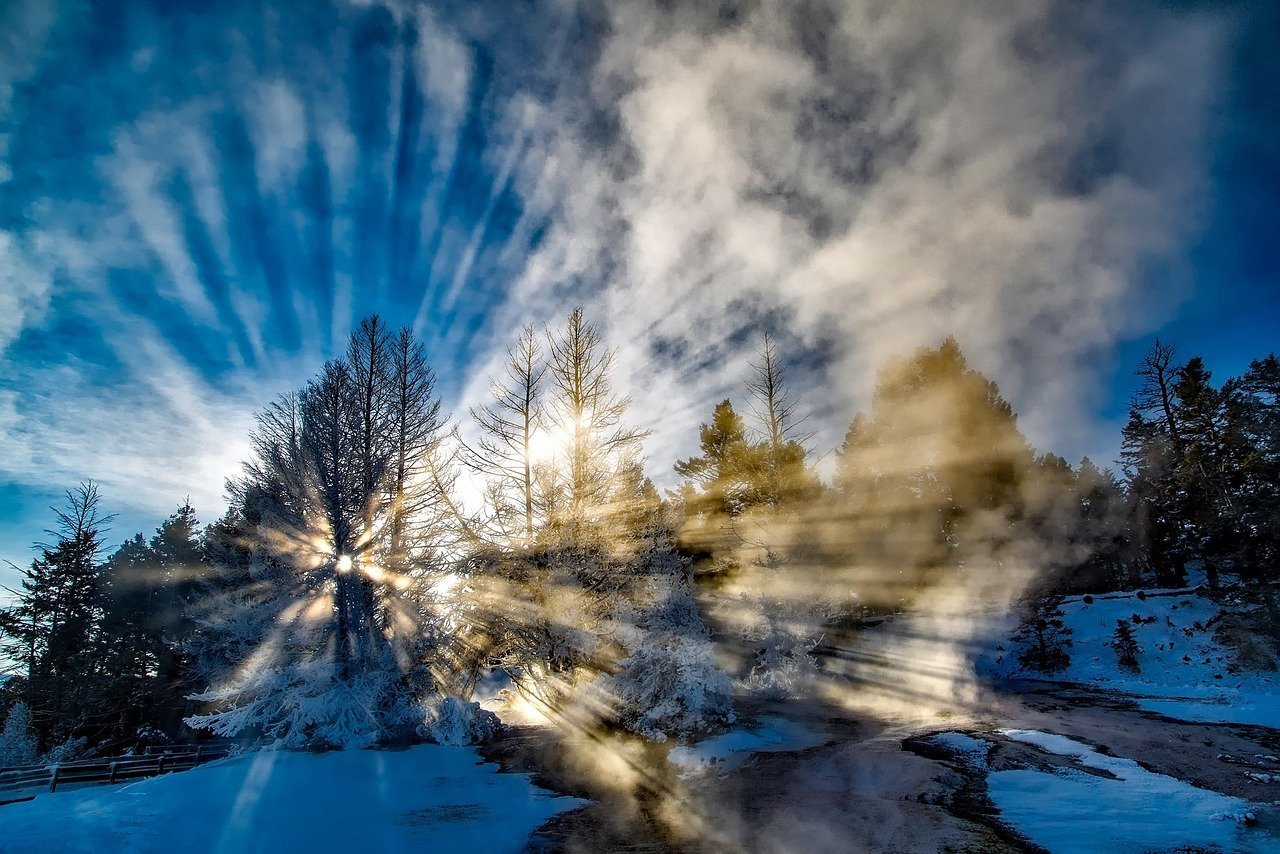
Yellowstone doesn’t have one obvious “front door.” Five entrances feed into the park from five different directions, and the small town nearest each one has developed its own character over more than a century of park tourism. Choosing where to stay shapes your entire trip — not just the drive time to your first geyser basin, but the pace, the crowd level, and even which part of the park you’ll naturally spend the most time in. This comparison looks honestly at the five main gateway towns, who each one suits best, and what trade-offs come with each choice.
Why the choice of base matters more here than at most parks
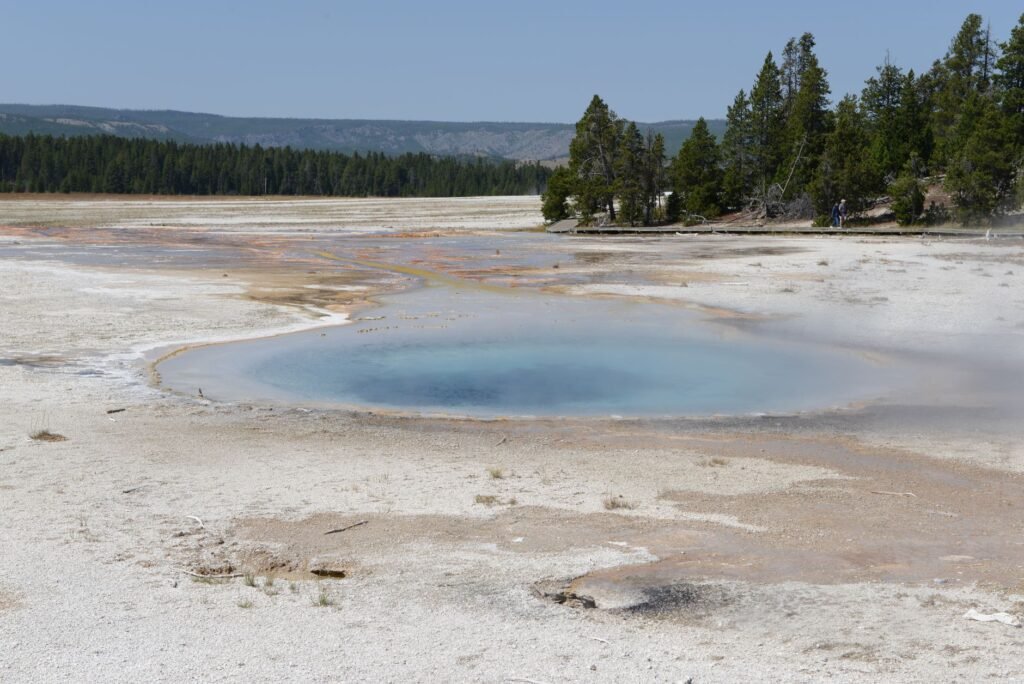
Yellowstone covers nearly 3,500 square miles (roughly 9,000 square kilometers), and its major attractions — Old Faithful, the Grand Canyon of the Yellowstone, Mammoth Hot Springs, Lamar Valley — are spread far enough apart that no single gateway town puts you close to everything. Picking a base is really picking which section of the park you’ll experience most easily, with the rest requiring longer drive days.
The other factor unique to Yellowstone is seasonality. The North Entrance near Gardiner is the only one that stays open to regular vehicle traffic year-round; the others close for winter or switch to oversnow-vehicle-only access, which materially affects which gateway town makes sense depending on when you’re visiting.
Best time to go
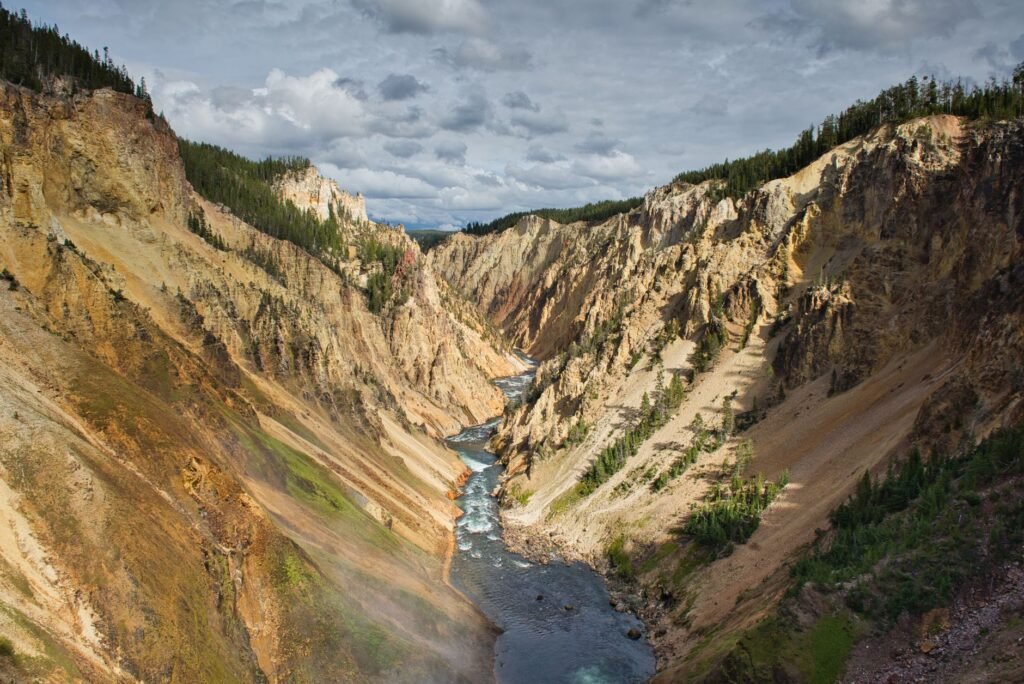
Late spring through early fall (roughly late May through September) is when all five entrances are typically open and every gateway town is fully operational, making this the most flexible window for choosing a base. July and August bring the heaviest crowds and the highest lodging rates across every gateway town. Shoulder months — May, June, September, and October — offer a calmer experience with lower rates, though some high-elevation roads and passes may open later or close earlier than the park’s main season. Winter travel narrows the practical options considerably, since Gardiner becomes essentially the only town offering standard vehicle access into the park, while West Yellowstone becomes the hub for guided snowcoach and snowmobile tours into the interior.
How to get there
Regional airports serve different sides of the park: Bozeman Yellowstone International Airport (Montana) is the most-used gateway for the northern and western entrances, with West Yellowstone and Gardiner each roughly 1.5-2 hours away by car. Jackson Hole Airport sits close to Jackson, Wyoming, itself about an hour from the South Entrance. Cody, Wyoming has its own small regional airport with more limited flight options, roughly an hour from the East Entrance. Driving between gateway towns around the park’s perimeter takes considerably longer than it looks on a map, since routes often follow mountain passes rather than direct roads — allow half a day or more to relocate from one gateway town to another rather than assuming a quick transfer.
A realistic USD budget by town
Lodging rates vary by season more than by town, with July-August rates commonly double what the same room costs in May or late September. As a general pattern across all five towns: budget tier (roughly $120-180/day per person) covers camping or basic motels with self-catered meals; mid-range tier (roughly $220-320/day per person) covers a comfortable hotel or cabin with a mix of dining options; upscale tier ($400+/day per person) covers boutique lodges, ranch-style resorts (especially around Jackson and Cody), and guided park excursions.
The gateway towns, compared
West Yellowstone, Montana. The busiest and most tourist-built-up of the gateway towns, sitting right at the West Entrance — historically the most heavily used entrance into the park. This is the town with the widest range of lodging density, dining options, and outfitters for guided tours, snowmobile rentals, and fly-fishing trips. It’s the strongest choice for travelers prioritizing convenience and variety over a quieter small-town feel, and it’s the main winter-access hub for snowcoach tours into the park’s interior. The trade-off is that it feels the most like a tourist town, with higher summer crowds and traffic at the entrance itself.
Gardiner, Montana. Smaller and more low-key than West Yellowstone, sitting at the North Entrance near the historic Roosevelt Arch. Gardiner’s standout advantage is being the only entrance that stays open to regular vehicle traffic year-round, making it the most reliable winter base if you want to drive into the park yourself rather than joining a guided oversnow tour. It also puts you closest to Mammoth Hot Springs and the Lamar Valley, one of the best wildlife-viewing corridors in the park (particularly for wolves and bears in early morning and evening light). Dining and lodging options are more limited than West Yellowstone, which suits travelers who prefer a quieter overnight base.
Cooke City and Silver Gate, Montana. The smallest and most remote of the gateway towns, near the Northeast Entrance and the start of the Beartooth Highway, often cited as one of the most scenic drives in the country. This is a strong pick for travelers prioritizing the Lamar Valley wildlife-watching corridor and a genuinely quiet, minimal-development base — but it comes with real trade-offs: very limited dining and lodging options, and the Beartooth Highway itself closes seasonally (typically mid-fall through late May, varying by year and snowpack), which affects access from that direction.
Cody, Wyoming. Positioned near the East Entrance, Cody has a stronger identity independent of Yellowstone tourism than most other gateway towns — it leans into its “Rodeo Capital of the World” reputation and hosts the well-regarded Buffalo Bill Center of the West museum complex. This makes it a good choice for travelers who want their gateway town to be a destination in its own right, not just a launch pad, though it’s also the farthest of the main gateway towns from Yellowstone’s most iconic sites like Old Faithful, with a longer drive through Sylvan Pass to reach the park’s interior.
Jackson, Wyoming. The most upscale of the gateway towns by a clear margin, with a well-developed dining scene, art galleries, and proximity to Grand Teton National Park along the way to Yellowstone’s South Entrance. Jackson works well for travelers who want to combine both parks in one trip, or who prioritize a livelier town with more dining and lodging variety at the higher end of the price spectrum. The trade-off is distance — Jackson sits roughly two to two-and-a-half hours from Old Faithful, making it the least convenient option if Yellowstone itself, rather than a Jackson-Teton combination trip, is the main focus.
Where to stay by traveler type
First-time visitors wanting maximum convenience: West Yellowstone offers the widest range of lodging and dining options directly at an entrance, with easy access to Old Faithful and the geyser basins.
Wildlife-focused travelers: Gardiner or Cooke City put you closest to the Lamar Valley, often called “America’s Serengeti” for its wolf and bear sightings, particularly at dawn and dusk.
Travelers combining Yellowstone with Grand Teton: Jackson is the natural choice, letting you split time between both parks without a long relocation drive.
Travelers wanting a non-touristy small-town base with its own character: Cody offers museums, rodeo culture, and a stronger sense of local identity than the more park-dependent towns.
Winter travelers: Gardiner is the most practical choice for those wanting to self-drive into the park, while West Yellowstone is the hub for guided snowcoach and snowmobile access to the interior.
Common mistakes to avoid
Underestimating drive times between gateway towns and major park attractions is the most frequent planning error — distances that look short on a map often take longer given mountain roads, wildlife jams (traffic stopped for roadside animal sightings), and seasonal speed limits. Booking lodging too late is another common issue, since rooms in all five towns fill up well in advance for peak summer months. Assuming every entrance is open year-round also trips up winter travelers — confirming current road status for your specific entrance and travel dates is essential before finalizing a base.
FAQ
Which gateway town is closest to Old Faithful? West Yellowstone, at roughly 30 miles (about an hour’s drive) via the West Entrance, is generally the closest of the main gateway towns to Old Faithful and the Upper Geyser Basin.
Can I stay inside Yellowstone itself instead of a gateway town? Yes — the park operates several in-park lodges (including Old Faithful Inn and Lake Yellowstone Hotel), though these book up quickly and close seasonally. Gateway towns offer more flexibility and a wider range of price points.
Which town is best for a winter trip? Gardiner, since it’s the only entrance that stays open to standard vehicle traffic through winter. West Yellowstone is the main hub if you’re planning a guided snowcoach or snowmobile tour into the park’s interior instead.
Is it possible to base in one town and see the whole park in a few days? It’s possible but requires long driving days, since the park’s major sites are spread across a wide area. Many repeat visitors split a longer trip between two gateway towns on opposite sides of the park.
Which town has the most dining and lodging options? West Yellowstone and Jackson both offer the widest range, though Jackson sits considerably farther from the park’s interior attractions than West Yellowstone does.
Do I need a reservation to enter Yellowstone, similar to some other national parks? Yellowstone has not historically required timed-entry reservations for general park entry, unlike some other high-traffic parks.
Next Step
Match your gateway town to your actual priority for the trip — wildlife, convenience, a livelier town, or winter access — rather than defaulting to whichever town appears first in a search. The right base changes the whole shape of a Yellowstone trip.