Current-status note — checked September 2, 2026: the North Rim’s paved roads and scenic drives are open for the 2026 season, and North Rim Campground reopened June 1. However, the entire North Kaibab Trail, Phantom Ranch, Bright Angel Campground, Black Bridge and Silver Bridge are closed until further notice after major flash flooding on August 29. NPS reports no estimated reopening date. Water is also off at North Rim and North Kaibab trail faucets, so visitors must plan around current NPS water guidance.
The North Rim is still worth visiting if your goal is the quieter high-elevation rim, Cape Royal, Point Imperial and the scenic drive itself. It is not currently the right base for a rim-to-rim hike, and it is a poor choice for anyone assuming the pre-2025 lodge-and-trail experience is operating normally.
The Honest Trade-Offs
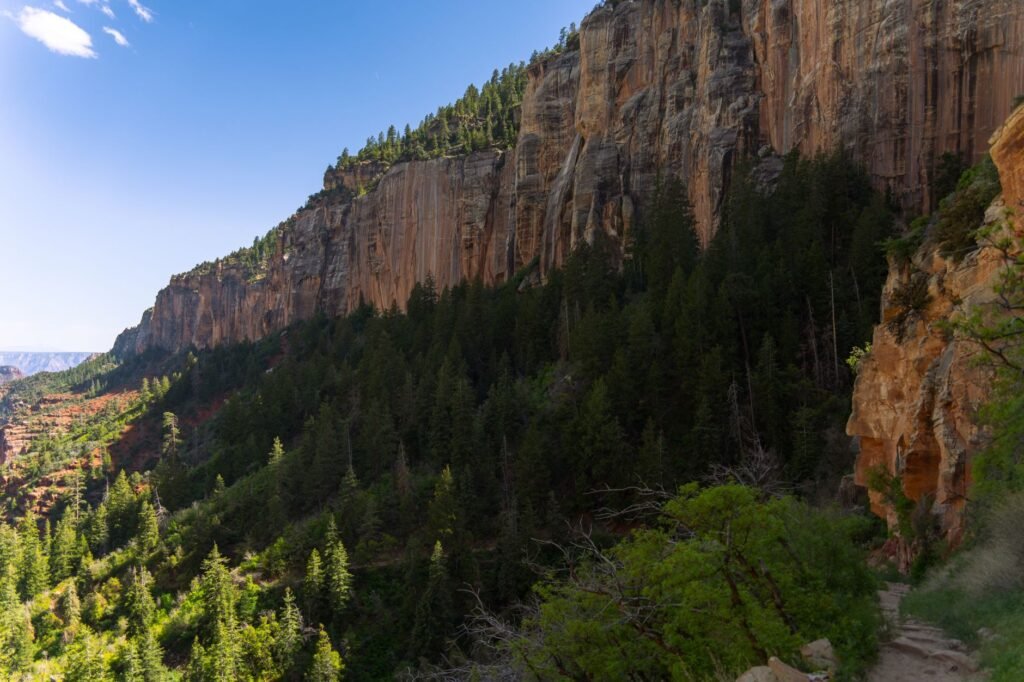
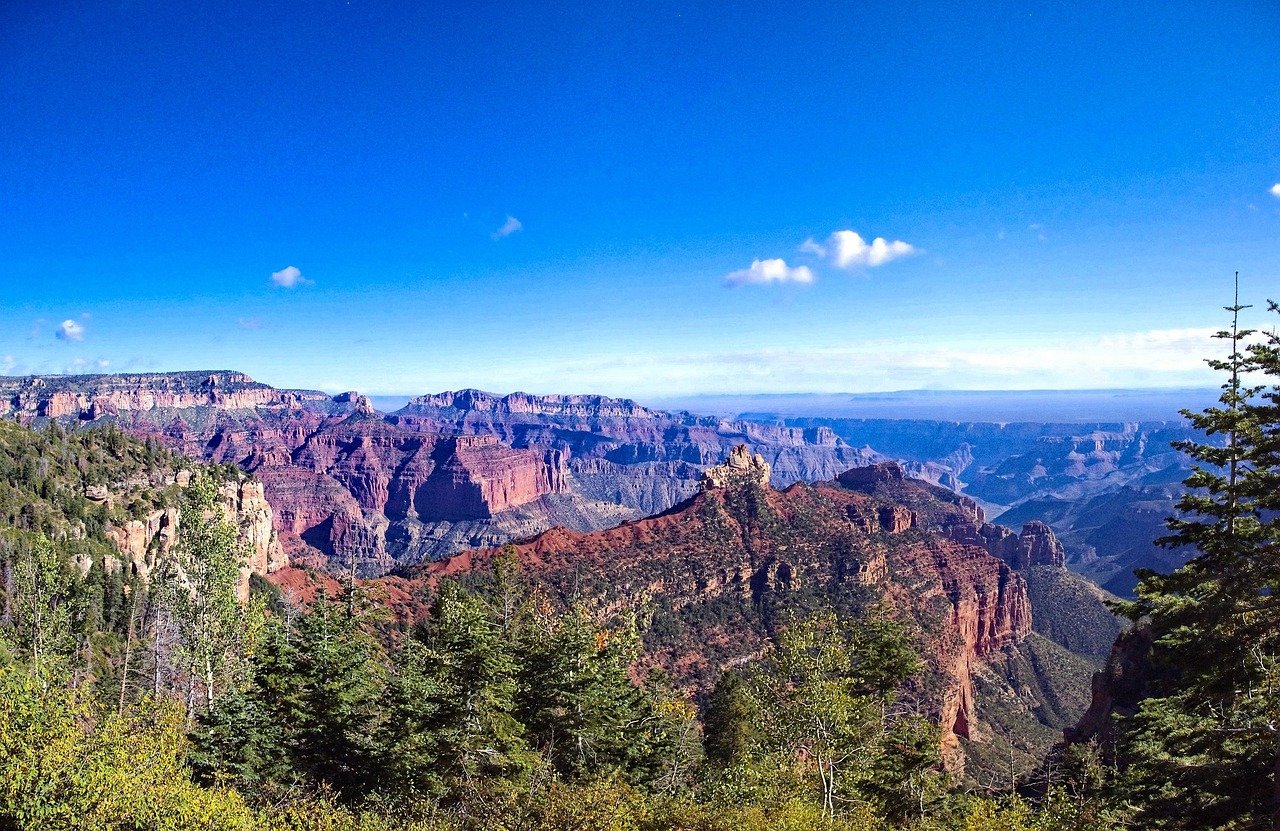
The North Rim’s appeal was always its scarcity: about 10% of Grand Canyon visitors make it there, versus the crowds pouring through the South Rim’s shuttle system. That trade-off hasn’t disappeared in 2026 — arguably it’s sharper. Visitors get quieter overlooks, less foot traffic on trails, and views many South Rim visitors never see, including Point Imperial and Cape Royal.
What’s changed is the infrastructure. The Grand Canyon Lodge — the only in-park lodging on the North Rim, and a National Historic Landmark building — was destroyed in the fire and has since been demolished for safety reasons. There is no overnight lodging inside the park on the North Rim for the 2026 season. The North Rim Campground reopened June 1, 2026, so tent and RV camping is possible, but anyone expecting the lodge’s dining room or cabins will need to look elsewhere. Several trails remain closed due to fire impact, most notably Bright Angel Point Trail — the short, iconic paved walk near where the lodge once stood — along with the Transept, Widforss, and Uncle Jim trails.
For travelers who prioritize comfort and predictability, this is a real drawback. For those who go for the landscape and don’t mind staying outside the park or camping, the trade-off is manageable, and the crowds are, if anything, lighter than usual.
Is It Worth Visiting Right Now?
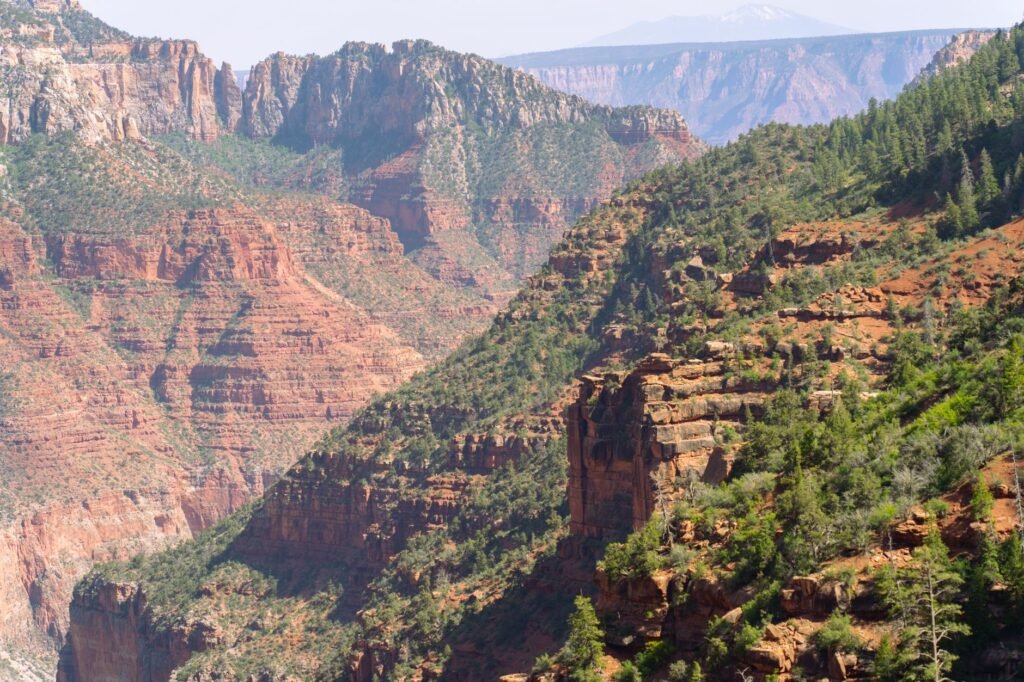
Yes, with caveats. The core experience—driving Highway 67 through high-elevation forest to rim viewpoints such as Point Imperial, Cape Royal, Roosevelt Point, Walhalla Overlook and Angels Window—remains the reason to visit. But do not use older status reports for corridor hiking: after the August 29 flash flood, the entire North Kaibab Trail is closed until further notice, along with Phantom Ranch and key inner-canyon infrastructure.
What isn’t worth pretending: this is not the full North Rim experience of past years. No lodge means no rim-side dining room, no gift shop in the historic building, and a fundamentally different overnight logistics picture. Anyone who visited pre-2025 and is returning expecting the same experience should recalibrate expectations before booking.
Best Time to Go
The North Rim’s operating window is inherently short compared to the South Rim, which is open year-round. In a typical (non-fire-affected) year, the developed area operates roughly mid-May through mid-October, and Highway 67 closes to vehicles at the first significant snowfall, usually in late fall. For the 2026 season specifically, the park opened North Rim roads on May 15 and the North Rim Campground on June 1.
Within that window, June and September tend to offer the best balance of open facilities and manageable heat, since North Rim elevation (around 8,000 feet) keeps summer temperatures noticeably cooler than the South Rim or the inner canyon. July and August bring the North American monsoon, which increases the risk of afternoon thunderstorms and, given the recent fire, elevated flash flood and debris flow risk in burned watersheds — a real safety consideration, not just an inconvenience.
How to Get There
The North Rim sits about 215 miles from the South Rim by road — a drive of roughly 4.5 to 5 hours around the canyon, since no bridge crosses the canyon itself. This is the detail that surprises first-time visitors most: despite being visually close across the gorge, the North and South Rims are not a quick hop apart.
The nearest sizable town is Jacob Lake, Arizona, about an hour north of the rim on Highway 67. Most visitors arrive by personal or rental vehicle from either Las Vegas (roughly 4.5–5 hours) or Flagstaff (around 4.5 hours via the long way around). There is no shuttle service connecting the two rims, and no public transit reaches the North Rim.
Hikers occasionally cross rim-to-rim on foot via the North and South Kaibab Trails, a strenuous multi-day undertaking that is a completely different trip from a scenic drive visit and requires backcountry permits, serious fitness, and careful water planning — it should not be attempted casually.
Realistic budget estimate
Entrance to Grand Canyon National Park uses a single park-wide pass, valid at both rims for seven days:
- Standard private vehicle pass: $35 (admits the vehicle and all passengers)
- Motorcycle: $30
- Individual (foot/bicycle) entry: $20
- Nonresident fee: Non-US residents aged 16 and older must pay an additional $100 per person, unless entering with an Annual or America the Beautiful Pass
- Annual Grand Canyon park pass: $70
- America the Beautiful annual pass (all US federal lands): $80 for US residents, $250 for non-residents
The park does not accept cash at entrance stations — credit or debit only.
Beyond the entrance fee, current North Rim budgeting looks different from a typical year because in-park lodging isn’t available:
- Budget tier: Camping at North Rim Campground plus groceries/packed food, roughly $50–90/day per person excluding the rental car.
- Mid-range tier: Camping or a lodging property outside the park (Jacob Lake or Kanab, UT area) combined with meals at casual restaurants, roughly $120–220/day per person.
- Upscale tier: A well-reviewed lodge or inn outside the park with sit-down dining, roughly $250–400+/day per person.
Top Experiences and Itinerary Tips
Point Imperial and Cape Royal Drive. The single best half-day on the North Rim: a paved scenic drive connecting several overlooks, ending at Cape Royal, which offers one of the widest panoramic views in the entire park. Go at golden hour if the schedule allows.
Angels Window. A natural rock arch visible from the Cape Royal Trail, one of the North Rim’s most photographed features and unaffected by the trail closures.
North Kaibab Trail. Do not plan a day hike here at present. NPS closed the entire trail from the North Kaibab Trailhead to Phantom Ranch after the August 29 flash flood. Build your visit around currently open rim trails such as Cape Royal, Cliff Springs, Cape Final, Roosevelt Point and Point Imperial, then recheck the status page immediately before travel.
Actionable tip: Because Bright Angel Point Trail — historically the easiest, most popular short walk near the (former) lodge site — is currently closed, plan for Cape Royal Trail or Cliff Springs Trail as the accessible-walk alternative instead.
Actionable tip: Fill up on gas before Jacob Lake; services on the North Rim itself are limited, and there is meaningfully less infrastructure than the South Rim’s village area.
Where to Stay
Since in-park overnight lodging is not available on the North Rim in 2026, visitors have three realistic options:
- North Rim Campground: Reopened June 1, 2026, with reservations available through the national recreation booking system. This is the only way to stay inside the park boundary this season.
- Jacob Lake, AZ: About an hour from the rim, with a small cluster of lodges and a general store — the most convenient outside-park base.
- Kanab, UT: Roughly 1.5–2 hours from the rim, offering a wider range of lodging and dining, useful for travelers combining the North Rim with other Utah parks (Zion, Bryce Canyon).
Families and groups who want more comfort than camping should plan on Jacob Lake or Kanab rather than assuming in-park lodging will be available — it will not be this season.
Safety and Practical Notes
Water: NPS currently reports all North Rim water faucets off. Bottled water may be available at the General Store, but visitors should not arrive depending on a normal in-park water system; check the live NPS water status first.
The burn scar from the Dragon Bravo Fire has increased flash flood and debris flow risk in several North Rim watersheds, particularly during monsoon season (roughly July–September). Visitors hiking or camping near drainage areas should monitor weather closely and heed any posted advisories. The park recommends signing up for river and backcountry emergency alerts if venturing into affected areas.
Elevation matters more than most visitors expect: North Rim viewpoints sit around 8,000 feet, high enough to cause mild altitude effects (fatigue, shortness of breath) for visitors arriving directly from sea level. Hydration and sun protection remain essential even with the cooler forest setting — the high desert sun is intense.
Cell service is limited to nonexistent across most of the North Rim; download offline maps and let someone know your hiking plans before setting out.
FAQ
Is the North Rim actually open? Yes, the paved North Rim roads and several rim trails are open as checked September 2, 2026. The entire North Kaibab Trail and Phantom Ranch area are closed after the August 29 flash flood, and water availability is severely constrained. Check the NPS status page on the day you travel.
What happened to the Grand Canyon Lodge? It was destroyed in the July 2025 Dragon Bravo Fire, along with the North Rim Visitor Center and numerous cabins. The remaining structure was later demolished for safety. Rebuilding plans are underway but will take considerable time.
Can I still do a day trip from the South Rim? Not realistically. The drive between rims is roughly 4.5–5 hours one way, making a same-day round trip impractical. The North Rim needs to be its own trip or an add-on to a Utah national parks itinerary.
Is the North Rim safe to visit after the fire and flood? Use the areas NPS has reopened, but treat closures and water restrictions as hard limits. Burn scars increase debris-flow and rockfall hazards, and the August 29 flood caused major infrastructure damage in Bright Angel Canyon. Weather and closure checks are part of the trip plan, not optional extras.
Which rim should a first-time Grand Canyon visitor choose? The South Rim remains the more practical choice for first-timers, given its year-round access, shuttle system, and full range of lodging and services. The North Rim suits repeat visitors or travelers specifically seeking a quieter, more remote experience, and travelers should factor in the current lodging gap.
Do I need a reservation to enter the park? No timed-entry reservation is required to enter Grand Canyon National Park as checked September 2, 2026, though North Rim Campground reservations should be booked in advance.
Related Travytour guides
Conclusion
The North Rim in 2026 is a genuine, worthwhile visit — but a different one than it was before the Dragon Bravo Fire. The overlooks, the drive along Highway 67, and the sense of having the canyon largely to yourself are all still there. What’s missing is the lodge, and with it the easy in-park comfort that used to define a North Rim trip. Anyone considering the drive should check the park’s current alerts page shortly before departure, since trail status and seasonal closing dates can shift with weather and ongoing recovery work.