Big Bend National Park sits in a bend of the Rio Grande in far West Texas, roughly equidistant from nowhere. There’s no major airport nearby, no interstate running through it, and once you’re inside the park boundary, cell service largely disappears. For travelers used to national parks reachable by a short drive from a regional airport, Big Bend is a different proposition entirely — it demands real commitment before you’ve even parked the car. This is an honest look at what that commitment buys you, and who it’s actually worth it for.
The trade-offs, honestly
Big Bend is not a convenient park. Depending on where you’re starting from in Texas, you’re looking at a drive of several hours from the nearest sizable city, and there is no commercial airport inside a reasonable driving distance — the closest options require their own multi-hour drive to reach the park after landing.
Once you arrive, the park itself is enormous — over 800,000 acres — and its major areas (the Chisos Basin, the desert lowlands near the Rio Grande, and the more remote backcountry) are separated by long drives within the park itself. Cell service is unreliable to nonexistent through most of the park, gas and services are limited to a handful of small outposts (Study Butte/Terlingua just outside the west entrance, and Panther Junction inside the park), and summer temperatures in the desert lowlands regularly exceed 100°F (38°C), which limits when certain hikes are safe or comfortable.
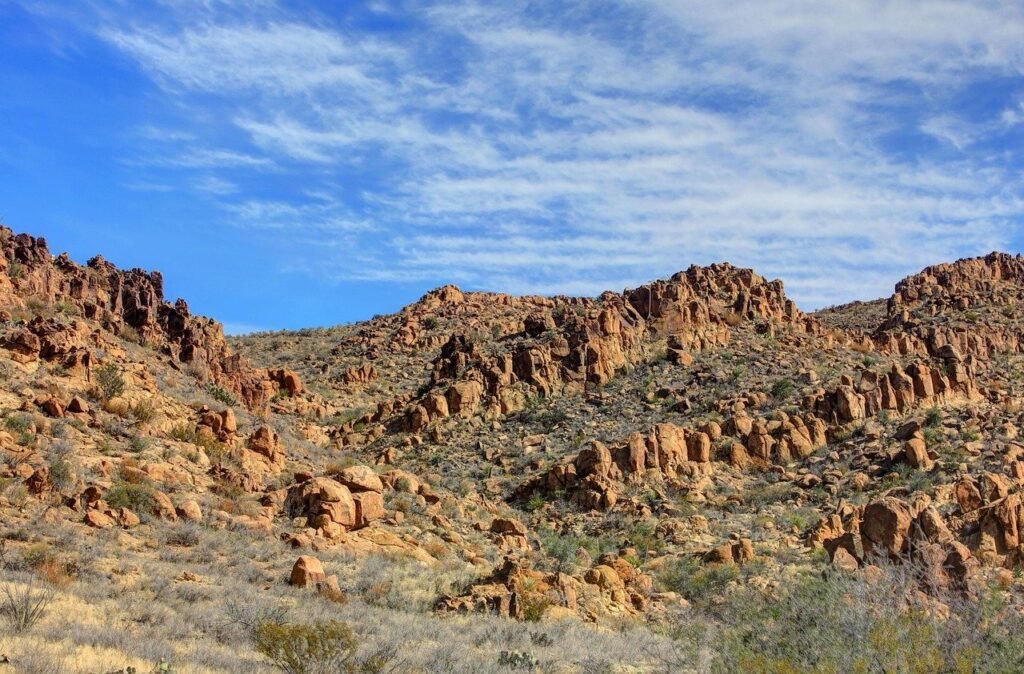
Against all of that: Big Bend is one of the least crowded major national parks in the country relative to its size, has some of the darkest night skies certified anywhere in the National Park System, and offers a genuinely different landscape — desert, river canyon, and mountain, all within one park — than almost anywhere else in the U.S. park system. For travelers who value solitude and dramatic, uncrowded landscapes over convenience, it delivers in a way that few other parks can match.
Who it’s worth it for — and who it isn’t
Big Bend rewards travelers who want to properly unplug, who enjoy stargazing and desert landscapes, and who have at least three to four days to give the trip given how much drive time surrounds it. It’s a strong fit for road-trip travelers already in West Texas or nearby New Mexico, for dedicated national park collectors, and for anyone specifically chasing dark-sky stargazing.
It’s a weaker fit for travelers with limited vacation time who want to maximize time actually in a park rather than driving to reach one, families with very young children who may struggle with the heat and limited services, and anyone expecting cell service or robust amenities throughout their stay.
Best time to go
Late fall through early spring (roughly November through April) is the most comfortable window, with mild days and cool nights in the desert sections; the Chisos Basin’s higher elevation keeps it noticeably cooler than the desert floor year-round. Summer (June through August) brings intense heat to the lower elevations that can make some hikes genuinely dangerous during the hottest parts of the day, though the Chisos Basin remains more tolerable. Spring can bring desert wildflower blooms in favorable years, and the shoulder months of March and April coincide with U.S. spring break travel, which is the park’s busiest period relative to its usual quiet baseline.
How to get there
There is no practical way to reach Big Bend without a car. Most visitors drive in from El Paso, San Antonio, Austin, or Midland/Odessa, all of which involve several hours of driving on two-lane highways for at least the final stretch. Fill your tank before the final approach — gas stations thin out considerably in the last hour or two of most routes.
Once inside the park, distances between major areas are substantial — driving from the west entrance to the Chisos Basin, or from the Basin down to the Rio Grande Village area on the park’s eastern side, each takes the better part of an hour or more. Plan driving time between park areas as a real part of each day’s itinerary, not an afterthought.
Realistic budget estimate (planning ranges)
- Entrance fee: A standard 7-day vehicle pass is $30, admitting one private vehicle. Motorcycle passes are $25, and individual (bicycle/pedestrian) passes are $15. An annual Big Bend-specific pass is $55. The park does not accept cash — credit or debit only — and there are no reservations required or day-visitor caps.
- Camping: NPS-run frontcountry campgrounds (Rio Grande Village, Chisos Basin, Cottonwood) run $16 per night per site ($8 with a Senior or Access pass), reservable through the national recreation booking system. Backcountry campsites require a $10 per night permit ($5 with Senior/Access pass).
- Budget tier: Camping, self-catering, and free hiking can keep costs to roughly $50–$90 per person per day excluding the drive itself.
- Mid-range tier: A stay in the Chisos Mountains Lodge (the only in-park lodging) or a motel in Study Butte/Terlingua or Marathon, combined with a mix of cooked and restaurant meals, typically runs $150–$250 per person per day.
- Upscale tier: Options are genuinely limited near Big Bend compared to more developed parks; a higher-end stay might mean a nicer room at the Chisos Mountains Lodge or a private guided rafting or hiking excursion, pushing $300–$450+ per person per day. This is not a park with luxury resort infrastructure nearby.
Top experiences and itinerary tips
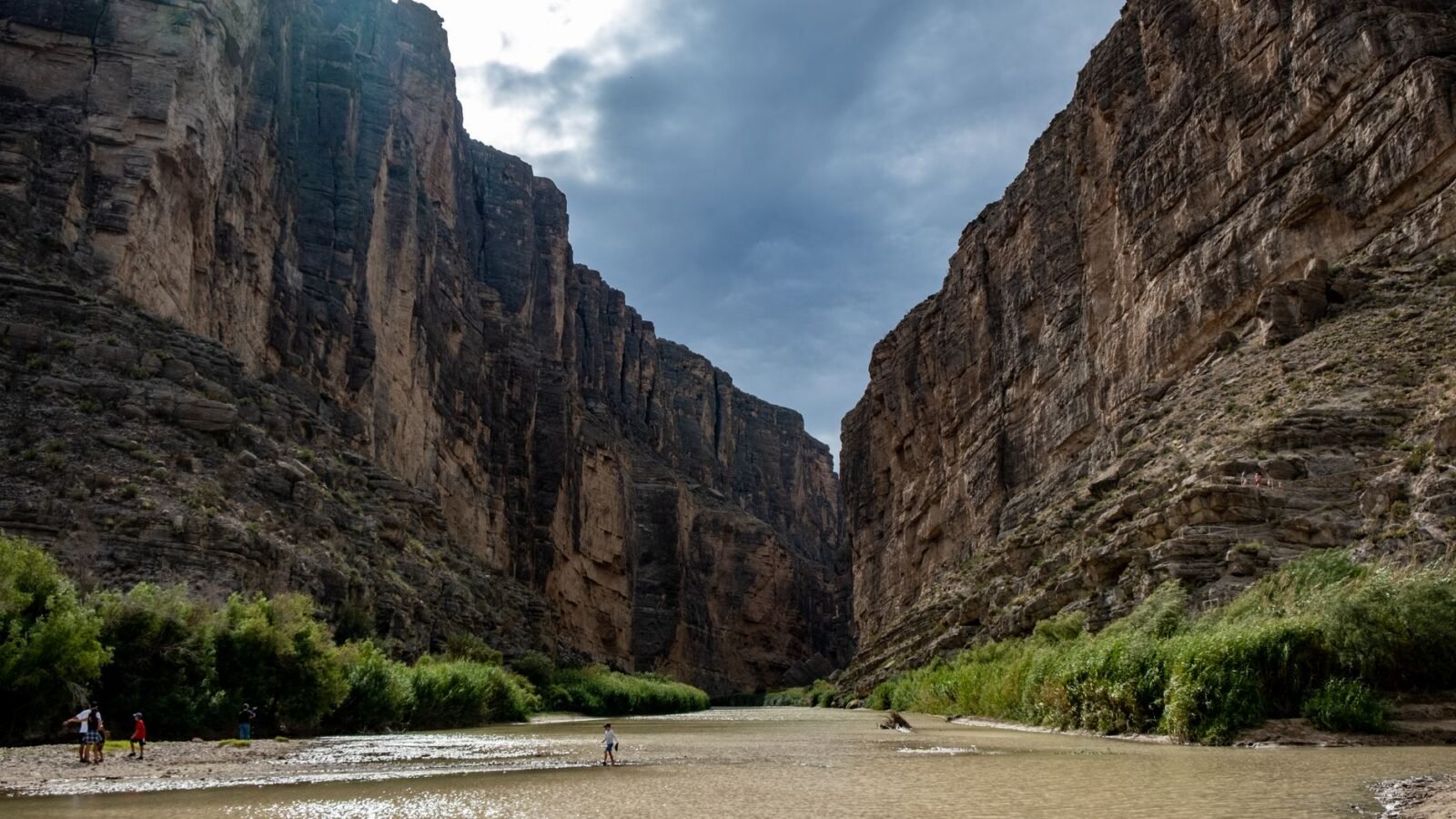
Santa Elena Canyon. A short, relatively easy trail leads into this dramatic 1,500-foot canyon carved by the Rio Grande — one of the park’s most photographed and accessible highlights.
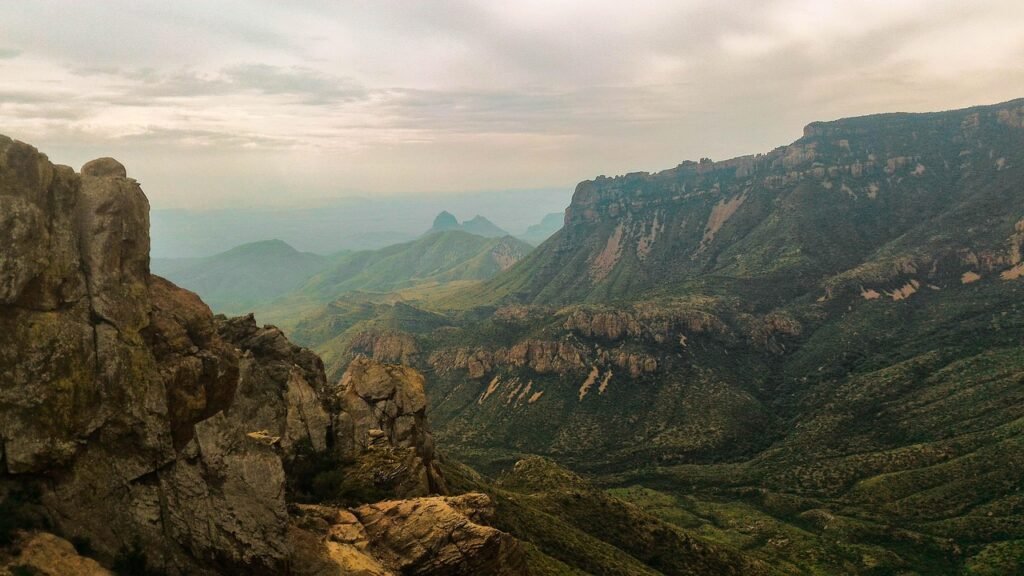
Chisos Basin hikes. The Window Trail and Lost Mine Trail both offer strong payoffs for moderate effort, with the Basin’s elevation providing welcome relief from desert heat.
Stargazing. Big Bend has some of the least light-polluted skies of any major U.S. national park. A clear, moonless night here offers a Milky Way view that’s genuinely rare to experience for most visitors. Bring a red-light flashlight and check the moon phase before your trip if stargazing is a priority.
Hot Springs Historic Trail. A short walk to historic hot spring ruins along the Rio Grande, with the option to soak in the spring itself.
Rio Grande activities. Rafting or canoeing sections of the Rio Grande, often through outfitters based in Terlingua, offers a different perspective on the park’s canyons.
Itinerary tip: Three full days is a reasonable minimum to see a genuine cross-section of the park (one day in the Chisos Basin, one along the Rio Grande/Santa Elena Canyon, one more flexible day for a longer hike or rafting trip), on top of whatever driving it takes to arrive. Two days is workable but tight; a single day realistically only allows a taste of one area.
Where to stay
- Inside the park (Chisos Basin): The Chisos Mountains Lodge is the only lodging inside the park and puts you closest to the Basin’s trailheads, but books up well ahead, especially in the cooler months.
- Study Butte/Terlingua: A small cluster of motels, cabins, and vacation rentals just outside the park’s west entrance — the most common base for visitors not camping or staying in the Basin.
- Marathon: A small town about 40 miles north of the park’s north entrance, offering a quieter, more old-West-town feel with a historic hotel option, at the cost of a longer daily drive into the park.
- Camping: The park’s three developed campgrounds and backcountry sites are the most immersive option, with Rio Grande Village and Chisos Basin bookable well in advance.
Safety and common mistakes
- Don’t underestimate desert heat. Summer lowland temperatures can be dangerous for hiking; carry far more water than feels necessary, and avoid strenuous hikes at low elevation during peak summer midday heat.
- Don’t rely on cell service. Download offline maps and let someone know your general plans before heading into the backcountry.
- Don’t skip the gas stop. Running low on fuel inside or near the park is a genuine problem given the distances between stations.
- Don’t assume same-day lodging availability. Options near the park are limited in number; book ahead, especially for the Chisos Mountains Lodge and for spring break periods.
FAQ
How far is Big Bend from the nearest city? It’s genuinely remote — several hours’ drive from any of Texas’s major cities.
Do I need a reservation to enter Big Bend? No — unlike some popular national parks, Big Bend does not currently require entry reservations or timed entry, and there’s no cap on daily visitors.
Is Big Bend safe to visit near the border? Big Bend sits along the Rio Grande and the U.S.-Mexico border. The park itself has a strong safety record for visitors; as with any border-adjacent destination, it’s worth checking current official guidance before your trip.
Is there cell service in the park? Coverage is limited to nonexistent through most of the park; don’t count on it for navigation or emergencies.
What’s the single best reason to make the drive? The dark skies and sense of true remoteness — this is one of the few places left in the continental U.S. where you can experience genuinely uncrowded desert wilderness and an unobstructed night sky.
Is Big Bend good for a first-time national park visitor? It can be, but it’s a more demanding introduction than parks with more infrastructure and shorter access drives. First-timers who prioritize convenience may want to pair it with a broader West Texas trip rather than a standalone weekend.
Conclusion
Big Bend asks a lot of its visitors before they’ve seen a single trail — hours of driving, limited services, and a real commitment to unplugging. For travelers who want solitude, dark skies, and a genuinely different desert-canyon-mountain landscape, that trade-off pays off. For those with limited time or who prioritize convenience and services, it’s a harder sell, and other parks may deliver more per hour invested.
Next step: Map the actual drive time from your starting point using a current routing tool before committing to dates — that number, more than anything else, should decide whether Big Bend fits your trip.
Related Travytour guides
- Best Small Towns Near Yellowstone to Stay In
- Great Smoky Mountains: Best Trails for Beginners
- Acadia National Park Fall Foliage: The Best Time to See Peak Color