
The Ha Giang Loop is routinely described as northern Vietnam’s most spectacular drive — a roughly 300-kilometer circuit through limestone karst mountains, terraced rice paddies, and ethnic minority villages near the Chinese border. It’s also, for many travelers, their first time on a motorbike in a foreign country, on unfamiliar roads, at altitude, sharing narrow mountain passes with trucks and livestock. That combination makes it one of those trips where enthusiasm can outpace preparation. This guide lays out what beginners genuinely need to know, including the legal requirements many blogs gloss over.
**Planning status (September 2, 2026):** For U.S. licence holders, the U.S. State Department states that U.S.-issued IDPs are not valid in Vietnam. Beginners should not treat the loop as a place to learn mountain motorcycling; using a licensed local driver is the lower-risk option.
Why the Ha Giang Loop Is Worth Considering

The scenery is the draw, and it earns its reputation: the Ma Pi Leng Pass, the Dong Van Karst Plateau Geopark, and villages of the Hmong, Tay, and Dao ethnic minorities offer a version of Vietnam far removed from Hanoi’s Old Quarter or Ha Long Bay’s boat decks. It’s also a genuinely different kind of travel experience — self-directed (or guided) adventure travel rather than a bus-and-checklist itinerary.
The honest trade-offs: the roads are winding, sometimes poorly maintained, and shared with trucks taking blind mountain curves. Weather changes quickly at altitude. And for a true beginner, the learning curve of operating a semi-automatic or manual motorbike on mountain switchbacks, while also navigating and taking in the scenery, is real. This isn’t a criticism of the loop — it’s simply worth knowing before you commit, so you can decide whether to self-drive, ride as a passenger with a local “easy rider” driver, or join a small guided group.
Best Time to Go
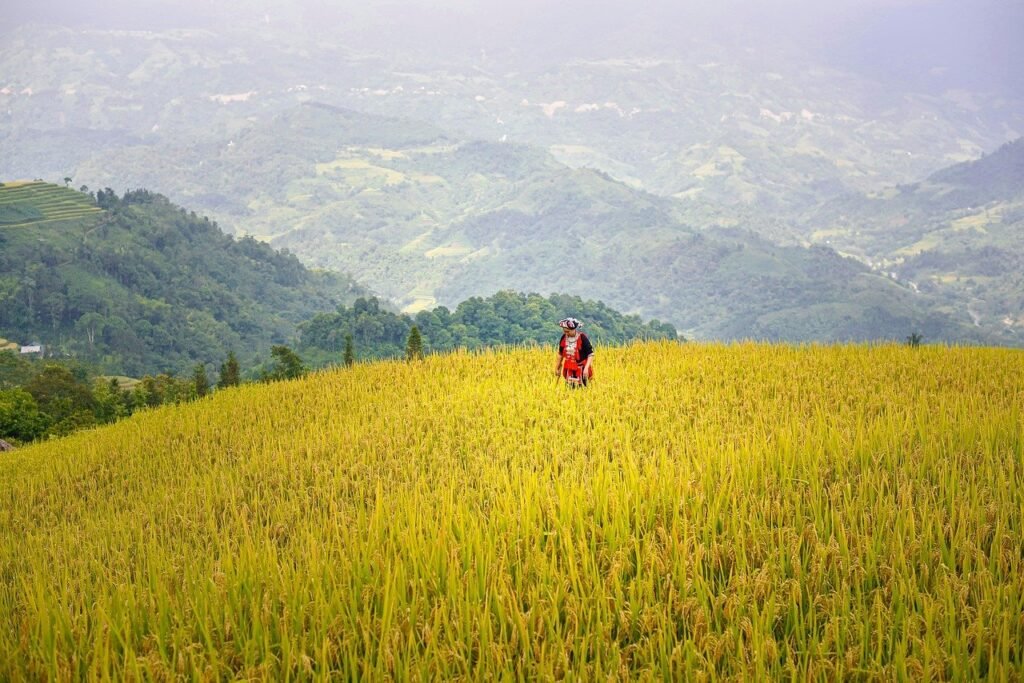
- **September to November (autumn)** is widely considered the best window: post-monsoon clear skies, terraced rice fields turning golden before harvest, and comfortable temperatures.
- **March to May (spring)** is the other strong option, with blooming flowers (including the famous white plum and peach blossoms in some years) and generally dry, mild weather.
- **June to August (summer/rainy season)** brings heavier rain, higher risk of landslides on mountain roads, and reduced visibility — rideable, but with meaningfully higher risk and less reliable conditions.
- **December to February (winter)** can be cold and foggy at higher elevations, particularly around Dong Van and the Ma Pi Leng Pass, with visibility sometimes dropping sharply; pack for genuinely cold mountain mornings.
For autumn travel, September through November is the usual planning window; mountain weather can change quickly, so check local forecasts immediately before riding.
How to Get There
Ha Giang city, the loop’s starting point, is not served by rail or air. The standard route is an overnight or early-morning sleeper bus from Hanoi, taking approximately 6–7 hours. Some travelers instead take a shorter bus to a nearer town and continue by local transport, but the direct Hanoi–Ha Giang bus is the most common and straightforward option. From Ha Giang city, the loop itself typically runs 3–4 days, covering towns including Dong Van, Meo Vac, and Yen Minh, before looping back.
The legal reality: licences, IDPs and insurance
Vietnam does not treat every foreign International Driving Permit the same. The U.S. State Department states that **U.S.-issued IDPs are not valid in Vietnam**; UK guidance points eligible drivers to the 1968-convention IDP together with the relevant domestic licence. Rules depend on the licence you actually hold, so check official guidance for your nationality rather than assuming an IDP bought at home makes you legal.
For a beginner, this is not merely paperwork. Vietnam’s official tourism guidance for the Ha Giang Loop explicitly advises visitors who are not experienced riders **not to ride by themselves** and to use a local driver instead. A local “easy rider” arrangement removes the need for you to control the motorcycle on technical mountain roads, though you should still use a reputable operator, wear a proper helmet and verify insurance terms.
If you intend to self-drive, confirm all three before renting: your licence is valid for the motorcycle class, Vietnam recognizes the accompanying permit/documentation, and your travel insurance covers motorcycle riding under those exact conditions. Rental-shop willingness to hand over a bike is not proof of legal or insurance compliance.
Self-Drive vs. Easy Rider: The Real Decision for Beginners
**Self-driving** gives you full independence and is the more adventurous, lower-cost option, but it demands genuine motorbike experience — ideally, prior experience riding a manual or semi-automatic bike, not just an automatic scooter around a resort town. The mountain roads include steep grades, hairpin turns, sometimes-unpaved sections, and unpredictable traffic including trucks, buffalo, and children. Riding here for the first time ever is a real risk, not just an inconvenience.
**”Easy rider” tours** pair each traveler with a local driver, so you ride as a passenger on the back of the bike. This removes the driving risk and legal ambiguity entirely, while still delivering the scenery and much of the cultural experience, including the local driver’s route knowledge and, often, homestay connections along the way. It costs more than self-driving but is the more honest choice for genuine beginners.
**A middle path some travelers choose:** self-drive on the flatter, easier stretches near Ha Giang city and switch to an easy rider for the more technical mountain passes — though this requires coordinating with a local operator and isn’t universally offered.
Realistic budget estimate
- **Budget (self-drive, budget guesthouses/homestays):** roughly $120–200 for 3–4 days, covering motorbike rental (approximately $8–15/day), fuel, basic homestay accommodation, and street food.
- **Mid-range (easy rider tour, standard homestays):** roughly $250–400 for 3–4 days, including a local driver, fuel, homestay accommodation, and most meals.
- **Upscale (private guided tour, better accommodation):** $450+ for a smaller group or private tour with more comfortable lodging options in towns like Dong Van.
Top Experiences and Practical Tips
- **The Ma Pi Leng Pass,** widely considered the loop’s visual highlight, cutting along a cliffside above the Nho Que River gorge — go early morning for both light and lighter traffic.
- **Dong Van Old Quarter,** a small preserved market town with a distinct highland character, worth an overnight rather than a rushed pass-through.
- **Lung Cu Flag Tower,** near Vietnam’s northernmost point, a worthwhile detour for those wanting the geographic extremity and views into China.
- **Sunday markets** in towns along the route, where ethnic minority communities from surrounding villages gather — check which town has a market on your specific travel dates, since they rotate by day of the week and location.
- **Pace yourself.** Rushing the loop in fewer days than recommended increases fatigue-related risk on unfamiliar mountain roads; 3–4 days is a reasonable minimum for most beginners.
Where to Stay
Accommodation along the loop is mostly homestays and small guesthouses in Ha Giang city, Yen Minh, Dong Van, and Meo Vac. Homestays typically offer shared dormitory-style sleeping with a family, often including a communal dinner, which is part of the cultural appeal of the route rather than a compromise. Dong Van has a slightly wider range of small hotels for travelers wanting a private room. Booking a night or two ahead during peak season (autumn weekends especially) is worth doing, as popular homestays can fill up.
Safety and Packing Notes
- **Wear a proper helmet,** ideally one you inspect yourself rather than assume is adequate — rental helmets vary widely in quality.
- **Pack layers.** Temperature swings between valley towns and higher passes can be significant, especially outside summer.
- **Bring a basic first-aid kit and any personal medications,** since pharmacy access in smaller towns along the loop is limited.
- **Carry cash.** ATMs are unreliable or absent in smaller towns along the route; withdraw what you’ll need in Ha Giang city before setting out.
- **Confirm your travel insurance covers motorbike accidents** and understand any licensing-related exclusions, as noted above.
- **Rent from a reputable operator** and photograph the bike’s existing condition before departure to avoid damage disputes on return.
Common Mistakes to Avoid
- **Underestimating the road conditions based on photos alone.** Some sections are steep, narrow, and shared with heavy trucks; this isn’t a scenic coastal cruise.
- **Self-driving with zero prior motorbike experience.** If your only riding experience is an automatic scooter on flat resort roads, seriously consider the easy rider option instead.
- **Skipping the IDP question because “everyone does it.”** The legal and insurance implications are real, even if enforcement is inconsistent.
- **Riding at night.** Roads are poorly lit, and visibility is significantly worse; plan each day’s riding to finish before dusk.
- **Packing too heavy.** You’ll be carrying your own bag on the bike (or it’ll be strapped on); pack light and leave non-essentials in Hanoi if your accommodation offers storage.
FAQ
**Do I need prior motorbike experience to do the Ha Giang Loop?** It’s strongly recommended if you plan to self-drive. If you have little or no experience, an easy rider tour (riding as a passenger with a local driver) is the safer, more practical choice.
**Is an International Driving Permit legally required?** Yes, in combination with a valid motorbike license from your home country. Note that IDPs from the US, Canada, and Australia are not recognized under Vietnam’s adopted 1968 convention, which creates a genuine gray area for travelers from those countries who wish to self-drive.
**How many days should I budget for the loop?** Most beginners should plan on 3–4 days minimum to avoid rushing, with some travelers extending to 5 days to add extra stops or rest.
**Is the Ha Giang Loop safe?** It carries real risk given the mountain roads, shared traffic with trucks, and variable weather, but it’s ridden by large numbers of travelers each year without incident when appropriate precautions (proper gear, realistic pacing, honest self-assessment of riding skill) are taken.
**Can I do the loop without a motorbike at all?** Yes — some tour operators offer the route by car or minibus for travelers who don’t want to ride, though this changes the experience significantly and reaches fewer of the smaller village roads.
**What’s the best season to avoid both rain and cold?** September through November offers the most reliable combination of clear skies and comfortable temperatures, alongside golden rice terraces before harvest.
Related Travytour guides
- [Sapa Trekking Guide for Beginners: What to Know Before You Go](/sapa-trekking-guide-for-beginners/)
- [Hanoi or Ho Chi Minh City First? How to Decide Where to Start Your Vietnam Trip](/hanoi-or-ho-chi-minh-city-first/)
- [Best Thailand Islands for Diving vs. Beach Relaxation: A Traveler’s Guide](/best-thailand-islands-diving-vs-beach/)
Conclusion
The Ha Giang Loop delivers genuinely spectacular scenery, but it rewards honest self-assessment more than enthusiasm. If you have real motorbike experience and the correct legal documentation, self-driving is a rewarding, independent way to see the route. If you don’t, an easy rider tour lets you experience the same landscapes without the driving risk or legal ambiguity. Either way, start by mapping out your riding experience and documentation status honestly, then choose the format that matches — not the other way around.