The Great Ocean Road is one of those drives that photographs well from a car window, which tempts people into rushing it. Doing that skips most of what makes the region worth visiting. Three days gives you enough time to drive the coast properly, spend real time in the Great Otway National Park’s rainforest, and reach the Twelve Apostles without a single day feeling like a checklist. This itinerary lays out a realistic, stop-by-stop route from Melbourne, with honest driving-time estimates and a sensible way to structure your nights.
Why three days works
The Great Ocean Road itself runs roughly 240–260 kilometers along Victoria’s southwest coast, officially beginning near Torquay and ending around Allansford, just before Warrnambool. Driven straight through without stops, it takes around four hours. That number is almost meaningless in practice, because the road’s entire appeal is the coastline, rainforest walks, and wildlife along the way — not the driving itself.
A rushed one-day version from Melbourne (a popular day-tour option) gets you to the Twelve Apostles and back, but leaves out the Great Otway National Park’s waterfalls and rainforest walks, slows down badly with tour-bus traffic at the main lookouts, and turns what should be a relaxed coastal drive into a long day in the car. Three days lets you break the drive into manageable chunks, actually get out and walk the short trails, and see the Twelve Apostles in better light than the midday rush.
Best time to go
The Great Ocean Road is a year-round destination, but conditions vary meaningfully by season. Spring (September–November) and autumn (March–May) tend to offer a good balance of manageable crowds and pleasant weather. Summer (December–February) is peak season, with warm weather, busy beaches at Torquay and Lorne, and the heaviest traffic along the coastal stretch, especially around Christmas and into January when Australian school holidays are in full swing.
Winter (June–August) is quieter and can be atmospheric — dramatic skies over the Twelve Apostles, storm swells at surf beaches, and noticeably thinner crowds — but expect cooler, wetter weather and shorter daylight hours, which affects how much you can comfortably pack into each day. Winter is also whale-watching season near Warrnambool’s Logans Beach, where southern right whales are known to visit to calve.
How to get there and logistics
The Great Ocean Road starts at Torquay, about a 1.5-hour drive southwest of Melbourne. Renting a car in Melbourne is the standard way to do this trip — public transport along the coast is limited and not well suited to a multi-stop road trip. Fuel up before you leave Melbourne’s outer suburbs, as prices along the coastal stretch tend to run higher, and mobile signal drops out in patches through the Otways rainforest sections.
If you’d rather not self-drive the entire route, guided small-group tours covering two or three days are available and handle the driving, though they trade some flexibility for convenience. For a fully independent trip, a standard rental car is sufficient for the entire route; no 4WD is needed for the main road itself, though some detours to lighthouses or lookout car parks involve short unsealed sections.
Realistic budget estimate (USD, per person for the 3-day trip, As checked on September 2, 2026)
- Budget tier: roughly $250–400 total — budget motel or hostel accommodation, self-catering or casual meals, a compact rental car split between two people, free walks and lookouts.
- Mid-range tier: roughly $500–800 total — three-star coastal accommodation, a mix of café and restaurant meals, a standard rental car, one or two paid activities (such as a Twelve Apostles helicopter flight or a guided rainforest walk).
- Upscale tier: roughly $900–1,500+ total — boutique or four/five-star coastal lodging, higher-end dining, a larger or premium rental vehicle, and add-ons like scenic flights or private tours.
These are general planning estimates rather than sourced current pricing.
Day 1: Melbourne to Lorne, via Torquay and Anglesea
Leave Melbourne in the morning to make the most of the day. Your first stop is Torquay, considered the start of the Great Ocean Road and a genuine hub of Australian surf culture — worth a stop even just to see the beaches and surf shops that helped shape it.
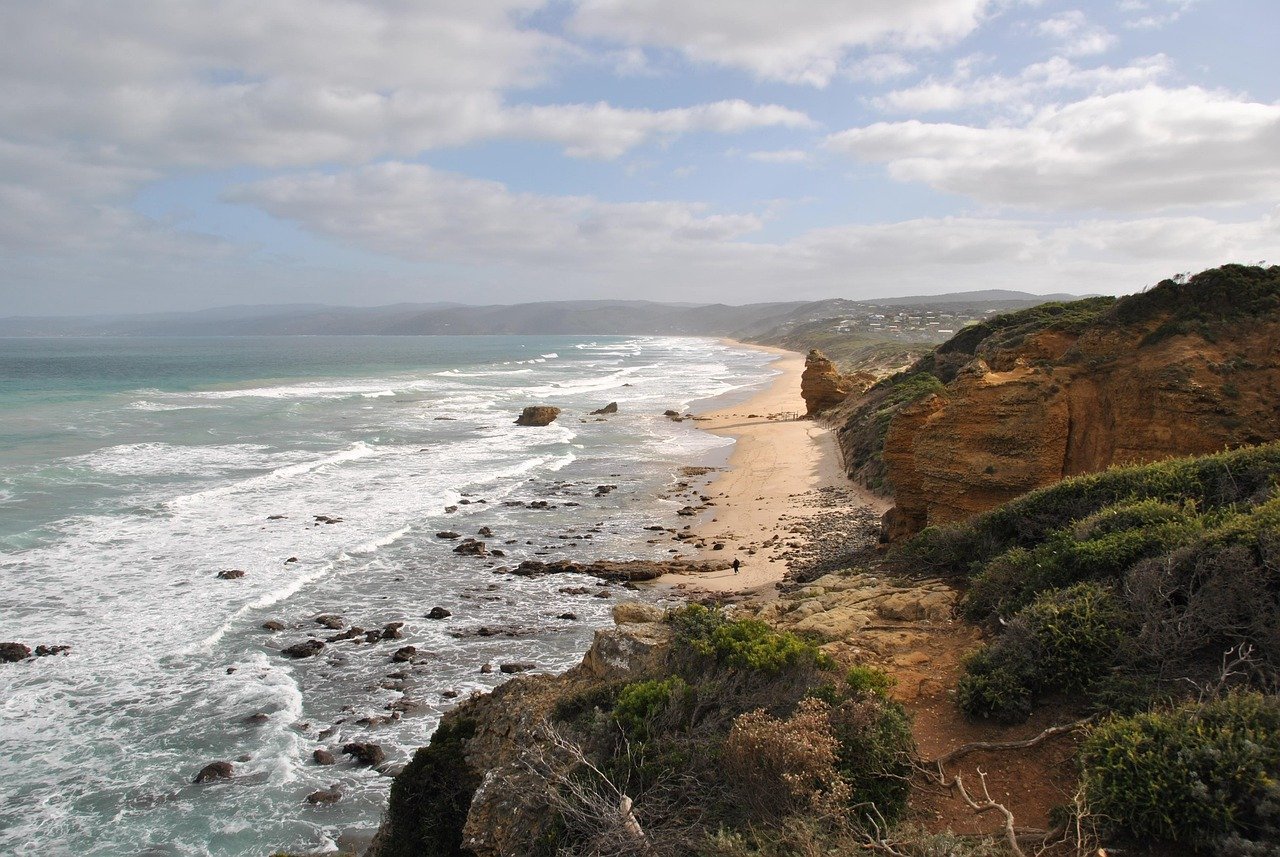
From Torquay, continue to Bells Beach, a short detour known for its surfing heritage and dramatic cliffside views, then on to Anglesea, a smaller beach town worth a coffee stop. The stretch from Anglesea to Lorne is one of the most scenic parts of the entire drive, hugging cliffs directly above the water.
Plan to arrive in Lorne by mid-to-late afternoon, leaving time to walk the town’s beachfront, browse its shops, and — if you have energy left — hike to Erskine Falls, a short and rewarding walk just outside town. Overnight in Lorne.
Driving time: Melbourne to Lorne is roughly 2.5–3 hours direct, but budget most of the day with stops.
Day 2: Lorne to Port Campbell, via Apollo Bay and the Otways
This is the day the itinerary earns its three-day length. From Lorne, continue along the coast to Apollo Bay, a good stop for lunch and one of the more relaxed towns on the route.
From Apollo Bay, turn inland briefly into the Great Otway National Park. This is where most one-day tours skip entirely, and it’s worth the detour: temperate rainforest, tree-fern gullies, and waterfalls like Triplet Falls or Maits Rest, a short, flat boardwalk loop through old-growth forest that’s accessible for most fitness levels. Wildlife spotting — particularly koalas along Great Ocean Road near Kennett River and in the Otways — is a genuine highlight for many visitors and doesn’t require a tour to experience; keep an eye out along tree lines as you drive.
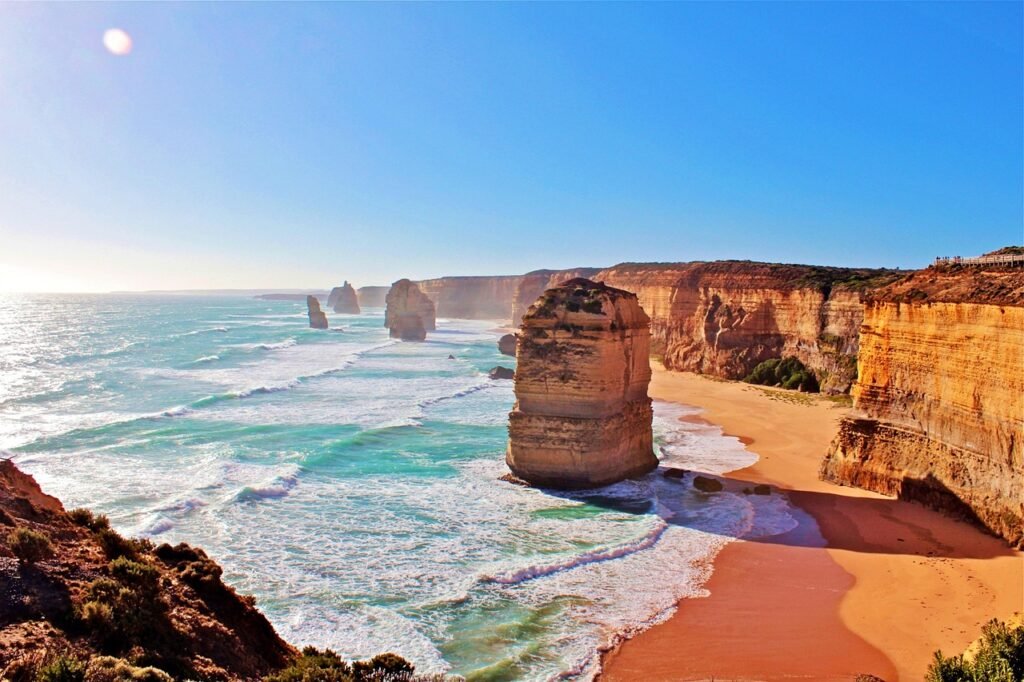
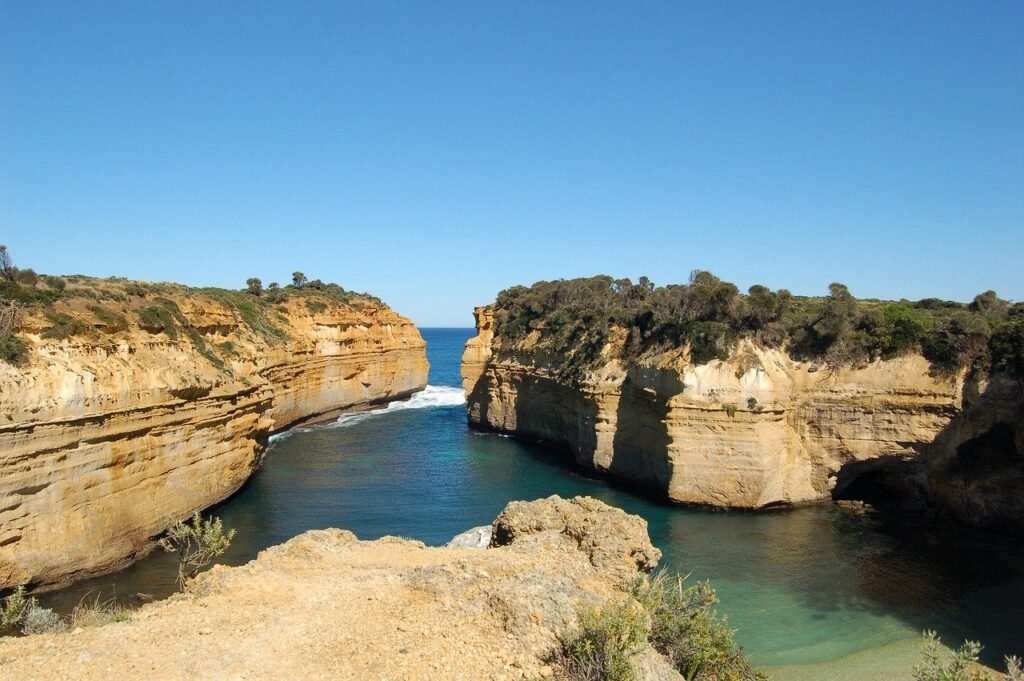
Rejoin the coast and continue toward Port Campbell National Park, home to the Twelve Apostles. Time your arrival for late afternoon if possible — the limestone stacks change color dramatically as the light softens, and the crowds thin out compared to midday. Nearby, Loch Ard Gorge and Gibson Steps are worth the short additional stops; note that beach access at Loch Ard Gorge has faced periodic closures for safety remediation, so check current signage on arrival.
Overnight in Port Campbell, a small town that puts you within easy reach of the main formations for both sunset and next-morning light.
Driving time: Lorne to Port Campbell is roughly 2.5–3 hours direct; with Otways detours and stops, plan for a full day.
Day 3: Port Campbell highlights, then return to Melbourne
Start early to catch the Twelve Apostles, London Bridge, and The Grotto in soft morning light and thinner crowds — a meaningful difference from the midday tour-bus rush. These formations are all within a short drive of each other along the Great Ocean Road’s final coastal stretch through Port Campbell National Park.
From here, you have two realistic options. The scenic option continues the coastal road toward Warrnambool and Port Fairy before turning inland to rejoin the Princes Highway back to Melbourne — a longer but more complete version of the route. The faster option turns inland from Port Campbell directly onto the Princes Highway, cutting return driving time meaningfully for travelers who need to be back in Melbourne by evening.
Driving time: Port Campbell back to Melbourne is roughly 3–3.5 hours via the inland Princes Highway route, or closer to 4.5–5 hours if you continue the full coastal loop through Warrnambool first.
Top tips for this itinerary
- Book Twelve Apostles-area accommodation well ahead in summer and around Easter; Port Campbell is small and rooms sell out.
- Fill your fuel tank in larger towns like Colac or before leaving Melbourne’s outskirts; rural stations along the route can have limited hours and higher prices.
- Wildlife spotting works best in early morning or late afternoon — Kennett River is a reliable koala-viewing spot, but treat it as wildlife-watching, not a guarantee.
- If traveling in winter, check weather and road conditions before departure; the coastal stretch can be exposed to strong winds and rain.
- Consider a scenic helicopter or small-plane flight over the Twelve Apostles if budget allows; it offers a genuinely different perspective on the rock formations that’s hard to get from ground level.
Where to stay by traveler type
Families: Lorne and Apollo Bay both offer a good range of family-friendly motels and holiday apartments, plus easy beach access and shorter walks suited to kids.
Couples: Port Campbell and Lorne both have boutique and small-hotel options with coastal views; Lorne in particular has a livelier dining scene for an evening out.
Budget-conscious and backpacker travelers: Torquay, Anglesea, and Apollo Bay have hostel and budget motel options, along with caravan and holiday parks well suited to campervan travelers.
Nature and hiking-focused travelers: Basing a night around Apollo Bay puts you closest to the Great Otway National Park’s rainforest walks and waterfalls without a long detour.
Safety, packing, and common mistakes
The coastal road has sections with sharp bends and limited overtaking opportunities, so budget more time than GPS estimates suggest, especially in a car unfamiliar to you or if driving on the left is new to you. Cliff-edge lookouts, particularly around the Twelve Apostles and Gibson Steps, have safety barriers for good reason — stay behind them, as the limestone cliffs are actively eroding.
Pack layers regardless of season; coastal weather changes quickly, and wind off the Southern Ocean can make even a sunny day feel cool. A common mistake is trying to do the entire route, including Warrnambool and Port Fairy, in a single long day from Melbourne — it’s technically possible but leaves no time to actually get out of the car.
FAQ
Do I need to book Great Ocean Road stops in advance? Most lookouts and walks are free and don’t require booking, but accommodation in small towns like Port Campbell should be booked ahead, especially in summer. Paid extras like scenic flights typically require advance booking.
Is three days enough, or should I add a fourth? Three days covers the route well for most travelers. A fourth day is worth adding if you want to continue to Warrnambool and Port Fairy in more depth, or if you’re visiting in whale season and want unhurried time at Logans Beach.
Can I do the Great Ocean Road without a car? Guided multi-day tours are a practical alternative to self-driving and cover the same key stops, though they follow a fixed schedule. Public transport along the route is limited and not well suited to a flexible multi-stop itinerary.
Is the drive difficult or dangerous for inexperienced drivers? The road is well-maintained but winding, with cliffside sections that require attention, particularly around Lorne to Apollo Bay. Take it slowly, use pull-outs for photos rather than stopping on the road, and allow extra time.
What’s the best time of day to see the Twelve Apostles? Early morning or late afternoon, both for lighting and for avoiding the coach-tour crowds that concentrate around midday.
Is the Great Ocean Road suitable for young children or older travelers? Yes, with planning — most of the signature walks (like Maits Rest) are short and flat, and driving days can be adjusted to include more rest stops. Loch Ard Gorge’s beach steps have faced closures, so check current accessibility if that stop matters to your plans.
Next Step
Before you go, sketch your three-day route onto a map with realistic stop times built in, rather than relying on total drive-time estimates alone — it’s the easiest way to avoid the rushed, tour-bus version of this trip.
Related Travytour guides
Keep planning
- More Great Ocean Road guides on Travytour
- Estimate your own trip cost with the Travytour budget calculator
- Browse all Travytour travel guides